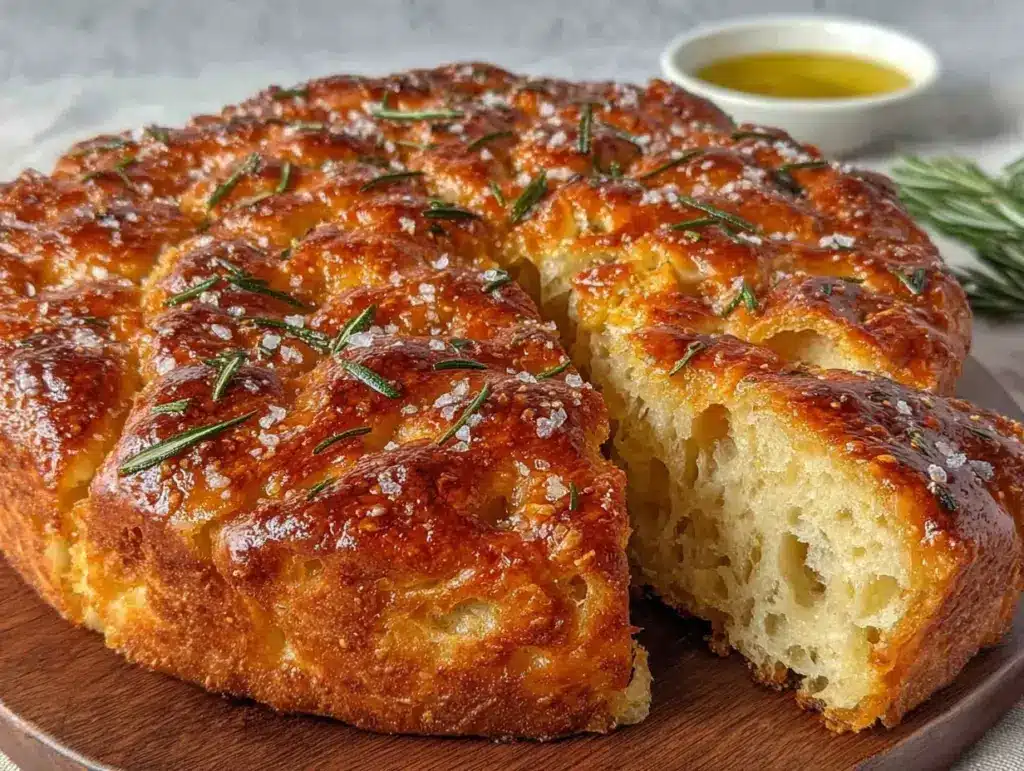
“You really have to try this bread,” my neighbor said one rainy afternoon as she handed me a rustic, golden slab of focaccia. Honestly, I was skeptical—homemade sourdough focaccia seemed too fancy for a casual snack. But the moment I bit into that crispy, herb-studded crust, everything changed. The crackly exterior giving way to a pillowy, fragrant crumb was nothing short of magic. It was the kind of bread that made me close my eyes and pause, savoring the simple pleasure of rosemary and sea salt dancing on my tongue.
I’ll admit, my first attempts weren’t flawless. The dough felt sticky, the crust sometimes too soft, or the rosemary unevenly scattered. But with a little patience—and a fair share of flour on the counter—I found a rhythm. Making this crispy sourdough focaccia bread became a bit of an obsession; I’d bake it multiple times a week, tweaking the hydration here, the resting time there.
It’s funny how a random gift from a friend turned into a kitchen staple, one that fills my home with warmth and that unmistakable aroma of fresh herbs and olive oil. This recipe stuck with me because it’s approachable yet rewarding, perfect for those moments when you want something comforting but not complicated. No fancy gadgets, no obscure ingredients—just good old sourdough, rosemary, and flaky sea salt.
So, if you’re after a crispy sourdough focaccia bread with rosemary and sea salt that’s got just the right crunch and herbaceous punch, I think you’ll find this recipe worth your time. It’s the kind of bread that feels like a little celebration, even on an ordinary day.
Why You’ll Love This Crispy Sourdough Focaccia Bread Recipe
After several weeks of testing this crispy sourdough focaccia bread recipe, I can confidently say it’s become one of my go-to breads for any occasion. Here’s why it might become your favorite, too:
- Quick & Easy: While sourdough takes some time to ferment, the hands-on work is minimal—perfect when you want artisanal bread without constant babysitting.
- Simple Ingredients: No need to hunt down fancy flours or strange herbs. Just basic pantry staples plus fresh rosemary and sea salt, which you might already have at hand.
- Perfect for Entertaining: Whether it’s a casual brunch or a laid-back dinner, this focaccia pairs beautifully with almost anything—from a bowl of soup to a hearty salad.
- Crowd-Pleaser: I’ve brought this along to potlucks and family gatherings, and it’s always the first to disappear. Kids love the crispy edges, and adults appreciate the rustic flavors.
- Unbelievably Delicious: The crust’s crunch combined with the airy crumb and the herb-infused olive oil topping feels like comfort food with an elegant twist.
This isn’t just another focaccia recipe. What sets this apart is the crispy crust that holds its own even after a day, thanks to the balance of hydration and baking technique. The rosemary is fresh and vibrant, not overpowering, and the sea salt flakes add bursts of savory goodness. I’ve also found that using a mature sourdough starter gives the bread a subtle tang that’s just right—not too sour, just enough to make you want another slice.
Honestly, it’s the kind of bread that invites you to slow down, share stories, and maybe even try that honey roasted butternut squash with rosemary alongside it for a flavor match made in heaven.
What Ingredients You Will Need
This recipe uses simple, wholesome ingredients to deliver bold flavor and satisfying texture without the fuss. Most are pantry staples, with a few fresh additions that make all the difference.
- Active sourdough starter (about 100g/3.5 oz; bubbly and mature for best rise)
- All-purpose flour (400g/3 1/4 cups; I prefer King Arthur for consistent results)
- Water (300ml/1 1/4 cups; lukewarm to help activate the yeast)
- Extra virgin olive oil (60ml/1/4 cup; plus more for drizzling; use good quality for flavor)
- Fine sea salt (1 1/2 tsp; blends into the dough)
- Fresh rosemary (2-3 tbsp, finely chopped; aromatic and bright)
- Coarse sea salt flakes (for sprinkling on top; adds texture and bursts of saltiness)
Optional: A pinch of garlic powder can add a subtle depth, but rosemary and sea salt alone keep the focus on simplicity and freshness.
If you don’t have an active sourdough starter, you can substitute with 2 tsp of instant yeast, but the flavor won’t be quite the same. For a gluten-free twist, try a blend of gluten-free flours and reduce hydration slightly.
Equipment Needed
- Mixing bowl: A large, sturdy bowl for the dough. Glass or plastic works fine, but I prefer stainless steel for easy cleanup.
- Dough scraper or spatula: Essential for handling the sticky sourdough dough without too much mess.
- Kitchen scale: For precise measurements—baking is a science, after all.
- Proofing basket or bowl: Something with a linen liner or a clean towel to let the dough rest.
- Baking sheet or cast iron pan: Preferably rimmed to hold the olive oil and allow the focaccia to crisp nicely.
- Oven thermometer (optional): To monitor accurate baking temperature; ovens can be tricky.
For budget-friendly baking, a simple rimmed baking sheet lined with parchment paper works wonders. I’ve also used a heavy cast iron skillet and loved the extra crisp it gives.
Preparation Method

- Mix the dough: In your mixing bowl, combine 400g (3 1/4 cups) all-purpose flour and 1 1/2 tsp fine sea salt. Add 100g (3.5 oz) active sourdough starter and 300ml (1 1/4 cups) lukewarm water. Stir with your dough scraper until combined—don’t worry about the dough being sticky; that’s what you want for a light crumb. (10 minutes)
- First rest: Cover the bowl loosely with a damp towel or plastic wrap. Let it sit at room temperature for 30 minutes to an hour. This autolyse step helps the flour absorb water and kickstarts gluten development.
- Fold and stretch: Every 30 minutes for the next 2 hours, perform gentle stretch-and-folds inside the bowl: reach under the dough, stretch it upwards, then fold it over itself. This builds strength without kneading. After three rounds, cover and let rise until doubled in size—usually about 3 to 4 hours depending on room temperature.
- Prepare baking pan: Generously oil your baking sheet or cast iron pan with olive oil. This oil bath is key for that crispy, golden crust.
- Shape the dough: Transfer the risen dough to your oiled pan. Using oiled hands, gently press and stretch it to fit the pan edges without deflating it too much. Don’t worry if it’s irregular—that rustic look adds charm.
- Second proof: Cover the dough and let it rest for another 30 to 60 minutes. It should puff up slightly.
- Dimple the dough: Using your fingertips, press dimples all over the surface. This traps pockets of olive oil and creates that signature focaccia texture.
- Add toppings: Drizzle 2 tbsp olive oil evenly over the top. Sprinkle finely chopped fresh rosemary, then scatter coarse sea salt flakes generously. You’ll want those little bursts of salt in every bite.
- Bake: Preheat your oven to 450°F (230°C). Place the focaccia on the middle rack and bake for 20 to 25 minutes, or until the crust is deep golden and crisp. You should hear a satisfying crackle when tapping the crust.
- Cool and enjoy: Let the focaccia cool slightly in the pan before slicing. Serve warm or at room temperature for best flavor.
If your dough feels too sticky to handle, lightly oil your hands instead of adding flour, which can dry out the crumb. And if you notice the focaccia browning too fast, tent it loosely with foil after 15 minutes of baking.
Cooking Tips & Techniques
Getting that perfect crispy sourdough focaccia isn’t just about the ingredients—it’s about the technique. Here’s what I’ve learned through trial and error:
- Hydration matters: A wetter dough means a more open crumb but can be tricky to handle. Don’t shy away from the stickiness; oiling your hands helps more than adding extra flour.
- Don’t skip the dimpling: Those finger indentations are where olive oil pools, crisping the crust and infusing every bite with flavor.
- Use good olive oil: The oil you drizzle on top shines here, so pick something fruity and robust.
- Room temperature proofing: Slow fermentation at a cooler spot overnight can boost flavor complexity if you have time.
- Avoid overproofing: If the dough is puffed beyond double, the structure weakens, leading to a dense focaccia.
One time, I left the dough too long and ended up with a focaccia that was delicious but more like a thick flatbread. Lesson learned! Also, multitasking—like starting a quick sautéed green beans with lemon zest while the dough proofs—makes the whole process feel less like a chore.
Variations & Adaptations
You can easily make this crispy sourdough focaccia your own with a few tweaks:
- Herb swaps: Try thyme, oregano, or even fresh sage instead of rosemary for a different herbal note.
- Cheese topping: Sprinkle shredded Parmesan or crumbled feta over the dough before baking for a savory punch.
- Olives or sun-dried tomatoes: Press pitted olives or chopped sun-dried tomatoes into the dough for Mediterranean flair.
- Gluten-free option: Use a gluten-free flour blend and reduce water slightly. The texture won’t be exactly the same but still tasty.
- Whole wheat: Substitute half the all-purpose flour with whole wheat for nuttier flavor and added fiber.
Personally, I’ve made this focaccia with a handful of caramelized onions tucked beneath the rosemary layer—talk about a crowd-pleaser at a casual dinner. And if you’re curious about pairing it, this recipe goes wonderfully with a robust soup or a fresh salad, like those vibrant green beans with caramelized shallots and mushrooms I often make alongside.
Serving & Storage Suggestions
This crispy sourdough focaccia bread shines best served warm, straight from the oven, with a drizzle of extra virgin olive oil or alongside your favorite dipping sauce. It pairs beautifully with soups, stews, or even a simple charcuterie board.
To store, wrap leftover focaccia tightly in plastic wrap or keep it in an airtight container at room temperature for up to two days. For longer storage, slice and freeze it in a resealable bag for up to three months.
When reheating, pop the slices in a preheated oven at 350°F (175°C) for 5-7 minutes to regain that crispness. Avoid microwaving, which makes the crust soggy.
Flavors actually deepen after a day, so if you have the patience, letting the focaccia rest wrapped overnight can improve the taste. It’s a great make-ahead option for weekend brunches or impromptu gatherings.
Nutritional Information & Benefits
Each serving (about 1/8 of the focaccia) contains roughly:
| Calories | 210 |
|---|---|
| Carbohydrates | 28g |
| Fat | 8g |
| Protein | 5g |
| Fiber | 1.5g |
Thanks to the sourdough fermentation, this focaccia is easier to digest than standard bread, and the rosemary adds antioxidants and anti-inflammatory properties. Olive oil contributes heart-healthy fats, making this a satisfying yet nourishing bread choice.
Keep in mind it contains gluten and is not suitable for those with celiac disease, but the simple ingredient profile makes it a wholesome option for most other diets.
Conclusion
This crispy sourdough focaccia bread with rosemary and sea salt is more than just a recipe—it’s a little ritual that brings joy to the kitchen and the table. It’s approachable enough for everyday baking but special enough to impress without fuss.
Feel free to make it your own, whether by swapping herbs, adding toppings, or pairing it with your favorite dishes. I love this recipe because it’s a reminder that simple ingredients, a bit of patience, and a splash of olive oil can create something truly satisfying.
If you try it out, I’d love to hear how you customize your focaccia or what meals you pair it with—comments always brighten my day!
Happy baking, and here’s to crispy, fragrant slices that make any moment a little better.
Frequently Asked Questions
Can I make this focaccia without a sourdough starter?
Yes! You can substitute 2 teaspoons of instant yeast for the starter. The flavor will be less tangy, but the texture will still be delicious.
How can I keep my focaccia crust crispy after baking?
Store it at room temperature wrapped loosely in parchment paper, and reheat briefly in the oven before serving to restore crispness.
What if my dough is too sticky to handle?
Instead of adding flour, try oiling your hands and work gently with the dough. Sticky doughs usually result in a lighter crumb.
Can I prepare the dough the night before?
Absolutely. You can refrigerate the dough overnight after the first rise to develop more flavor. Just bring it back to room temperature before shaping and baking.
Is rosemary the only herb that works for focaccia?
Not at all! Thyme, oregano, or sage make wonderful alternatives. You can even mix herbs or add toppings like olives or caramelized onions for variety.
Pin This Recipe!

Crispy Sourdough Focaccia Bread Recipe Easy Homemade Rosemary Sea Salt

A crispy sourdough focaccia bread with a crackly crust, pillowy crumb, fresh rosemary, and flaky sea salt. This easy homemade recipe delivers artisanal flavor with simple ingredients and minimal hands-on time.
- Prep Time: 10 minutes active + 3.5 to 5 hours including rests
- Cook Time: 20 to 25 minutes
- Total Time: 4 to 5.5 hours
- Yield: 8 servings 1x
- Category: Bread
- Cuisine: Italian
Ingredients
- 100g (3.5 oz) active sourdough starter, bubbly and mature
- 400g (3 1/4 cups) all-purpose flour
- 300ml (1 1/4 cups) lukewarm water
- 60ml (1/4 cup) extra virgin olive oil, plus more for drizzling
- 1 1/2 tsp fine sea salt
- 2–3 tbsp fresh rosemary, finely chopped
- Coarse sea salt flakes for sprinkling on top
- Optional: pinch of garlic powder
Instructions
- In a mixing bowl, combine 400g (3 1/4 cups) all-purpose flour and 1 1/2 tsp fine sea salt.
- Add 100g (3.5 oz) active sourdough starter and 300ml (1 1/4 cups) lukewarm water. Stir with a dough scraper until combined; dough will be sticky. (10 minutes)
- Cover the bowl loosely with a damp towel or plastic wrap and let sit at room temperature for 30 minutes to 1 hour for autolyse.
- Every 30 minutes for the next 2 hours, perform gentle stretch-and-folds inside the bowl (3 rounds). Then cover and let rise until doubled in size, about 3 to 4 hours depending on room temperature.
- Generously oil a baking sheet or cast iron pan with olive oil.
- Transfer the risen dough to the oiled pan. Using oiled hands, gently press and stretch it to fit the pan edges without deflating it too much.
- Cover the dough and let it rest for another 30 to 60 minutes until slightly puffed.
- Press dimples all over the surface with your fingertips to trap olive oil pockets.
- Drizzle 2 tbsp olive oil evenly over the top. Sprinkle finely chopped fresh rosemary and scatter coarse sea salt flakes generously.
- Preheat oven to 450°F (230°C). Bake focaccia on the middle rack for 20 to 25 minutes until deep golden and crisp.
- Let focaccia cool slightly in the pan before slicing. Serve warm or at room temperature.
Notes
If dough is too sticky to handle, oil your hands instead of adding flour to avoid drying the crumb. Tent focaccia loosely with foil if browning too fast after 15 minutes. For longer flavor development, refrigerate dough overnight after first rise and bring to room temperature before shaping. Store focaccia wrapped loosely in parchment paper at room temperature to keep crust crispy. Reheat in oven at 350°F (175°C) for 5-7 minutes to restore crispness. Avoid microwaving.
Nutrition
- Serving Size: 1/8 of the focaccia
- Calories: 210
- Fat: 8
- Carbohydrates: 28
- Fiber: 1.5
- Protein: 5
Keywords: sourdough focaccia, rosemary focaccia, crispy bread, homemade bread, easy focaccia, sea salt focaccia, artisanal bread