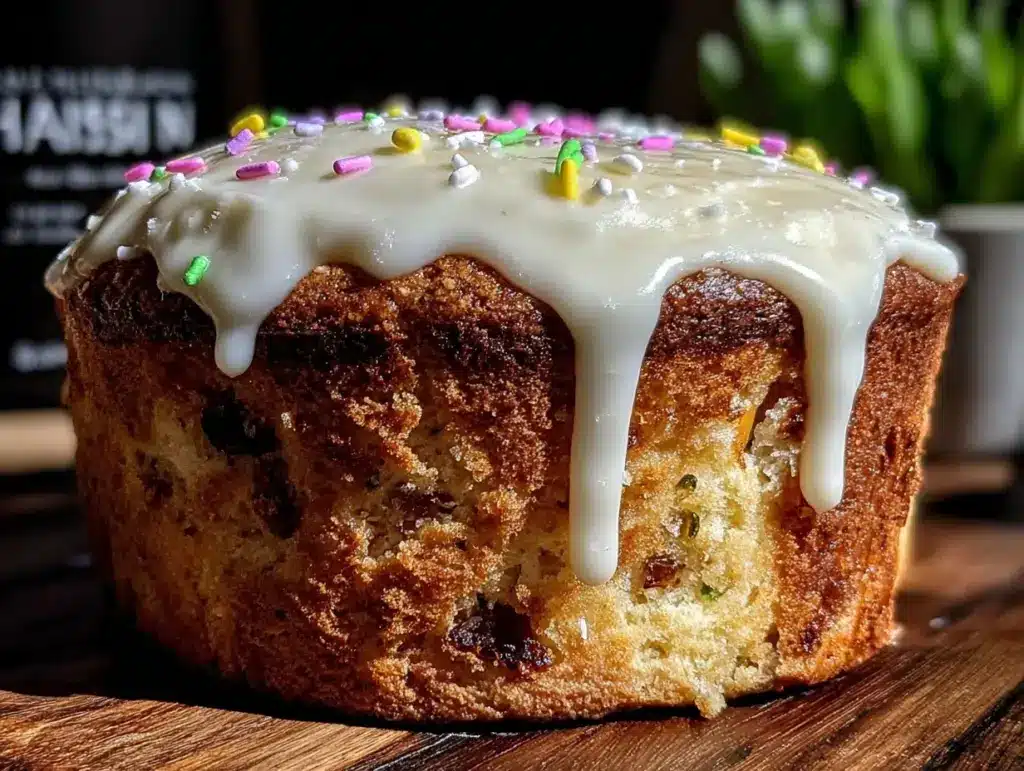
“You really think the yeast is still good?” my friend asked, eyeing the tiny packet I’d fished out of the back of my fridge. It was late afternoon, and I was experimenting with a recipe I’d only ever seen in my grandmother’s worn cookbook — classic Russian Kulich Easter cake with sweet white icing. Honestly, I was skeptical. Yeast and I have a complicated relationship, and the idea of nailing this tall, rich bread with that glossy, sugary glaze felt a little intimidating.
But as the dough slowly rose, filling my kitchen with that unmistakable warm, yeasty aroma, something clicked. That smell—soft and comforting—took me back to childhood holidays and the quiet mornings when my family gathered around the table, slicing thick pieces of this cake with a dab of butter. I remember my grandmother’s hands dusting flour everywhere, and how the icing always seemed a little too sweet but perfectly joyful, like a little sugar celebration on top.
That day, after a few rounds of kneading, proofing, and a bit of trial with the icing consistency, I realized this recipe wasn’t just about tradition or taste—it was about feeling connected, even across miles and years. It’s easy enough for anyone to try, even if you’re “not really a baker” like me, and the results are honestly worth every sticky finger and patient minute. That classic Russian Kulich Easter cake with sweet white icing stuck with me not just because it’s delicious, but because it’s a quiet triumph of simple ingredients coming together to make something truly special.
Why You’ll Love This Recipe
This classic Russian Kulich Easter cake with sweet white icing has become one of those dishes I find myself making again and again, especially when I want a little festive comfort without the stress. Here’s why I think you’ll enjoy it too:
- Quick & Easy: While it’s a yeast bread, the process comes together in about 3 hours, with plenty of hands-off time for rising. It’s perfect for busy weekend baking sessions.
- Simple Ingredients: You probably already have most of what you need in your pantry—flour, eggs, butter, sugar, and that trusty packet of yeast.
- Perfect for Celebrations: Traditionally served at Easter, but honestly, it’s great for any special occasion or cozy brunch.
- Crowd-Pleaser: The rich, fluffy crumb combined with the sweet white icing always gets rave reviews from kids and adults alike.
- Unbelievably Delicious: The balance of aromatic citrus zest, plump raisins, and the silky icing makes it a standout comfort food.
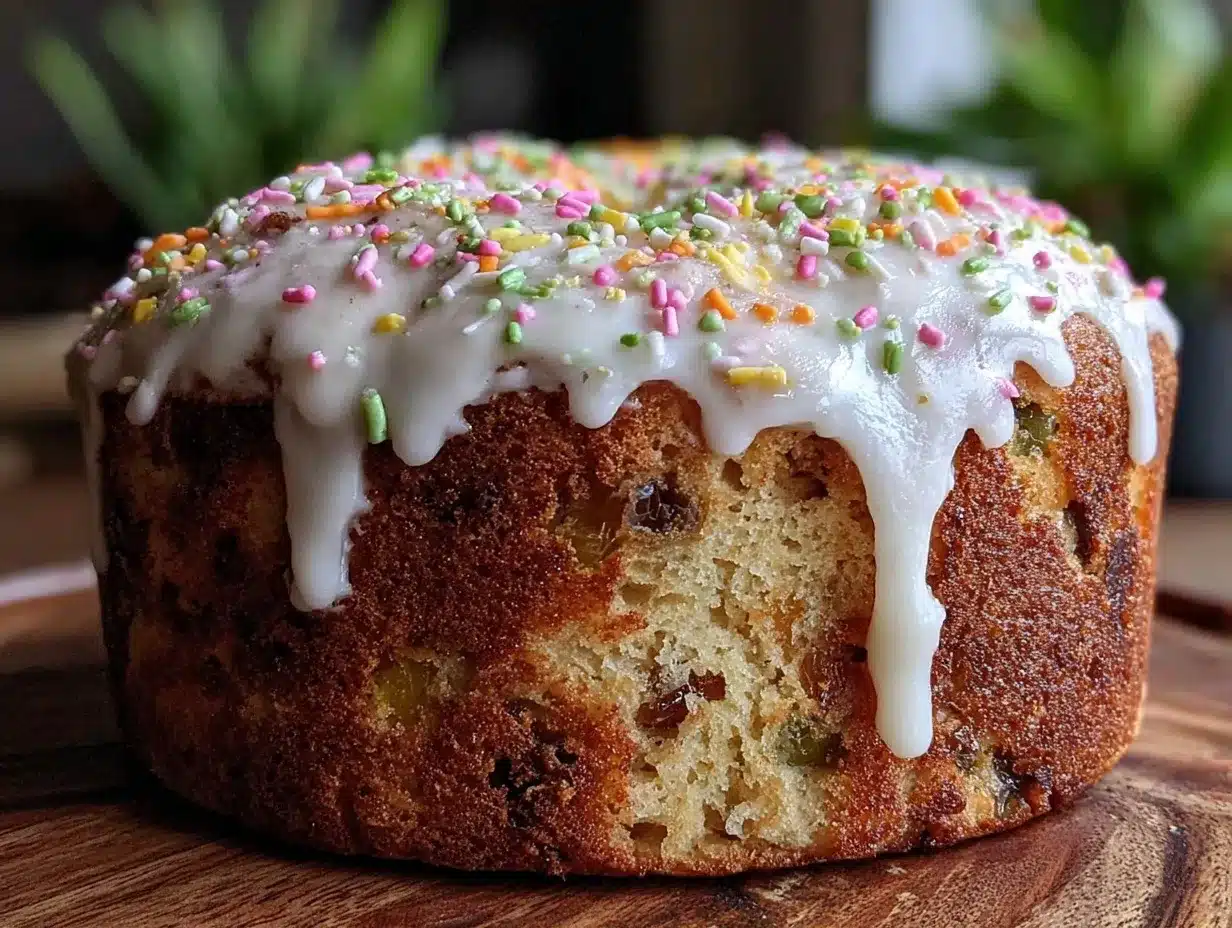
What makes this version different? The sweet white icing isn’t just a drizzle—it’s a smooth, glossy glaze that sets with a delicate crackle, adding a lovely texture contrast to the soft bread. Plus, I add a touch of lemon zest to the dough and icing for a fresh brightness that wakes up the classic flavors without overpowering them.
Honestly, this recipe has become my go-to for turning a simple afternoon into a meaningful moment. It’s not just a cake; it’s a little tradition you can bake into your own story.
What Ingredients You Will Need
This recipe uses simple, wholesome ingredients to deliver that bold, comforting flavor and satisfying texture without any fuss. Most are pantry staples, and you can easily find or swap them if needed.
- All-purpose flour – 4 cups (480g), for the soft, tender crumb
- Active dry yeast – 2 ¼ tsp (one packet), the star for that lovely rise
- Whole milk – 1 cup (240ml), warmed to about 110°F (43°C), helps activate the yeast
- Granulated sugar – ¾ cup (150g), adds sweetness to the dough
- Unsalted butter – ½ cup (115g), softened for richness (I recommend Kerrygold for its creamy texture)
- Large eggs – 4, room temperature, for structure and moisture
- Salt – 1 tsp, to balance flavors
- Vanilla extract – 1 tsp, for warmth and depth
- Fresh lemon zest – 1 tbsp, brightens the flavor (optional but highly recommended)
- Golden raisins – ¾ cup (120g), soaked in warm water for 10 minutes to plump up
- For the sweet white icing:
- Powdered sugar – 1 ½ cups (180g), sifted for silky smoothness
- Fresh lemon juice – 2 tbsp, adds freshness and helps set the glaze
- Vanilla extract – ½ tsp, enhances flavor
- Milk (optional) – 1-2 tsp, to thin the icing if needed
If you want a gluten-free option, almond flour blends poorly here because of the yeast, but you can try a gluten-free all-purpose flour blend designed for baking. For dairy-free, swap the butter and milk for plant-based alternatives like coconut oil and almond milk, but keep in mind the texture will shift slightly.
Equipment Needed
- Large mixing bowl: For combining and proofing the dough. A glass or stainless steel bowl works best and is easy to clean.
- Stand mixer with dough hook (optional): Helpful for kneading the sticky dough, though you can knead by hand if patience permits.
- Measuring cups and spoons: Accurate measurements are key for baking success.
- Loaf pans or traditional tall Kulich molds: I used tall cylindrical tins (about 4 inches in diameter and 6 inches high) to get that classic shape.
- Kitchen thermometer (optional): Handy for checking milk temperature before activating yeast.
- Baking sheet and parchment paper: To catch any drips from the icing and make cleanup easier.
If you don’t have a stand mixer, no worries—just plan to knead for about 10-15 minutes by hand. A silicone spatula will also help scrape dough from the bowl. For the icing, a small whisk or fork is all you need.
Preparation Method
- Activate the yeast: Warm 1 cup (240ml) of whole milk to about 110°F (43°C). It should feel warm but not hot to the touch. Stir in 1 tsp of sugar and sprinkle the 2 ¼ tsp active dry yeast over the top. Let it sit for 5-10 minutes until foamy and bubbly. This tells you the yeast is alive and kicking.
- Prepare the dough base: In a large mixing bowl or stand mixer, combine 4 cups (480g) all-purpose flour, ¾ cup (150g) sugar, and 1 tsp salt. Add the lemon zest and mix briefly to distribute the zest evenly.
- Add wet ingredients: Crack in 4 large eggs, pour in the softened ½ cup (115g) butter, 1 tsp vanilla extract, and the activated yeast mixture. If mixing by hand, use a wooden spoon to combine until a shaggy dough forms.
- Knead the dough: If using a stand mixer, switch to the dough hook and knead on medium speed for about 8 minutes. By hand, turn the dough out onto a lightly floured surface and knead for 10-15 minutes until smooth, elastic, and slightly tacky but not sticky. Add small amounts of flour if needed, but be careful not to overdo it.
- Incorporate the raisins: Drain the soaked golden raisins and gently fold them into the dough, distributing evenly without crushing them.
- First rise: Lightly grease a large bowl and place the dough inside. Cover with a clean kitchen towel or plastic wrap and let it rise in a warm, draft-free spot for about 1.5 to 2 hours, or until doubled in size. The dough should feel airy and soft when pressed gently.
- Shape and proof: Punch down the dough to release excess air. Divide into two equal portions and shape into tall cylinders to fit your Kulich molds or loaf pans. Place the dough into the prepared pans, cover again, and let rise for another 45 minutes to 1 hour, until puffy and just about to touch the top of the pan.
- Bake: Preheat your oven to 350°F (175°C). Bake the Kulich for 35-40 minutes. Check doneness by inserting a toothpick into the center—it should come out clean. If the tops brown too quickly, tent with aluminum foil halfway through baking.
- Cool: Remove from oven and cool in the pan for 15 minutes. Then transfer onto a wire rack to cool completely before icing.
- Prepare the sweet white icing: In a bowl, whisk together 1 ½ cups (180g) powdered sugar, 2 tbsp fresh lemon juice, and ½ tsp vanilla extract. If the icing is too thick, add milk 1 tsp at a time until it reaches a thick but pourable consistency.
- Ice the Kulich: Spoon the icing generously over the tops of the cooled cakes, letting it drip down the sides naturally. Let the icing set at room temperature for about 30 minutes before serving.
If the dough feels too sticky during kneading, dust your hands lightly with flour rather than adding flour to the dough—this keeps it tender. And don’t rush the rising times; they’re key to the fluffy texture.
Cooking Tips & Techniques
Working with yeast can feel a bit tricky if you’re new to it, but here are some tips that helped me avoid mistakes:
- Milk temperature is crucial: Too hot, and the yeast dies; too cold, and it won’t activate. Aim for a warm bath-like temperature (around 110°F/43°C).
- Patience with rising: Don’t rush the proofing stages. If your kitchen is cold, try placing the dough near a warm stove or inside a turned-off oven with the light on.
- Use fresh yeast: Old or expired yeast won’t rise properly. Always check the expiration date or perform a quick proof test by mixing yeast with warm water and sugar before starting.
- Don’t over-knead: The dough should be elastic but still soft. Overworking can make the bread tough.
- Evenly distribute raisins: Fold them gently in the last stages of kneading to prevent them from breaking or sinking to the bottom during baking.
When icing the cake, use a thick but fluid glaze so it sets with a slight crackle, which is part of the charm. If it’s too runny, it won’t hold shape; if too stiff, it won’t spread nicely.
One time, I forgot to soak the raisins, and the cake turned out a bit dry and chewy—lesson learned! Also, I find multitasking by prepping the icing while the cakes bake saves time and keeps the momentum going.
Variations & Adaptations
This classic Russian Kulich Easter cake is flexible for different tastes and dietary needs. Here are some variations I’ve tried or recommend:
- Seasonal fruit swap: Instead of raisins, try dried cranberries, chopped candied orange peel, or even fresh blueberries for a summer twist.
- Nutty version: Add ½ cup chopped walnuts or almonds to the dough for extra crunch and richness.
- Gluten-free adaptation: Use a gluten-free baking flour blend designed for yeast breads—expect a slightly denser crumb but still tasty.
- Dairy-free option: Replace butter with coconut oil and milk with almond or oat milk; just be mindful the flavor will shift subtly.
- Chocolate chip twist: For a more indulgent cake, fold in mini chocolate chips with the raisins.
For a different method, some people bake Kulich in a slow cooker using special tall molds, which keeps it moist and soft, but I prefer the oven for the traditional golden crust.
Serving & Storage Suggestions
Serve your Kulich at room temperature, sliced thick with a pat of butter or just as is with the glossy icing. It pairs beautifully with a hot cup of tea or coffee, making it a lovely brunch centerpiece. Leftovers make a great sweet breakfast treat the next day.
To store, wrap the cake tightly in plastic wrap or place in an airtight container. It keeps well at room temperature for up to 3 days or refrigerated for 5-7 days. For longer storage, Kulich freezes wonderfully—wrap it in foil and place in a freezer bag for up to 3 months.
When reheating, gently warm slices in the microwave for 15-20 seconds or toast lightly to bring back softness. The flavors tend to mellow and deepen after a day, so sometimes I actually prefer it the next day!
For a festive touch, consider serving it alongside lighter vegetable sides like sautéed green beans with lemon zest and pine nuts, which balance the sweetness nicely.
Nutritional Information & Benefits
Each slice (about 100g) of this classic Russian Kulich Easter cake provides roughly 320 calories, 8g fat, 50g carbohydrates, and 6g protein. The eggs and milk add protein and calcium, while the raisins contribute a touch of natural sweetness along with fiber and antioxidants.
This recipe is gluten-rich but can be adapted for gluten-free diets. It’s also vegetarian-friendly and can be made dairy-free with simple swaps.
From a wellness perspective, the lemon zest adds a small boost of vitamin C and a refreshing aroma that lifts the mood. Baking this cake is more than just nutrition—it’s about nourishing the soul with tradition and warmth.
Conclusion
This classic Russian Kulich Easter cake with sweet white icing is a recipe that’s stuck with me because it’s equal parts tradition, comfort, and approachable baking. Whether you’re celebrating a holiday or just craving something with a little something special, this cake delivers in flavor and heart.
I encourage you to make it your own—try adding your favorite dried fruits or nuts, or tweak the icing to fit your sweetness preference. For me, it’s those quiet moments slicing into the tall, tender cake that make it worth every step.
If you’ve enjoyed this recipe, I’d love to hear how you put your spin on it. Share your thoughts or questions below, and let’s keep the baking conversation going!
Frequently Asked Questions About Classic Russian Kulich Easter Cake
How long does Kulich keep fresh?
When stored properly in an airtight container at room temperature, Kulich stays fresh for about 3 days. Refrigerating extends its life up to a week, and freezing can preserve it for 3 months.
Can I make Kulich without yeast?
Traditional Kulich relies on yeast for its characteristic rise and texture. Using baking powder instead will result in a denser bread and isn’t recommended for this recipe.
What’s the best way to prevent Kulich from drying out?
Don’t overbake and keep the cake wrapped well after cooling. Also, adding enough butter and eggs helps keep it moist.
Can I prepare the dough in advance?
Yes! You can prepare the dough, let it rise once, then refrigerate overnight. Bring it back to room temperature before shaping and the final rise.
How do I get the perfect glossy white icing?
Use sifted powdered sugar and fresh lemon juice. The icing should be thick but pourable. Spread it on cooled cake and allow it to set at room temperature without refrigeration for the best crackle effect.
Pin This Recipe!
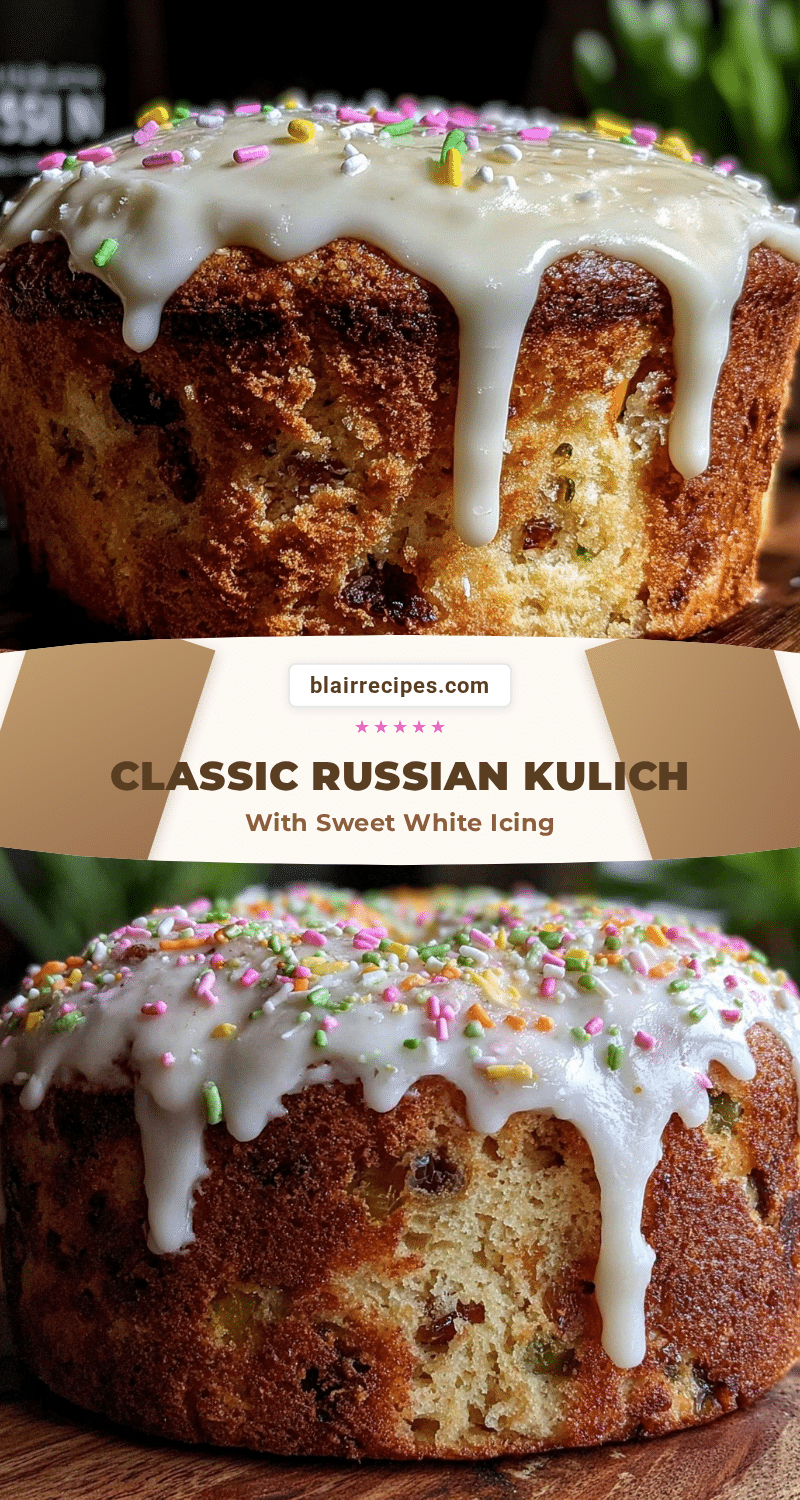
Classic Russian Kulich Easter Cake Recipe Easy Homemade Sweet Icing Tutorial

A traditional Russian Kulich Easter cake with a tall, rich bread and a smooth, glossy sweet white icing with lemon zest. Perfect for celebrations and cozy brunches.
- Prep Time: 30 minutes
- Cook Time: 40 minutes
- Total Time: 3 hours 10 minutes
- Yield: 2 tall Kulich cakes (about 8 servings total) 1x
- Category: Dessert
- Cuisine: Russian
Ingredients
- 4 cups (480g) all-purpose flour
- 2 ¼ tsp active dry yeast (one packet)
- 1 cup (240ml) whole milk, warmed to about 110°F (43°C)
- ¾ cup (150g) granulated sugar
- ½ cup (115g) unsalted butter, softened
- 4 large eggs, room temperature
- 1 tsp salt
- 1 tsp vanilla extract
- 1 tbsp fresh lemon zest (optional but recommended)
- ¾ cup (120g) golden raisins, soaked in warm water for 10 minutes
- For the sweet white icing:
- 1 ½ cups (180g) powdered sugar, sifted
- 2 tbsp fresh lemon juice
- ½ tsp vanilla extract
- 1–2 tsp milk (optional, to thin icing if needed)
Instructions
- Activate the yeast: Warm 1 cup (240ml) whole milk to about 110°F (43°C). Stir in 1 tsp sugar and sprinkle 2 ¼ tsp active dry yeast over the top. Let sit 5-10 minutes until foamy.
- Prepare the dough base: In a large bowl or stand mixer, combine 4 cups flour, ¾ cup sugar, 1 tsp salt, and lemon zest. Mix briefly.
- Add wet ingredients: Crack in 4 eggs, add softened butter, 1 tsp vanilla extract, and the activated yeast mixture. Combine until shaggy dough forms.
- Knead the dough: Knead with stand mixer dough hook for 8 minutes or by hand on floured surface for 10-15 minutes until smooth, elastic, and slightly tacky.
- Incorporate raisins: Drain soaked raisins and fold gently into dough.
- First rise: Place dough in greased bowl, cover, and let rise in warm spot for 1.5 to 2 hours until doubled.
- Shape and proof: Punch down dough, divide into two portions, shape into tall cylinders, place in pans, cover, and let rise 45 minutes to 1 hour until puffy.
- Bake: Preheat oven to 350°F (175°C). Bake 35-40 minutes until toothpick comes out clean. Tent with foil if tops brown too quickly.
- Cool: Cool in pan 15 minutes, then transfer to wire rack to cool completely.
- Prepare icing: Whisk powdered sugar, lemon juice, and vanilla extract. Add milk 1 tsp at a time if too thick until pourable.
- Ice the Kulich: Spoon icing over cooled cakes, let drip naturally, and set at room temperature for 30 minutes before serving.
Notes
Milk temperature is crucial for yeast activation; do not over-knead dough; soak raisins to prevent dryness; icing should be thick but pourable for best crackle effect; dough can be prepared in advance and refrigerated after first rise.
Nutrition
- Serving Size: About 100g slice
- Calories: 320
- Fat: 8
- Carbohydrates: 50
- Protein: 6
Keywords: Kulich, Russian Easter cake, yeast bread, sweet icing, traditional, holiday dessert, lemon zest, raisins