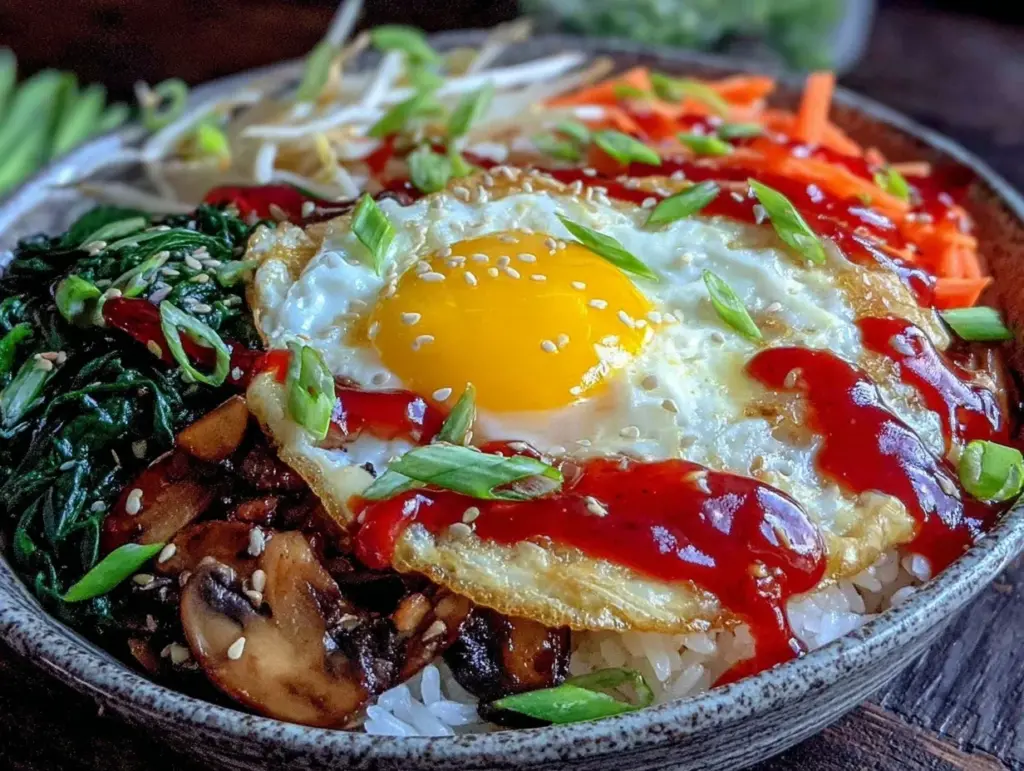
“You’re not going to believe what I whipped up after a long day,” my friend said over the phone, breathless with excitement. She’d just discovered Korean bibimbap, and honestly, I was skeptical at first. Mixing warm rice with a rainbow of veggies, a fried egg perched on top, and that fiery red gochujang sauce? It sounded like a lot going on. But she insisted it was the perfect comfort food—flavorful, balanced, and surprisingly simple. That night, I gave it a shot while the kitchen hummed softly around me and the evening stretched quiet. The first bite was a revelation: spicy, savory, with textures that danced—crisp veggies, tender beef, the rich egg yolk melding it all together.
Since then, this flavorful Korean bibimbap bowl with gochujang and fried egg has become a go-to meal in my rotation—especially when I want something that feels special without hours of fuss. It’s one of those recipes that quietly sneaks into your heart, making you want to experiment with different toppings or spice levels each time. What really sticks with me is how it’s both comforting and vibrant, a bowl that somehow manages to satisfy every craving at once. And if you’ve ever wondered how to bring authentic Korean flavors into your kitchen with ease, this recipe just might be your new favorite discovery.
Why You’ll Love This Recipe
This bibimbap bowl isn’t just a dish—it’s a culinary experience that balances flavor, texture, and nutrition in a way that feels effortlessly satisfying. Through many tests and tweaks in my own kitchen, I’ve nailed down a version that’s approachable yet packed with authentic Korean punch.
- Quick & Easy: You can have this bowl ready in under 30 minutes, perfect for busy weeknights or when you need a flavorful reset without the stress.
- Simple Ingredients: Most of what you need is probably already in your fridge or pantry, from rice to fresh veggies and that iconic gochujang paste—no exotic shopping required.
- Perfect for Any Occasion: Whether it’s a cozy solo dinner, a casual get-together, or you’re craving a nourishing lunch, bibimbap fits right in.
- Crowd-Pleaser: The mix of textures and spicy-sweet flavors tends to win over even picky eaters—my family keeps asking for it!
- Unbelievably Delicious: The blend of warm rice, crisp vegetables, savory beef, and that rich fried egg with gochujang sauce is pure magic.
What sets this recipe apart? The secret lies in balancing the gochujang’s heat with a touch of sweetness and acidity, plus frying the egg just right so the yolk becomes a luscious sauce. I’ve also found that using a mix of fresh and slightly sautéed veggies keeps the bowl vibrant and texturally interesting. This isn’t just another bibimbap recipe—it’s the one that makes you pause, savor, and maybe even close your eyes after that first spicy, savory bite.
What Ingredients You Will Need
This flavorful Korean bibimbap bowl is all about combining simple, wholesome ingredients that come together to create bold flavors and satisfying textures. Most are pantry staples or easy to find at any grocery store, and substitutions are straightforward if you want to tweak it.
- For the base:
- 1 ½ cups cooked short-grain white rice (or brown rice for a nuttier flavor)
- 1 teaspoon sesame oil (adds that signature nutty aroma)
- For the protein:
- 6 oz ground beef or thinly sliced beef (I prefer lean ground beef from Grass Roots for better texture)
- 1 clove garlic, minced
- 1 teaspoon soy sauce (for savory depth)
- For the vegetables:
- ½ cup julienned carrots (fresh and crunchy)
- ½ cup spinach, blanched and squeezed dry
- ½ cup bean sprouts, lightly blanched
- ½ cup shiitake mushrooms, sliced and sautéed
- 1 small cucumber, thinly sliced
- For the sauce and garnish:
- 2 tablespoons gochujang (Korean red chili paste; Chung Jung One brand is my go-to)
- 1 teaspoon rice vinegar (balances the spice)
- 1 teaspoon honey or sugar (softens the heat)
- 1 teaspoon toasted sesame seeds (for crunch and aroma)
- For the egg:
- 2 large eggs (room temperature for even cooking)
- Salt and pepper to taste
Feel free to swap vegetables seasonally—fresh green beans from this recipe would add a bright twist. For a vegetarian option, tofu works beautifully in place of beef. And if you prefer gluten-free, just double-check your soy sauce or opt for tamari.
Equipment Needed
This bibimbap bowl recipe calls for basic kitchen tools that most home cooks have. A good skillet or non-stick frying pan is key, especially for the fried egg.
- Medium saucepan or rice cooker for perfectly cooked rice
- Non-stick skillet or cast iron pan for frying the egg and sautéing beef and mushrooms
- Mixing bowls to prep and toss vegetables
- Small bowl for mixing the gochujang sauce
- Colander for blanching vegetables like spinach and bean sprouts
If you don’t have a rice cooker, no worries—just use a heavy-bottomed pot with a tight lid to steam the rice. A splatter guard is handy when frying eggs, but not essential. I’ve also found using a silicone spatula makes mixing the sauce and tossing veggies much easier without scratching pans. If you want to keep things budget-friendly, a simple non-stick skillet will do the job perfectly.
Preparation Method
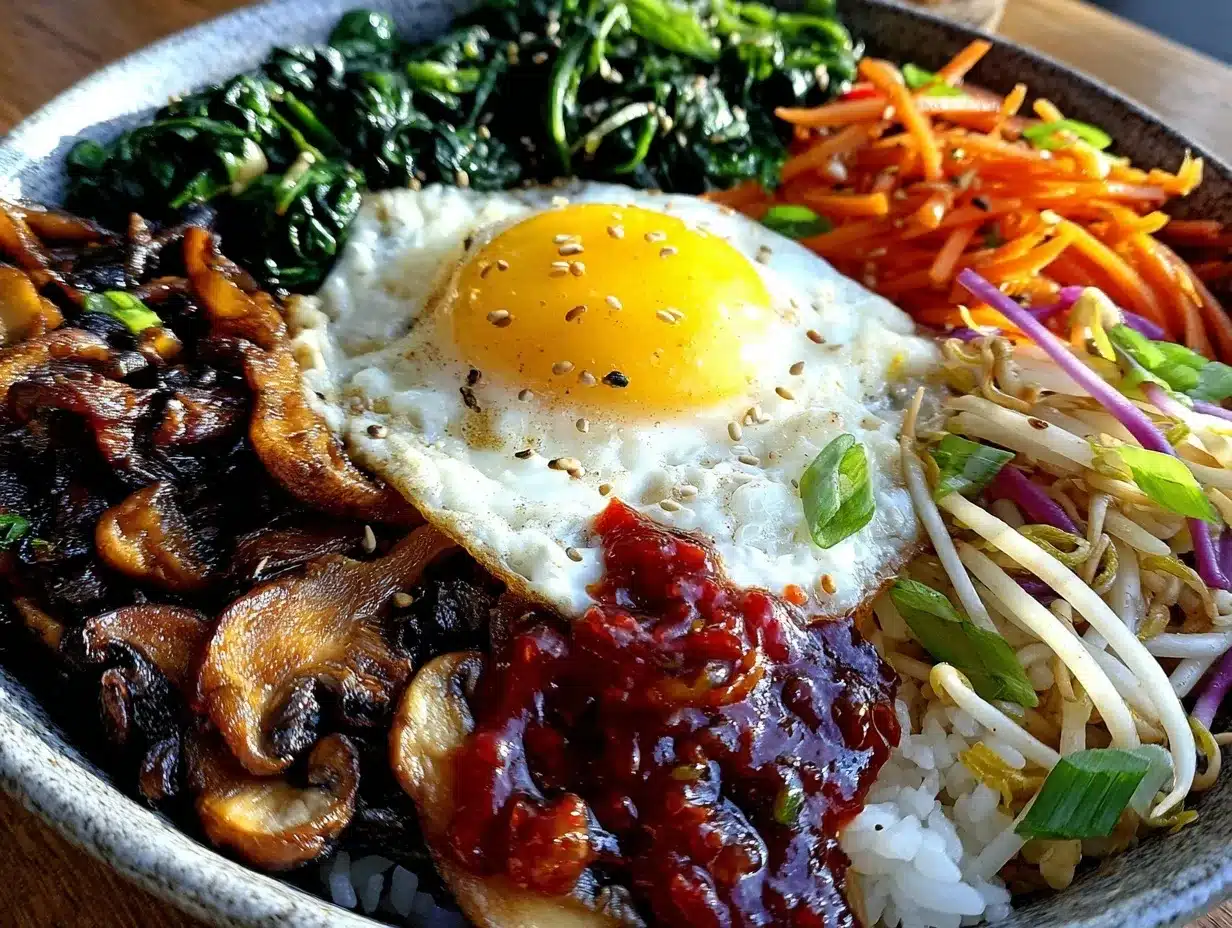
- Cook the rice: Rinse 1 ½ cups short-grain rice under cold water until the water runs clear. Cook rice in a rice cooker or on the stove with 2 cups (480 ml) water. Let rice rest covered for 10 minutes after cooking, then fluff with a fork. Drizzle with 1 teaspoon sesame oil and set aside. (Approx. 30 minutes)
- Prepare the vegetables: Blanch spinach and bean sprouts in boiling water for 1-2 minutes each. Drain and squeeze out excess moisture. Sauté shiitake mushrooms in a lightly oiled pan over medium heat until soft, about 5 minutes. Julienne carrots and thinly slice cucumber. Keep each vegetable separate to maintain texture. (Approx. 10 minutes)
- Cook the beef: Heat a skillet over medium-high heat. Add ground beef with minced garlic and 1 teaspoon soy sauce. Cook, breaking up meat, until browned and cooked through, about 5-7 minutes. Drain excess fat if needed. Taste and adjust seasoning. (Approx. 10 minutes)
- Make the gochujang sauce: In a small bowl, whisk together 2 tablespoons gochujang, 1 teaspoon rice vinegar, and 1 teaspoon honey or sugar until smooth. Adjust sweetness or acidity to your liking. (Approx. 2 minutes)
- Fry the eggs: Heat a non-stick pan over medium heat with a little oil. Crack in eggs, season with salt and pepper, and cook until whites are set but yolks remain runny, about 2-3 minutes. For firmer yolks, cover the pan and cook 1-2 minutes longer. (Approx. 5 minutes)
- Assemble the bowl: In individual bowls, spread warm rice as the base. Arrange vegetables and beef in neat sections on top. Place the fried egg in the center. Drizzle with the gochujang sauce and sprinkle with toasted sesame seeds. Mix everything together just before eating to enjoy the full flavor and texture combo. (Approx. 5 minutes)
Note: Keep ingredients separate until serving to preserve their unique textures and flavors. If you prefer, warm the vegetables slightly before assembly for a cozier bowl. I always double-check the seasoning on the beef and sauce before plating—it makes a big difference!
Cooking Tips & Techniques
Getting bibimbap just right is about more than throwing ingredients together. Here are some tips that helped me perfect this bowl:
- Rice texture matters: Use short-grain or sushi rice for stickiness, which helps everything bind together. Fluff the rice gently to avoid mushiness.
- Veggie prep is key: Blanching spinach and bean sprouts softens them while keeping their color and crunch. Avoid overcooking to maintain freshness.
- Balance the gochujang sauce: Gochujang can be punchy, so mixing it with a bit of honey and vinegar calms the heat and brightens the flavor. Taste as you go.
- Frying the egg: A runny yolk acts like a rich sauce that brings the whole bowl together. Don’t rush this step—medium heat and patience pay off.
- Use sesame oil sparingly: A little goes a long way in adding that authentic Korean aroma without overpowering the other flavors.
- Multitasking: While rice cooks, prep veggies and cook the beef simultaneously for efficiency.
- Personal experience: I once overcooked the egg yolk and lost that luscious texture—lesson learned! Now, I watch the egg closely and cover the pan briefly for just the right doneness.
Variations & Adaptations
One of the best things about bibimbap is how versatile it is. Here are a few ways to tailor this recipe to your tastes or dietary needs:
- Vegetarian or vegan: Swap beef for marinated tofu or tempeh. Use a vegan egg substitute or skip the egg entirely. Add extra mushrooms or roasted sweet potatoes for heartiness.
- Spice level: Adjust gochujang quantity to suit your heat tolerance or add a dollop of mild Korean chili paste if you prefer less heat.
- Grain alternatives: Use quinoa, cauliflower rice, or brown rice if you want a gluten-free or lower-carb bowl.
- Seasonal veggies: Try swapping cucumbers for sautéed zucchini or adding pickled radish for tang. Fresh green beans from this Asian sesame green beans recipe would add a nice crunch and flavor.
- Protein swaps: Ground chicken, pork, or even shrimp work well if you want to mix things up.
Personally, I’ve experimented with replacing the beef with sliced Korean BBQ chicken marinated in soy and garlic—it was a hit at a casual dinner party. The key is keeping the balance of fresh vegetables, bold sauce, and cooked protein intact.
Serving & Storage Suggestions
Serve this Korean bibimbap bowl immediately while the rice is warm and the egg is perfectly runny—this is when all the flavors and textures blend delightfully. Present it in a deep bowl so it’s easy to mix everything just before eating. A small side of kimchi or pickled vegetables adds a tangy complement that cuts through the richness.
Leftovers can be refrigerated in an airtight container for up to 2 days, but the best experience is fresh. To reheat, warm the rice and vegetables gently in a skillet or microwave, then top with a freshly fried egg. The flavors deepen after sitting, especially the gochujang sauce, so don’t hesitate to make a double batch.
For a complete meal, try pairing bibimbap with a light soup or a simple side like honey-roasted butternut squash to add a touch of sweetness and warmth.
Nutritional Information & Benefits
This bibimbap bowl packs a nutritious punch without feeling heavy. An estimated serving provides:
- Calories: ~550-600 kcal
- Protein: 25-30 grams (from beef and egg)
- Carbohydrates: 60-65 grams (mostly from rice and vegetables)
- Fat: 15-20 grams (healthy fats from sesame oil and egg yolk)
Key ingredients like spinach and mushrooms add fiber, vitamins, and antioxidants, while gochujang contains fermented chili paste which may support digestion. The balance of carbs, protein, and fats makes it a wholesome meal. For gluten-free diets, simply ensure the soy sauce is gluten-free. Those with egg allergies can omit the egg or substitute with avocado for creaminess.
Conclusion
This flavorful Korean bibimbap bowl with gochujang and fried egg is one of those rare meals that feels both nourishing and exciting. It’s approachable enough for a weeknight but impressive enough to serve guests who appreciate bold, authentic flavors. What makes it truly special is how customizable it is—you can easily swap ingredients or adjust spice levels to fit your mood and pantry.
For me, bibimbap is the kind of recipe that keeps me coming back, each time finding something new to love. It’s not just a meal; it’s a reminder of how simple ingredients, when thoughtfully combined, can create something deliciously memorable. If you try it, I’d love to hear how you made it your own!
FAQs About Flavorful Korean Bibimbap Bowl
What type of rice is best for bibimbap?
Short-grain white rice or sushi rice works best because it’s sticky and helps hold the bowl together. Brown rice can be used for a nuttier flavor and extra fiber.
Can I make bibimbap ahead of time?
You can prep components like rice, cooked beef, and vegetables in advance, but it’s best to assemble and fry the egg just before serving for the freshest experience.
Is gochujang very spicy?
Gochujang has a moderate heat with a sweet and savory depth. You can adjust the amount to control the spice level or mix it with honey and vinegar, as in this recipe, to mellow it.
What if I don’t have gochujang?
Substitute with a mix of chili paste and miso, or a spicy sriracha-based sauce, but the flavor won’t be quite the same. Gochujang’s unique fermentation gives bibimbap its distinctive taste.
Can bibimbap be made vegetarian or vegan?
Absolutely! Replace beef with tofu or mushrooms, omit the egg or use a vegan alternative, and make sure to use vegan-friendly sauces.
Pin This Recipe!
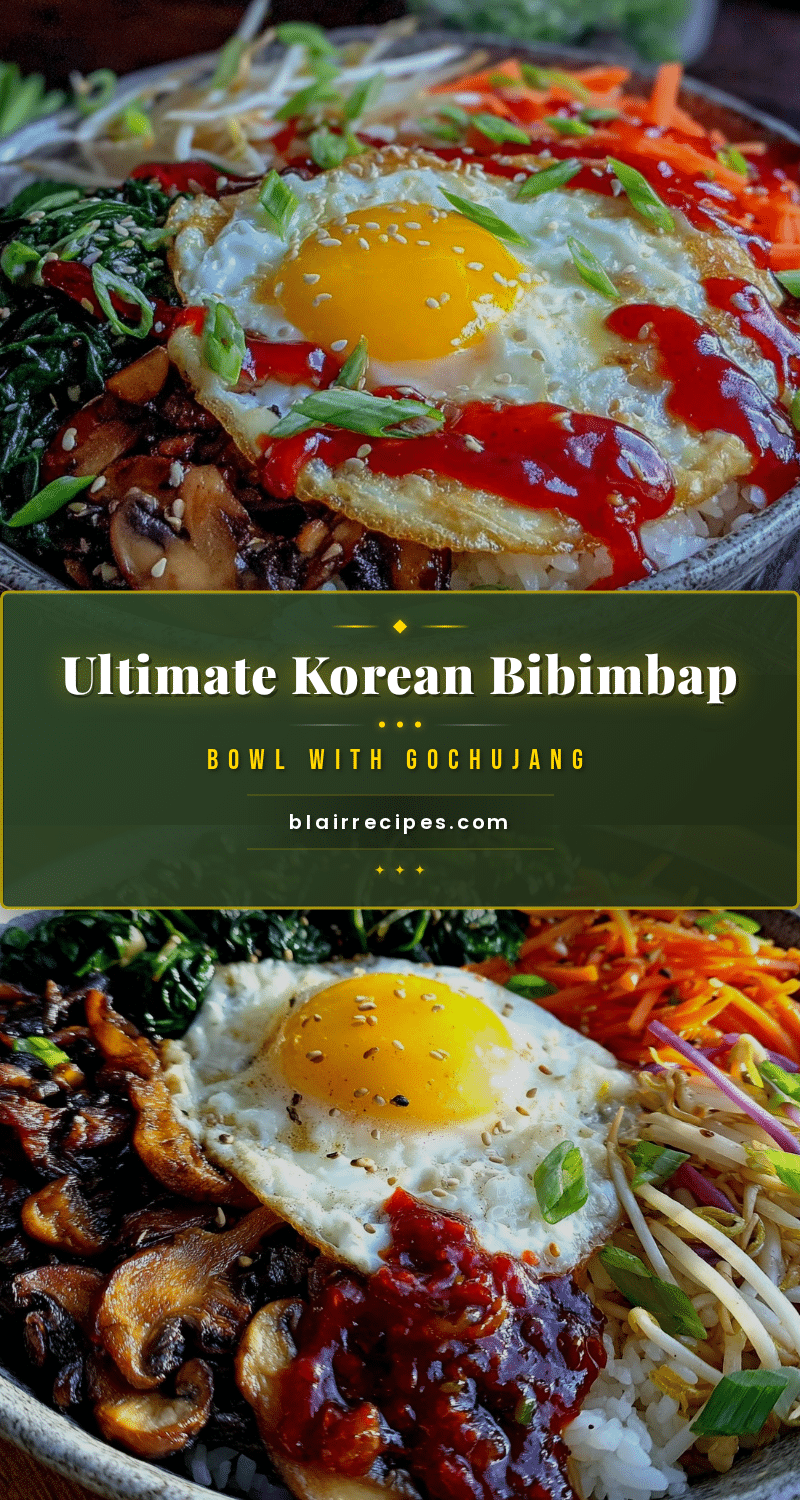
Flavorful Korean Bibimbap Bowl Recipe with Gochujang and Fried Egg

A vibrant and comforting Korean bibimbap bowl featuring warm rice, a variety of fresh and sautéed vegetables, savory beef, a fried egg, and a balanced gochujang sauce. Perfect for a quick, flavorful meal that satisfies every craving.
- Prep Time: 15 minutes
- Cook Time: 30 minutes
- Total Time: 45 minutes
- Yield: 2 servings 1x
- Category: Main Course
- Cuisine: Korean
Ingredients
- 1 ½ cups cooked short-grain white rice (or brown rice for a nuttier flavor)
- 1 teaspoon sesame oil
- 6 oz ground beef or thinly sliced beef
- 1 clove garlic, minced
- 1 teaspoon soy sauce
- ½ cup julienned carrots
- ½ cup spinach, blanched and squeezed dry
- ½ cup bean sprouts, lightly blanched
- ½ cup shiitake mushrooms, sliced and sautéed
- 1 small cucumber, thinly sliced
- 2 tablespoons gochujang (Korean red chili paste)
- 1 teaspoon rice vinegar
- 1 teaspoon honey or sugar
- 1 teaspoon toasted sesame seeds
- 2 large eggs
- Salt and pepper to taste
Instructions
- Rinse 1 ½ cups short-grain rice under cold water until the water runs clear. Cook rice in a rice cooker or on the stove with 2 cups (480 ml) water. Let rice rest covered for 10 minutes after cooking, then fluff with a fork. Drizzle with 1 teaspoon sesame oil and set aside.
- Blanch spinach and bean sprouts in boiling water for 1-2 minutes each. Drain and squeeze out excess moisture. Sauté shiitake mushrooms in a lightly oiled pan over medium heat until soft, about 5 minutes. Julienne carrots and thinly slice cucumber. Keep each vegetable separate to maintain texture.
- Heat a skillet over medium-high heat. Add ground beef with minced garlic and 1 teaspoon soy sauce. Cook, breaking up meat, until browned and cooked through, about 5-7 minutes. Drain excess fat if needed. Taste and adjust seasoning.
- In a small bowl, whisk together 2 tablespoons gochujang, 1 teaspoon rice vinegar, and 1 teaspoon honey or sugar until smooth. Adjust sweetness or acidity to your liking.
- Heat a non-stick pan over medium heat with a little oil. Crack in eggs, season with salt and pepper, and cook until whites are set but yolks remain runny, about 2-3 minutes. For firmer yolks, cover the pan and cook 1-2 minutes longer.
- In individual bowls, spread warm rice as the base. Arrange vegetables and beef in neat sections on top. Place the fried egg in the center. Drizzle with the gochujang sauce and sprinkle with toasted sesame seeds. Mix everything together just before eating.
Notes
Keep ingredients separate until serving to preserve textures and flavors. Warm vegetables slightly before assembly for a cozier bowl. Adjust gochujang sauce sweetness and acidity to taste. Use short-grain or sushi rice for best texture. For vegetarian or vegan options, substitute beef with tofu or tempeh and omit or replace the egg.
Nutrition
- Serving Size: 1 bowl
- Calories: 575
- Sugar: 8
- Sodium: 700
- Fat: 17
- Saturated Fat: 5
- Carbohydrates: 62
- Fiber: 5
- Protein: 28
Keywords: bibimbap, Korean recipe, gochujang, fried egg, Korean bowl, easy Korean meal, ground beef bibimbap, healthy Korean food