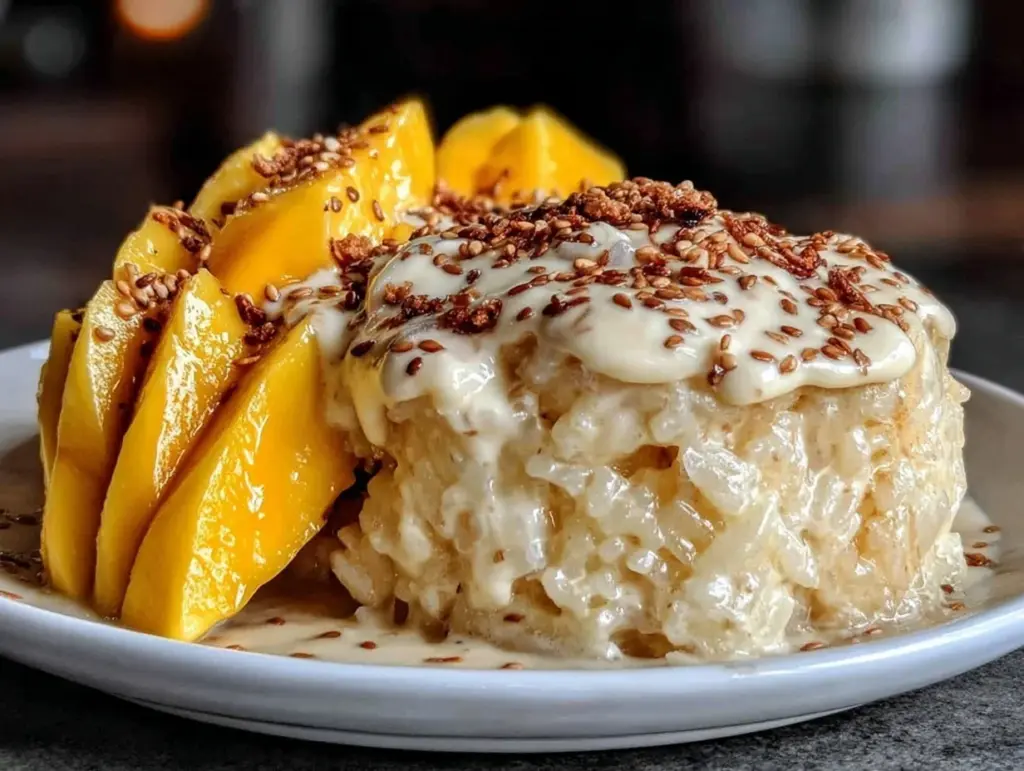
The kitchen was nearly silent except for the faint hum of the rice cooker and the soft dripping of coconut cream slowly thickening on the stove. I had just returned from the market with a bag of golden mangoes—fragrant, ripe, and impossibly inviting—and the urge to make something simple but special was overwhelming. Honestly, I wasn’t even sure if I could pull off authentic Thai mango sticky rice at home. I mean, sticky rice has its quirks, and coconut cream? That’s a whole different texture dance.
But as I spooned the creamy, warm coconut sauce over the perfectly sticky rice, the scent of sweet mangoes mingled with the rich coconut filled the room, and there it was—a quiet moment where everything just clicked. No fuss, no frills, just a humble dessert that felt like a hug from the inside out. It became clear why this creamy Thai mango sticky rice with coconut cream isn’t just a treat—it’s a pause, a small celebration of simple ingredients doing their thing.
Since that evening, I’ve found myself making this recipe more often than I expected. It’s not flashy, but it’s got that comforting soul that gets people asking for seconds, and believe me, that’s no small feat with my picky crew. This dish reminds me that sometimes, the best flavors come from the most straightforward, lovingly made recipes.
Why You’ll Love This Recipe
Having tested this creamy Thai mango sticky rice recipe multiple times, I can say it reliably delivers that silky, luscious texture and balanced sweetness that’s hard to beat. Here’s why it stands apart and will probably become a staple in your kitchen too:
- Quick & Easy: Ready in under 45 minutes, making it perfect for a spontaneous dessert or a cozy finish to dinner.
- Simple Ingredients: Uses pantry essentials like glutinous rice and canned coconut milk. No exotic shopping required.
- Perfect for Warm Weather: Bright, fresh mangoes combined with creamy coconut make it an ideal tropical treat during spring and summer.
- Crowd-Pleaser: Loved by kids and adults alike, it’s a gentle introduction to Thai flavors if you’re not used to them.
- Unbelievably Delicious: That sticky rice texture combined with the sweet-tangy mango and rich coconut cream is honestly next-level comfort food.
- Unique Touch: The coconut cream topping is gently thickened with a touch of salt and sugar, creating a velvety sauce that’s the perfect counterpoint to the fresh mango.
This isn’t just another mango sticky rice recipe—it’s the kind that makes you pause after one bite, eyes closed, savoring the creamy, tropical bliss. Whether you’re impressing friends or craving a nostalgic treat, it’s got that quiet magic that stays with you.
What Ingredients You Will Need
This recipe relies on straightforward, wholesome ingredients to create bold, authentic flavors with a satisfying texture. Most are pantry staples or easy to find in any grocery store that carries Asian products.
- For the Sticky Rice:
- 1 cup glutinous (sweet) rice, rinsed (look for Thai sticky rice, sometimes called sweet rice)
- 1 ¼ cups water (for soaking and steaming)
- For the Coconut Cream Sauce:
- 1 cup canned coconut milk (full-fat for best richness; I usually go with Chaokoh brand)
- ¼ cup granulated sugar (adjust to your sweetness preference)
- ¼ teaspoon salt (balances the sweetness and enhances coconut flavor)
- For Serving:
- 2 ripe mangoes, peeled and sliced ( Ataulfo or Keitt varieties work beautifully — sweeter and less fibrous)
- Optional: Toasted sesame seeds or mung beans for garnish (adds a lovely crunch)
Ingredient tips: If you want to try a gluten-free twist, this recipe is naturally gluten-free as long as you use certified gluten-free sticky rice. For a vegan-friendly sweetener, swap sugar with maple syrup or coconut sugar (though adjust the amount to taste). When in season, fresh mangoes really make the difference—avoid underripe ones, or the texture won’t be as luscious.
Equipment Needed
To make creamy Thai mango sticky rice with coconut cream, you don’t need a fancy setup. Here’s what I use and recommend:
- Steamer Basket or Bamboo Steamer: Essential for steaming sticky rice properly. A bamboo steamer is traditional, but a metal mesh steamer insert works just as well.
- Large Pot or Wok: To hold the steamer basket and water for steaming.
- Saucepan: For gently heating the coconut cream sauce.
- Mixing Bowls: For soaking and mixing rice and sauce.
- Measuring Cups and Spoons: Accuracy is key for the right texture.
If you don’t have a steamer basket, you can cook sticky rice in a rice cooker or Instant Pot with a special setting, but steaming yields the most authentic texture. I’ve tried both and prefer steaming—it gives you that slightly chewy, fluffy bite that rice cookers sometimes miss.
For budget-friendly options, a metal colander placed over a pot with a lid can act as a makeshift steamer. Just be sure the colander doesn’t touch the water.
Preparation Method
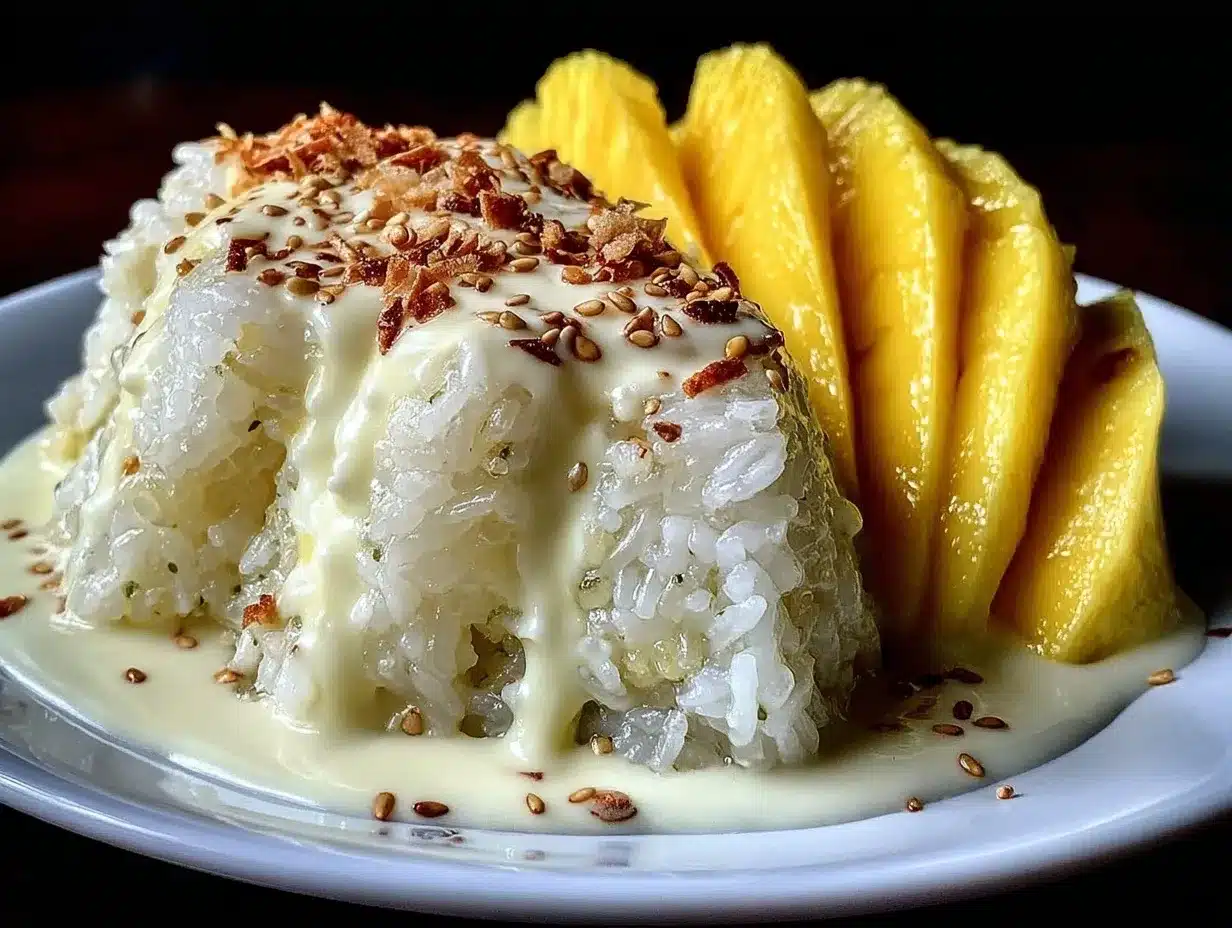
- Rinse and Soak the Sticky Rice: Rinse 1 cup of glutinous rice under cold water until the water runs clear—this removes excess starch to prevent clumping. Then, soak the rice in 1 ¼ cups of water for at least 4 hours or overnight. This step is key for achieving that perfect sticky texture.
- Steam the Rice: Drain the soaked rice thoroughly. Place it in your steamer basket lined with cheesecloth or a clean kitchen towel to prevent grains from falling through. Steam over boiling water for about 20-25 minutes. Halfway through, gently fluff the rice with a fork or spoon to ensure even cooking. The rice should be tender but still sticky, not mushy.
- Prepare the Coconut Cream Sauce: While the rice steams, combine 1 cup full-fat coconut milk, ¼ cup sugar, and ¼ teaspoon salt in a saucepan. Warm over low heat, stirring occasionally until the sugar dissolves completely. Do not boil, just gently heat to blend flavors. Set aside a few tablespoons of this sauce for drizzling later.
- Mix Coconut Sauce with Sticky Rice: Once the rice is cooked, transfer it to a large bowl. Pour the warm coconut sauce over the rice and stir gently to coat every grain. Cover and let it sit for about 15-20 minutes to absorb the coconut flavors fully. The rice will become even creamier during this rest.
- Prepare the Mango: Peel and slice 2 ripe mangoes into thin, elegant slices. If you want a neat presentation, try to keep the slices uniform—presentation counts, right?
- Serve: Spoon the sticky rice onto a plate or bowl, arrange mango slices alongside, and drizzle the reserved coconut cream sauce on top. Garnish with toasted sesame seeds or crispy mung beans if you like a little crunch.
Quick tip: Sticky rice can cool down and harden quickly, so serve it while warm for the best creamy texture. If it gets cold, a short steam or microwave for 30 seconds helps bring it back.
Cooking Tips & Techniques
Sticky rice can be a bit temperamental, but after a few tries, you’ll get a feel for it. Here are some insider tips I learned the hard way:
- Don’t Skip Soaking: It’s tempting when you’re hungry, but soaking is critical. It hydrates the grains evenly so they steam perfectly and stick together without turning gummy.
- Use the Right Rice: Glutinous or sticky rice is very different from jasmine or basmati. Using the wrong rice will give you disappointing texture.
- Gentle Steam Heat: Keep the water simmering, not boiling aggressively, so the steam cooks the rice slowly and evenly.
- Rest Time is Crucial: Allowing the rice to sit with the coconut sauce lets the flavors meld. This step really makes the rice creamy and rich.
- Adjust Sweetness: Depending on your mango’s ripeness, you might want to tweak the sugar in the coconut sauce. Taste as you go!
- Multitasking: While rice is steaming, use the time to prep mangoes or get your sauce ready. It keeps the process smooth and efficient.
Once, I overcooked the rice, and it turned too mushy—lesson learned: steaming time matters. Also, I prefer drizzling the reserved coconut cream sauce right before serving because it keeps the dish from becoming soggy.
Variations & Adaptations
This creamy Thai mango sticky rice recipe is flexible and invites fun twists:
- Dietary Adjustments: For a vegan version, use organic coconut sugar or maple syrup instead of refined sugar. The rice itself is naturally gluten-free.
- Seasonal Twists: When mangoes are out of season, try swapping with ripe peaches or nectarines for a different but equally delightful fruity note.
- Flavor Enhancements: Add a splash of pandan extract to the coconut milk for a fragrant, green-hued sauce. Or sprinkle toasted coconut flakes for texture.
- Cooking Method Swap: If you don’t have a steamer, cooking the sticky rice in an Instant Pot on the rice setting works well—just be sure to rinse and soak the rice first.
- Personal Variation: I once added a pinch of ground cardamom to the coconut sauce—unexpected but delicious, lending a subtle warmth that paired beautifully with the mango.
Serving & Storage Suggestions
This dessert is best enjoyed warm or at room temperature to appreciate the creamy texture fully. Serve the sticky rice nestled beside fresh mango slices on a small dessert plate for an elegant look.
Pair it with a light jasmine tea or a chilled coconut water to complement the tropical flavors.
Leftovers? Store any uneaten sticky rice and mango separately in airtight containers in the fridge for up to 2 days. Reheat the rice gently by steaming or microwaving with a damp paper towel to retain moisture.
Keep the coconut cream sauce refrigerated and warm slightly before serving again. The flavors deepen and mellow overnight, so sometimes it tastes even better the next day.
Nutritional Information & Benefits
One serving of creamy Thai mango sticky rice provides approximately:
| Calories | 320 kcal |
|---|---|
| Carbohydrates | 55 g |
| Fat | 8 g (mostly from coconut) |
| Protein | 3 g |
| Fiber | 2 g |
The recipe offers a good source of energy from the sticky rice and natural sweetness of mango. Coconut milk provides healthy medium-chain triglycerides (MCTs), which may aid in digestion and provide quick energy.
It’s naturally gluten-free and dairy-free, making it suitable for many dietary needs. Just watch the sugar content if you’re managing blood sugar levels.
From a wellness perspective, this recipe satisfies sweet cravings with whole-food ingredients rather than processed sugars or artificial flavors, which feels better both physically and mentally.
Conclusion
This creamy Thai mango sticky rice with coconut cream recipe is a gem that’s both approachable and memorable. It’s proof that simple ingredients and a little patience can create a dessert that’s far from ordinary. Whether you’re new to Thai cuisine or a longtime fan, this dish invites you to savor a moment of tropical comfort.
Feel free to tweak the sweetness or switch up the fruit to suit your mood and pantry. Personally, I love how this recipe brings a little sunshine to even the dullest days—and I hope it does the same for you.
If you try it out, I’d love to hear your thoughts or any creative spins you put on it! Sharing your experience helps keep the recipe alive and evolving.
Here’s to sweet, creamy moments that linger a little longer.
Frequently Asked Questions
What type of rice is best for Thai mango sticky rice?
Glutinous or sweet rice is essential for the right sticky texture. Regular jasmine or long-grain rice won’t work the same.
Can I use frozen mango instead of fresh?
Fresh ripe mango is best for flavor and texture, but if you use frozen, thaw completely and drain excess water to avoid sogginess.
How do I store leftovers?
Keep sticky rice and mango separate in airtight containers in the fridge. Reheat the rice gently before serving again.
Is this recipe vegan and gluten-free?
Yes! It’s naturally gluten-free, and using plant-based sugar keeps it vegan.
Can I prepare the coconut cream sauce ahead of time?
Absolutely, you can make it a day ahead and gently warm it before serving for convenience.
For those who love pairing fresh vegetables with sweet dishes, this recipe complements vibrant sautéed green beans with lemon zest and pine nuts beautifully—check out the recipe here. And if you’re in the mood for something cozy to balance the tropical sweetness, the creamy butternut squash soup might just hit the spot.
Pin This Recipe!
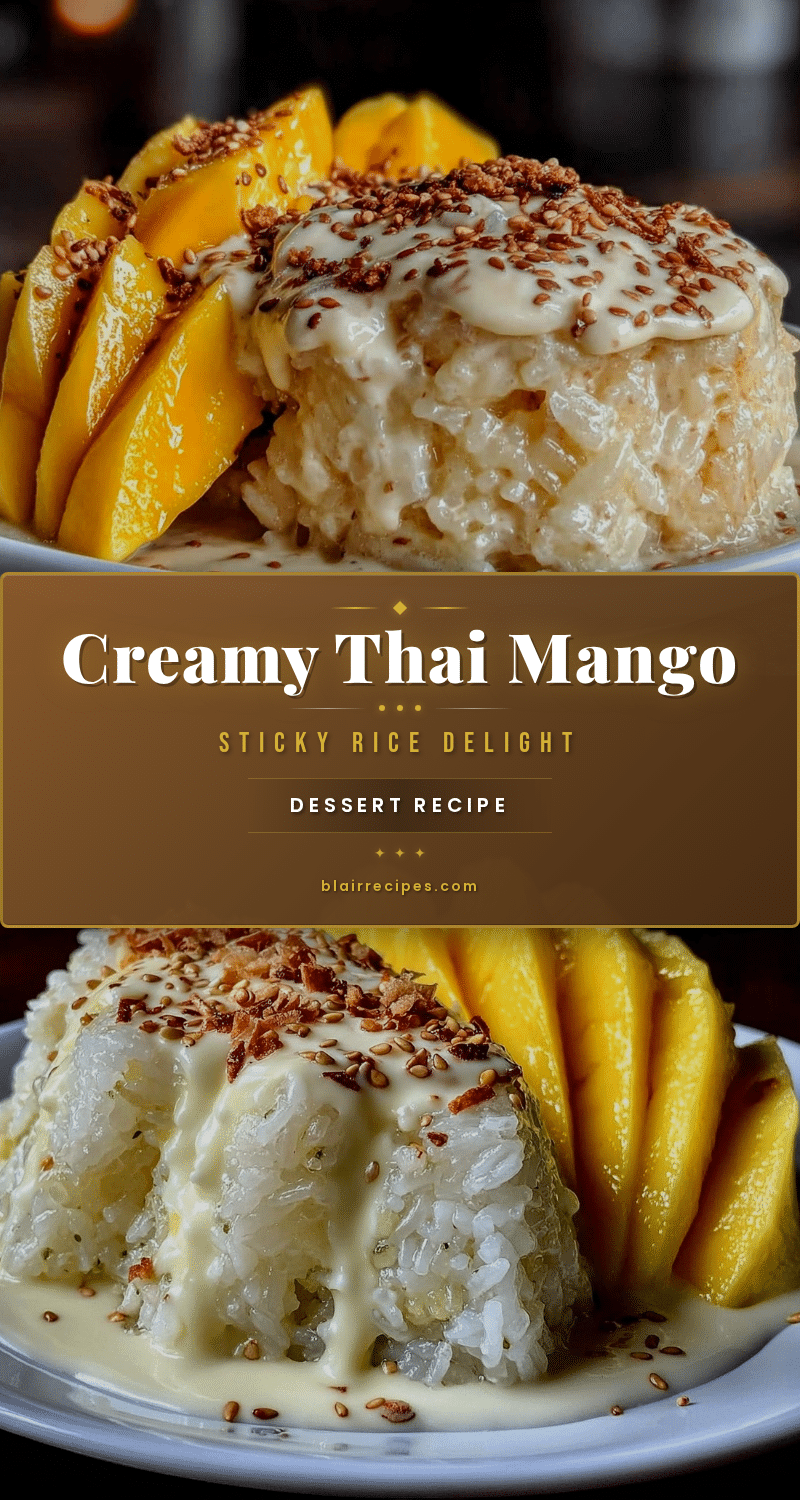
Creamy Thai Mango Sticky Rice Recipe with Easy Coconut Cream Topping

A simple and comforting Thai dessert featuring silky sticky rice paired with ripe mangoes and a luscious coconut cream sauce. Ready in under 45 minutes, this recipe delivers authentic flavors with easy-to-find ingredients.
- Prep Time: 10 minutes
- Cook Time: 25 minutes
- Total Time: 45 minutes
- Yield: 4 servings 1x
- Category: Dessert
- Cuisine: Thai
Ingredients
- 1 cup glutinous (sweet) rice, rinsed
- 1 1/4 cups water (for soaking and steaming)
- 1 cup canned coconut milk (full-fat)
- 1/4 cup granulated sugar
- 1/4 teaspoon salt
- 2 ripe mangoes, peeled and sliced (Ataulfo or Keitt varieties recommended)
- Optional: toasted sesame seeds or mung beans for garnish
Instructions
- Rinse 1 cup of glutinous rice under cold water until the water runs clear. Soak the rice in 1 1/4 cups of water for at least 4 hours or overnight.
- Drain the soaked rice thoroughly. Place it in a steamer basket lined with cheesecloth or a clean kitchen towel. Steam over boiling water for 20-25 minutes, fluffing gently halfway through.
- While the rice steams, combine 1 cup coconut milk, 1/4 cup sugar, and 1/4 teaspoon salt in a saucepan. Warm over low heat until sugar dissolves, do not boil. Reserve a few tablespoons for drizzling.
- Transfer the cooked rice to a large bowl. Pour the warm coconut sauce over the rice and stir gently to coat. Cover and let sit for 15-20 minutes to absorb flavors.
- Peel and slice 2 ripe mangoes into thin slices.
- Serve the sticky rice with mango slices on the side. Drizzle reserved coconut cream sauce on top and garnish with toasted sesame seeds or mung beans if desired.
Notes
Soaking the sticky rice for at least 4 hours or overnight is critical for the perfect texture. Serve the sticky rice warm for best creaminess; reheat gently if needed. Adjust sugar in the coconut sauce based on mango sweetness. Use certified gluten-free sticky rice for gluten-free assurance. Coconut cream sauce can be prepared a day ahead and warmed before serving.
Nutrition
- Serving Size: 1 serving (approxima
- Calories: 320
- Fat: 8
- Carbohydrates: 55
- Fiber: 2
- Protein: 3
Keywords: Thai mango sticky rice, coconut cream, Thai dessert, sticky rice recipe, mango dessert, gluten-free dessert, vegan dessert