
Introduction
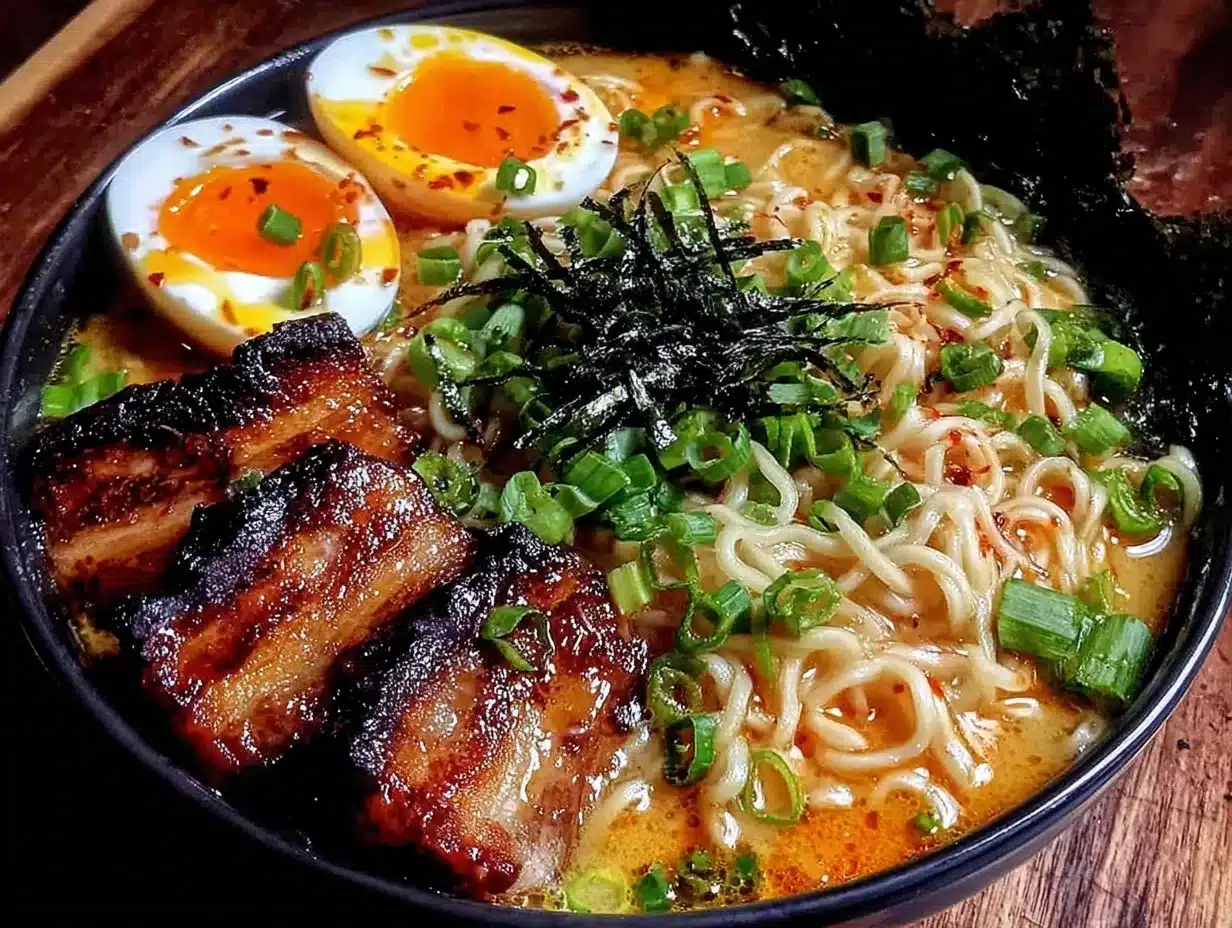
“You seriously need to try this,” my coworker said, sliding a bowl of steaming ramen across the table. I was skeptical—tonkotsu ramen always felt like something you ordered at a specialty spot, not something I could whip up at home without a full kitchen takeover. But that first bite changed everything. The broth was so rich, creamy, and silky, with that signature pork bone depth that you don’t expect from a homemade version. The chashu pork was melt-in-your-mouth tender, and the soft-boiled egg had that perfect jammy center that makes you want to savor every spoonful.
Honestly, that recipe has become a bit of an obsession for me. I found myself making this creamy tonkotsu ramen multiple times a week—never quite able to get enough of that broth or those pork slices. Late nights, after work, or when the day just felt too long, a bowl of this was exactly what I needed. It’s not just a meal; it’s a comforting ritual that turns any chaotic evening into something quietly satisfying.
What’s wild is how approachable this recipe turned out to be. No crazy ingredients hiding in the pantry, just a few staples and some patience. If you’ve ever wondered if you could pull off restaurant-quality ramen at home, this recipe will quietly convince you otherwise. It’s stuck with me because it’s not just about the food—it’s the little moments of calm and warmth it brings to the table.
Why You’ll Love This Recipe
After testing out a handful of tonkotsu ramen recipes (and tweaking them after some trial and error), this version stands out because it balances authentic richness with home-friendly prep. Here’s why you’ll find yourself coming back to it:
- Quick & Easy: The broth simmers for a few hours, but hands-on prep is simple, making it doable even on busy days when you want comfort food without fuss.
- Simple Ingredients: You don’t need a specialty Asian market; ingredients like pork belly, garlic, and miso are easy to find or substitute.
- Perfect for Cozy Nights: Whether it’s a chilly evening or a weekend treat, this bowl warms you up inside and out.
- Crowd-Pleaser: Friends and family always ask for seconds, especially the tender chashu pork which feels like a special indulgence.
- Unbelievably Delicious: The broth’s creamy texture comes from hours of simmering pork bones, but with my method, you’ll get that luscious mouthfeel without all-day cooking.
What sets this creamy tonkotsu ramen apart is the way the chashu pork is slow-cooked until it’s ridiculously tender and flavorful, then paired with a perfectly soft-boiled egg that adds a luscious, velvety finish. Also, I blend in a bit of umami miso paste to boost depth without overpowering, which is a trick I picked up from a chef friend. Honestly, it’s the kind of recipe that makes you close your eyes after the first spoonful and just savor the moment.
What Ingredients You Will Need
This recipe uses simple, wholesome ingredients to deliver bold flavor and satisfying texture without the fuss. Most are pantry staples, making it easy to gather everything for your creamy tonkotsu ramen in one trip.
- Pork Bones: About 3 lbs (1.4 kg) pork leg bones or neck bones for broth — rich in collagen for that silky texture
- Pork Belly: 1 lb (450 g), skin removed for chashu pork slices (fatty and tender)
- Soft-Boiled Eggs: 4 large eggs, room temperature (for that perfect jammy yolk)
- Garlic: 6 cloves, smashed (adds aromatic depth)
- Ginger: 2-inch piece, sliced thin (fresh zing)
- Green Onions: 4 stalks, chopped (for garnish and broth flavor)
- Miso Paste: 2 tablespoons, preferably white or yellow miso (trusted brand: Hikari Miso works great)
- Soy Sauce: 1/4 cup (60 ml), low sodium preferred
- Sake: 1/4 cup (60 ml) for the chashu marinade (adds sweetness and tenderizes)
- Mirin: 1/4 cup (60 ml), sweet rice wine for balancing flavors
- Sesame Oil: 1 tablespoon, toasted (optional but adds a nutty note)
- Ramen Noodles: 4 servings fresh or dried (recommend fresh for best texture)
- Salt: to taste, for seasoning broth and water
- Water: About 12 cups (3 liters) for broth base
If you don’t have pork bones handy, chicken bones can be a substitute but the broth won’t be quite as creamy. For a gluten-free option, swap soy sauce with tamari. In the summer, fresh green onions from the garden add a lovely brightness when sprinkled on top. When I can, I like to pick up fresh ramen noodles from my local Asian market, but dried ones work just fine if you soak them briefly before cooking.
Equipment Needed
- Large Stockpot or Dutch Oven: At least 6-quart capacity for simmering the broth comfortably. I’ve found enameled pots distribute heat evenly and make cleanup easier.
- Fine Mesh Strainer: To strain out bones and aromatics from the broth, ensuring a clear, silky soup.
- Large Bowl: For marinating chashu pork and soaking eggs.
- Slotted Spoon or Tongs: To handle bones and pork belly safely.
- Medium Saucepan: For soft-boiling eggs precisely.
- Sharp Knife and Cutting Board: For slicing pork and prepping aromatics.
- Kitchen Thermometer (Optional): Helps monitor broth temperature during simmering.
If you don’t have a fine mesh strainer, a colander lined with cheesecloth works well too. For those on a budget, a heavy-bottomed stockpot will do the job — just keep an eye on heat to avoid scorching. My favorite tool for slicing chashu pork thin is a very sharp Japanese-style knife, but any chef’s knife will work with a bit more care.
Preparation Method
- Prepare the Broth: Rinse pork bones under cold water to remove any impurities. Place them in the large stockpot and cover with cold water (about 12 cups/3 liters). Bring to a boil over high heat and let it boil for 10 minutes. This initial boil will help release bone marrow and impurities.
- Clean Bones: Drain the pot and rinse the bones thoroughly to remove scum. Clean the pot as well to ensure a clear broth.
- Simmer the Broth: Return bones to the pot with fresh cold water (12 cups/3 liters). Add smashed garlic, sliced ginger, and half of the chopped green onions. Bring to a simmer over medium heat. Reduce heat to low and simmer gently, uncovered, for 4–5 hours. Skim any foam or fat occasionally to keep broth clear. This slow simmer extracts collagen and flavor that creates the creamy texture.
- Make Chashu Pork: While the broth simmers, combine soy sauce, sake, mirin, and 2 smashed garlic cloves in a bowl. Place pork belly in a small pot, add marinade and enough water to cover halfway. Simmer gently on low for 2 hours, turning occasionally. The pork should be tender but still sliceable.
- Soft-Boil the Eggs: Bring a saucepan of water to a boil. Carefully add eggs and boil for exactly 7 minutes for that soft, jammy center. Immediately transfer eggs to an ice bath to stop cooking. Once cool, peel gently and set aside.
- Strain Broth: After simmering, strain broth through a fine mesh strainer into a clean pot. Discard bones and aromatics. Return broth to stove and keep warm.
- Season Broth: Stir in miso paste, soy sauce, and toasted sesame oil (if using). Taste and adjust salt as needed.
- Cook Ramen Noodles: In a separate pot, cook noodles according to package instructions until just tender (usually 2–3 minutes for fresh noodles). Drain and divide among serving bowls.
- Assemble Bowls: Ladle hot broth over noodles. Slice chashu pork thinly and arrange on top. Halve soft-boiled eggs and place in bowls. Garnish with remaining green onions and any extra toppings like nori or bamboo shoots if you like.
Keep a close eye on the broth simmer — too vigorous a boil will cloud it. I usually set a timer to stir and skim every 30 minutes. When slicing chashu, let it rest a bit after cooking so juices redistribute—trust me, it makes a difference. The soft-boiled eggs are a game-changer; timing them perfectly took me a few tries but now it’s second nature.
Cooking Tips & Techniques
Getting that creamy tonkotsu broth right can feel intimidating at first, but a few tips make it manageable:
- Patience is key: The long simmer extracts gelatin from the pork bones, giving that signature creamy mouthfeel without any cream added.
- Skim often: Removing foam and impurities during simmering keeps the broth clear and clean-tasting.
- Chashu care: Simmer pork belly gently — too high heat can toughen it. Slow and low is the way to go.
- Egg perfection: Use room temperature eggs and an ice bath immediately after boiling to stop cooking and aid peeling.
- Don’t rush seasoning: Add miso and soy sauce gradually and adjust to taste. Miso can overpower if added too early or in too big a quantity.
- Multitask: While the broth simmers, prep chashu and eggs to streamline cooking day.
- Consistency check: Broth should coat the back of a spoon thickly — if it feels watery, simmer a bit longer.
After a few batches, you’ll notice subtle improvements just by tweaking simmer times and seasoning amounts. I once overcooked the pork belly and ended up with pork confit-style bites that actually tasted great—don’t be afraid to experiment a little! This ramen is forgiving if you keep an eye on textures.
Variations & Adaptations
This creamy tonkotsu ramen recipe is a great base for all sorts of tweaks to suit your taste and dietary needs:
- Vegetarian Twist: Swap pork broth with a rich mushroom and kombu dashi broth, and use tofu or seitan slices instead of chashu.
- Spicy Kick: Add a drizzle of chili oil or a spoonful of spicy miso paste to the broth for a warming heat.
- Low-Carb Version: Replace ramen noodles with spiralized zucchini or shirataki noodles for a lighter bowl.
- Different Proteins: Try braised chicken thighs or duck breast in place of pork belly for a new flavor profile.
- Seasonal Veggies: Toss in baby spinach, corn kernels, or bamboo shoots as toppings to add freshness and texture—perfect alongside recipes like sautéed green beans with lemon zest.
One personal variation I love is stirring in a spoonful of creamy peanut butter at the end for a subtle nutty undertone—it’s unexpected but oddly comforting! If you’re curious about Asian-inspired sides, pairing this ramen with Asian sesame green beans really rounds out the meal beautifully.
Serving & Storage Suggestions
This creamy tonkotsu ramen is best served immediately while the broth is hot and the noodles are perfectly tender. Arrange your bowl with chashu pork slices neatly folded, eggs halved with yolk gleaming, and a sprinkle of green onions for freshness.
Pair it with light sides like pickled vegetables or a crisp salad to balance the richness. A chilled Japanese beer or green tea complements the flavors nicely.
Leftovers store well in the fridge for up to 3 days—keep broth and noodles separate to avoid sogginess. Reheat broth gently on the stove, and briefly dip noodles in hot water before serving. The flavors actually deepen overnight, so sometimes leftovers taste even better.
If freezing broth, pour into airtight containers and thaw in the fridge overnight before reheating. Avoid freezing noodles as they lose texture.
Nutritional Information & Benefits
A serving of this creamy tonkotsu ramen offers a balanced mix of protein, fat, and carbs. The collagen-rich pork bone broth supports joint and skin health, while the pork belly provides satisfying protein and essential fats.
Key ingredients like ginger and garlic add anti-inflammatory benefits, and green onions contribute vitamins and antioxidants. The soft-boiled egg delivers a boost of vitamins B12 and D, making this bowl comforting yet nourishing.
For those watching carbs, swapping noodles with veggie noodles cuts down on calories while keeping the soul of the dish intact. Just be mindful of soy sauce if you’re monitoring sodium intake.
Conclusion
This creamy tonkotsu ramen with tender chashu pork and a soft-boiled egg is one of those recipes that feels like a hug in a bowl. It’s approachable enough for home cooks but impressive enough to share with friends who’ll be asking for your secret. I love how it turns simple ingredients into something so rich and soulful, and how it offers a quiet moment of comfort no matter the day.
Feel free to tweak the toppings or broth seasoning to fit your taste—it’s your bowl after all. I’d love to hear how you make it your own or what unexpected twists you try. Cooking ramen at home changed how I think about weeknight dinners, and I hope it does the same for you.
Happy cooking, and may your next bowl be silky, savory, and just what you needed.
Frequently Asked Questions
How long does it take to make creamy tonkotsu ramen broth?
The broth simmers for about 4–5 hours to extract collagen and achieve that creamy texture, but hands-on prep time is minimal.
Can I use pre-made broth instead of making my own?
You can, but homemade broth has a deeper, richer flavor and creaminess that’s hard to match with store-bought options.
What’s the secret to perfect soft-boiled eggs?
Boil eggs for exactly 7 minutes, then plunge into an ice bath to stop cooking—this keeps the yolks soft and jammy.
Can I prepare chashu pork in advance?
Absolutely! Chashu tastes even better after resting overnight in its marinade and can be sliced and reheated before serving.
What are good toppings to add to tonkotsu ramen?
Besides chashu and egg, popular toppings include green onions, nori sheets, bamboo shoots, corn, and pickled ginger.
Pin This Recipe!
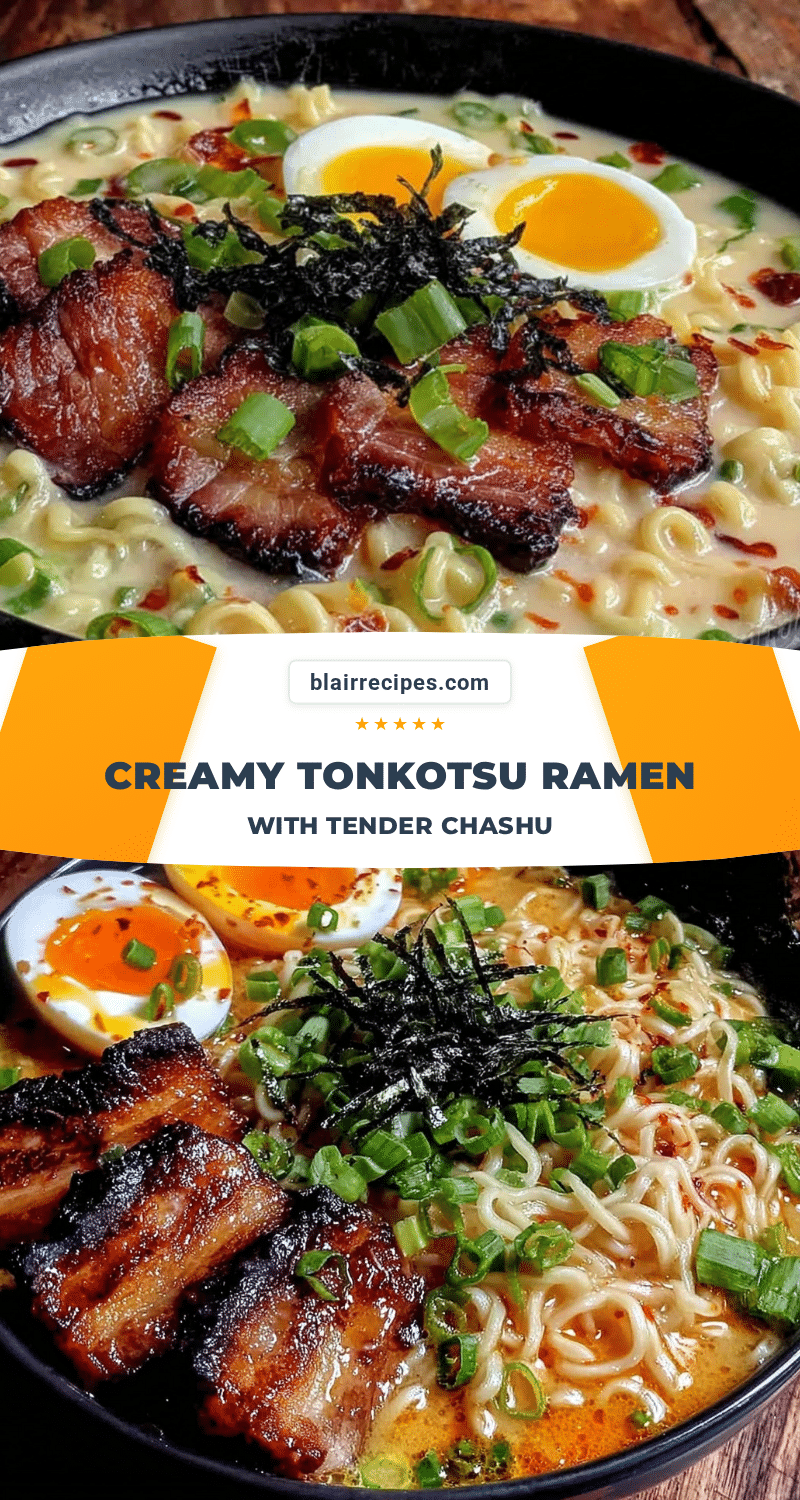
Creamy Tonkotsu Ramen Recipe with Tender Chashu Pork and Perfect Soft-Boiled Egg

A rich, creamy tonkotsu ramen featuring melt-in-your-mouth chashu pork and perfectly soft-boiled eggs with a jammy center. This recipe balances authentic flavor with approachable home cooking.
- Prep Time: 20 minutes
- Cook Time: 4 hours 30 minutes
- Total Time: 4 hours 50 minutes
- Yield: 4 servings 1x
- Category: Main Course
- Cuisine: Japanese
Ingredients
- 3 lbs pork leg bones or neck bones
- 1 lb pork belly, skin removed
- 4 large eggs, room temperature
- 6 cloves garlic, smashed
- 2-inch piece ginger, sliced thin
- 4 stalks green onions, chopped
- 2 tablespoons white or yellow miso paste
- 1/4 cup low sodium soy sauce
- 1/4 cup sake
- 1/4 cup mirin
- 1 tablespoon toasted sesame oil (optional)
- 4 servings fresh or dried ramen noodles
- Salt to taste
- About 12 cups water
Instructions
- Rinse pork bones under cold water to remove impurities. Place in a large stockpot and cover with about 12 cups of cold water. Bring to a boil over high heat and boil for 10 minutes.
- Drain and rinse bones and pot thoroughly to remove scum.
- Return bones to pot with fresh 12 cups cold water. Add smashed garlic, sliced ginger, and half the chopped green onions. Bring to a simmer over medium heat, then reduce to low and simmer uncovered for 4–5 hours, skimming foam and fat occasionally.
- For chashu pork, combine soy sauce, sake, mirin, and 2 smashed garlic cloves in a bowl. Place pork belly in a small pot, add marinade and enough water to cover halfway. Simmer gently on low for 2 hours, turning occasionally.
- Soft-boil eggs by boiling them for exactly 7 minutes, then transfer to an ice bath to stop cooking. Peel and set aside.
- Strain broth through a fine mesh strainer into a clean pot. Discard bones and aromatics. Keep broth warm.
- Stir miso paste, soy sauce, and toasted sesame oil (if using) into broth. Adjust salt to taste.
- Cook ramen noodles according to package instructions until just tender (2–3 minutes for fresh noodles). Drain and divide among bowls.
- Ladle hot broth over noodles. Slice chashu pork thinly and arrange on top. Halve soft-boiled eggs and place in bowls. Garnish with remaining green onions and optional toppings like nori or bamboo shoots.
Notes
[‘Patience is key for extracting collagen and achieving creamy broth.’, ‘Skim foam and impurities often to keep broth clear.’, ‘Simmer pork belly gently to keep it tender.’, ‘Use room temperature eggs and ice bath for perfect soft-boiled eggs.’, ‘Add miso and soy sauce gradually to avoid overpowering flavors.’, ‘Let chashu pork rest before slicing to redistribute juices.’, ‘Keep broth and noodles separate when storing leftovers to avoid sogginess.’, ‘Freeze broth only; avoid freezing noodles.’]
Nutrition
- Serving Size: 1 bowl (including br
- Calories: 650
- Sugar: 5
- Sodium: 900
- Fat: 38
- Saturated Fat: 12
- Carbohydrates: 45
- Fiber: 2
- Protein: 35
Keywords: tonkotsu ramen, chashu pork, soft-boiled egg, creamy ramen, homemade ramen, Japanese noodle soup