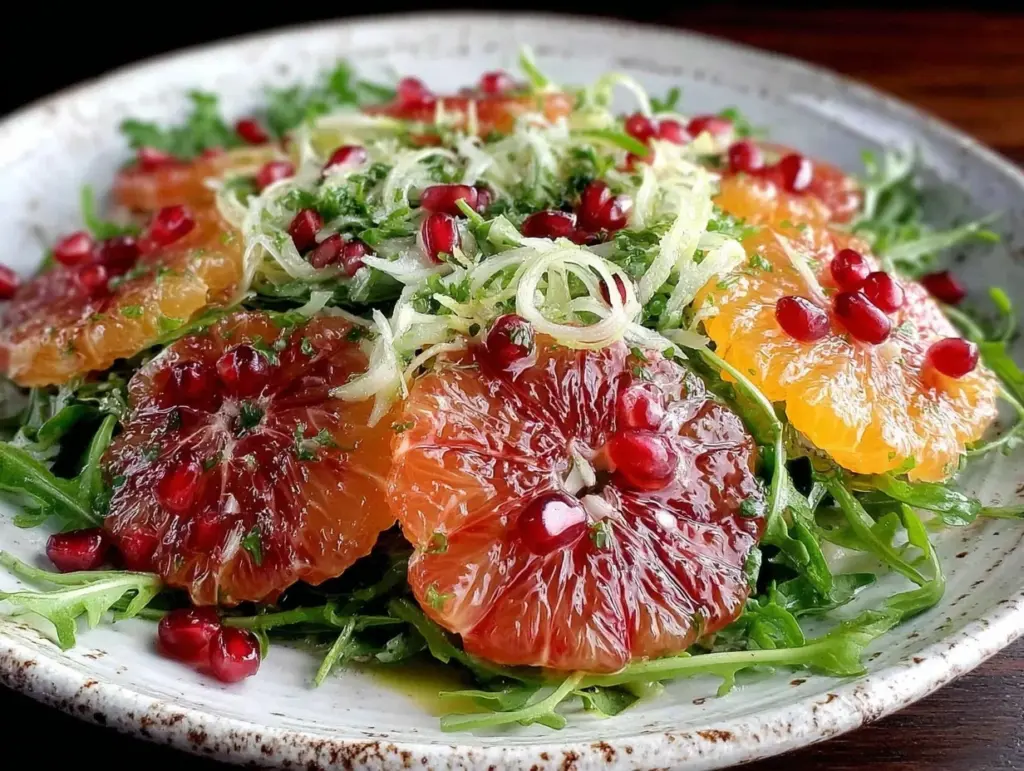
The bright, tangy scent of fresh citrus always lifts my spirits on a chilly winter morning. I remember the first time I tossed together this vibrant winter citrus salad with arugula and pomegranate—it was a happy accident during a holiday gathering when I wanted something light but bursting with flavor. You know that feeling when you bite into something crisp, juicy, and just a little peppery? That’s exactly what this salad delivers. It’s like winter sunshine on a plate.
This salad combines the peppery punch of arugula, the jewel-like crunch of pomegranate seeds, and a medley of citrus fruits that are at their peak in the colder months. Honestly, it’s been a staple in my kitchen for years now. Whether I’m whipping it up for a quick lunch or bringing it to a potluck, it never fails to impress. Plus, it’s a refreshing change from the usual heavy winter fare we all tend to lean on.
If you’re looking for a salad that’s easy to make, visually stunning, and packed with flavor, this vibrant winter citrus salad with arugula and pomegranate is it. It’s perfect for anyone craving a fresh, healthy bite during the colder months, especially if you want something that feels both festive and nourishing.
Why You’ll Love This Recipe
- Quick & Easy: Comes together in about 15 minutes, making it ideal for busy days or last-minute guests.
- Simple Ingredients: No need for specialty stores—most are pantry staples or easy to find in winter markets.
- Perfect for Winter Gatherings: Brightens up holiday tables, brunch spreads, or a cozy dinner at home.
- Crowd-Pleaser: The mix of sweet, tart, and peppery flavors wins over both kids and adults every time.
- Unbelievably Delicious: The combination of juicy citrus, crunchy pomegranate, and fresh arugula creates a lively, balanced bite.
What sets this salad apart? It’s the thoughtful layering of flavors and textures. For instance, I like to gently massage the arugula with a touch of olive oil to soften its edges without losing that peppery bite. Plus, the dressing—just a simple drizzle of honey and a splash of aged balsamic—brings everything together without stealing the spotlight. This isn’t your typical winter salad; it’s a fresh twist that feels both indulgent and light.
Every time I make this salad, I close my eyes after the first bite and savor the burst of juicy citrus balanced by the crisp arugula and the pop of pomegranate seeds. It’s comfort food with a refreshing personality, and honestly, it’s my go-to when I want something healthy yet exciting.
What Ingredients You Will Need
This recipe relies on fresh, wholesome ingredients to create a salad that’s both flavorful and visually stunning. Most of these are easy to find in your local grocery store or farmers market during winter.
- Arugula – About 4 cups (120g), washed and dried. I prefer organic or baby arugula for its tender texture and peppery flavor.
- Assorted Citrus Fruits – Around 3 cups total, peeled and segmented:
- 2 medium oranges (navel or blood oranges work well)
- 2 small grapefruits (pink or ruby red for sweetness)
- 1 medium tangelo or tangerine (for a sweeter touch)
- Pomegranate Seeds – ½ cup (about 80g), fresh seeds preferred for maximum crunch and sweetness.
- Red Onion – ¼ small, thinly sliced (optional, adds a mild bite and color contrast).
- Fresh Mint Leaves – A handful, roughly chopped or torn (adds a refreshing herbal note).
- Extra Virgin Olive Oil – 3 tablespoons for the dressing and tossing (I recommend using a fruity, cold-pressed brand).
- Honey – 1 tablespoon, to balance the tartness.
- Aged Balsamic Vinegar – 1 tablespoon, for a rich, slightly sweet tang.
- Sea Salt and Freshly Ground Black Pepper – To taste, seasoning brings everything together.
- Optional Toppings:
- Toasted almonds or walnuts (for extra crunch)
- Feta cheese crumbles (for a creamy, salty contrast)
When choosing citrus, look for firm, heavy fruits with bright skin—these usually mean juicier interiors. If you can find blood oranges, I highly recommend using them for their vibrant color and complex flavor. For pomegranate, fresh seeds add the best texture, but frozen works in a pinch (just thaw and drain well). I’ve tried this with store-bought arugula and home-grown, and honestly, both work—just make sure your greens are fresh and crisp.
Equipment Needed
- Sharp Chef’s Knife: Essential for peeling and segmenting citrus without losing juice or creating a mess. I keep mine razor-sharp for this reason.
- Citrus Peeler or Paring Knife: Helpful if you want to segment citrus cleanly (supplies a neater presentation).
- Mixing Bowl: A medium to large bowl for tossing ingredients without spillage.
- Cutting Board: Preferably a non-slip one to keep things steady.
- Salad Spinner: Optional, but highly recommended for drying arugula quickly to ensure the dressing sticks.
- Measuring Spoons and Cups: For precise dressing measurements (accuracy helps balance flavors).
- Serving Platter or Bowl: Something wide and shallow to showcase the vibrant colors.
If you don’t have a salad spinner, patting greens dry with kitchen towels works fine—just be gentle to avoid bruising. For budget-friendly options, any sharp knife and regular mixing bowl will do the trick. I’ve found that taking a little extra time to segment citrus neatly really pays off in presentation, so if you’re a visual person like me, don’t skip that step!
Detailed Preparation Method
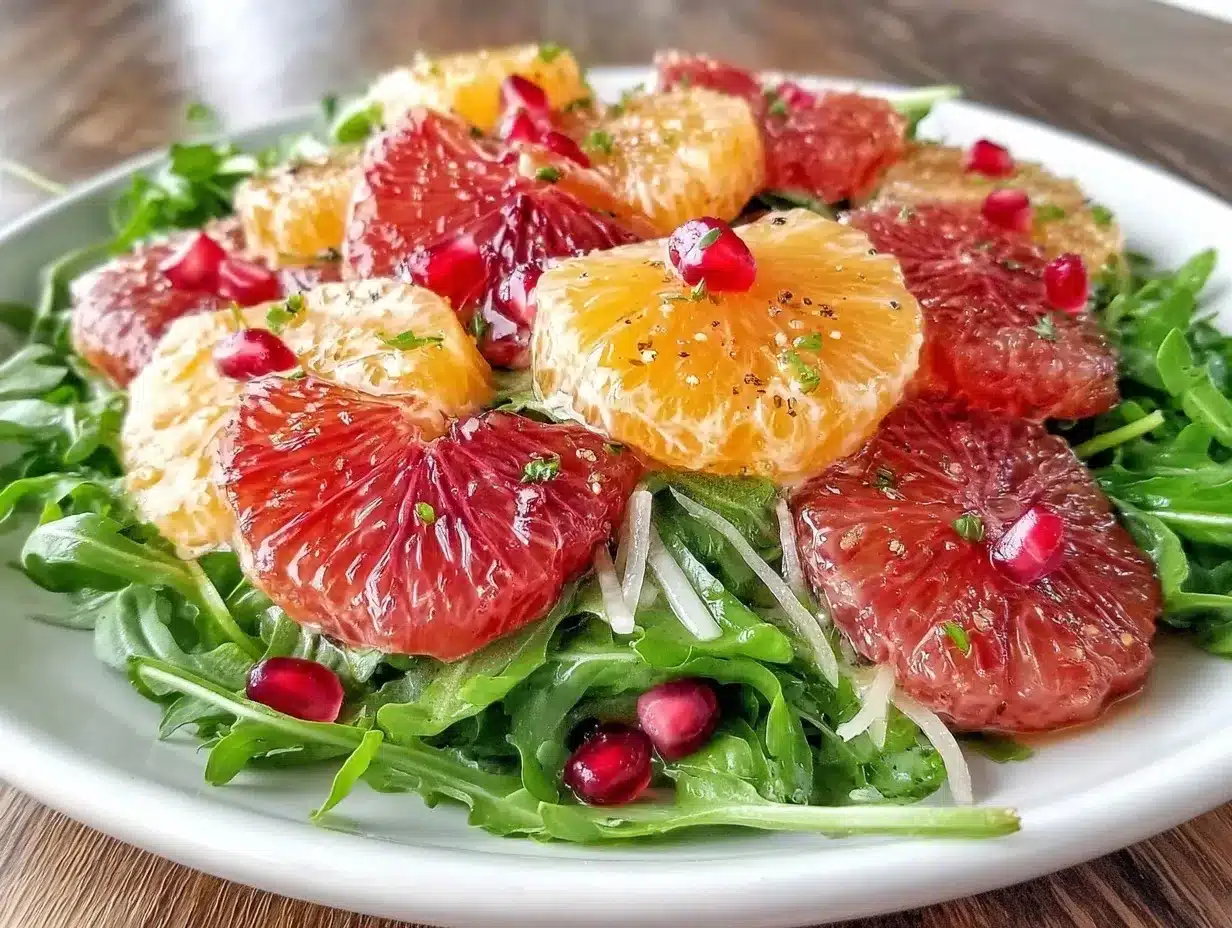
- Prepare the Citrus: Start by washing your citrus fruits thoroughly. Using a sharp knife, peel the skin and remove all the white pith—it can be bitter. Segment the fruits by cutting between the membranes to release clean, pith-free pieces. Aim for about 3 cups total (450g). This step should take about 10-12 minutes. If you’re new to this, take your time; it’s worth it for the neatness and flavor.
- Dry the Arugula: If you have a salad spinner, give your arugula a good spin to remove any excess water. Wet greens dilute the dressing and make the salad soggy. No spinner? Pat dry gently with a clean towel. This takes 2-3 minutes.
- Slice the Red Onion: Thinly slice ¼ of a small red onion. If you’re wary of raw onion’s sharpness, soak the slices in cold water for 5 minutes, then drain. This mellows the bite.
- Make the Dressing: In a small bowl, whisk together 3 tablespoons of extra virgin olive oil, 1 tablespoon of honey, and 1 tablespoon of aged balsamic vinegar. Season lightly with sea salt and freshly ground black pepper. Taste and adjust—dressing should be balanced, not overly sweet or acidic. This takes about 2 minutes.
- Assemble the Salad: In your mixing bowl, combine the arugula, citrus segments, pomegranate seeds, sliced onion, and fresh mint leaves. Drizzle the dressing over the top. Toss gently but thoroughly, making sure everything is coated without bruising the citrus. This step is quick but delicate—about 3-4 minutes.
- Optional Toppings: Add toasted nuts or feta cheese if desired. Toast nuts in a dry skillet over medium heat for 3-5 minutes, shaking frequently to avoid burning. Let cool before adding.
- Serve Immediately: Transfer the salad to a serving platter or bowl. If you’re prepping ahead, keep the dressing separate until serving to maintain freshness and crispness.
Pro tip: When segmenting citrus, use a paring knife with a pointed tip for precision. Also, keep a bowl underneath your cutting board to catch juice—don’t toss it! It makes a fantastic addition to your dressing or marinade later.
Cooking Tips & Techniques
One thing I’ve learned is that the key to this salad’s success is balancing moisture and texture. Too much dressing, and your arugula wilts fast. So, toss lightly and add more dressing in small amounts if needed.
Also, patience during citrus prep pays off. If you rush through peeling and segmenting, you risk including bitter pith or bursting the fruit, which makes the salad soggy. Take your time and enjoy that meditative chopping—it’s oddly satisfying.
When it comes to seasoning, less is often more. Start with a pinch of salt and a few cracks of pepper, then taste. The natural sweetness of the honey and the acidity of the balsamic usually create a well-rounded dressing without heavy-handed seasoning.
Lastly, if you want that perfect pop from the pomegranate seeds, add them right before serving. They tend to lose their snap if mixed too early with the dressing.
Variations & Adaptations
- Seasonal Twists: Swap out the citrus for blood oranges in late winter or add segments of kiwi for a tropical flair.
- Diet-Friendly: Make it vegan by replacing honey with maple syrup or agave nectar.
- Nut-Free Option: Skip nuts entirely or add crunchy roasted chickpeas for texture without allergens.
- Protein Boost: Toss in cooked quinoa, grilled chicken, or chickpeas to turn this into a light meal.
- Creamy Variation: Mix in dollops of ricotta or goat cheese for a luscious finish.
Personally, I’ve experimented with swapping arugula for baby spinach or watercress—both work but change the flavor profile slightly. I also like adding a pinch of chili flakes for a subtle heat kick on chilly days.
Serving & Storage Suggestions
This salad shines best when served fresh and slightly chilled. I usually plate it immediately after tossing to keep the arugula crisp and the citrus juicy. It looks gorgeous on a white or clear glass platter, letting those vibrant colors pop.
Pair it with grilled fish or roasted chicken for a balanced meal, or serve alongside warm crusty bread for a cozy lunch. It also pairs beautifully with a crisp white wine or sparkling water with a splash of fresh lemon.
If you need to store leftovers, keep the salad and dressing separate in airtight containers in the refrigerator. The salad will last for up to 1 day, but the arugula will begin to wilt. Dressing can be refrigerated for up to 3 days.
For reheating, this salad is best eaten cold or at room temperature. The flavors actually deepen after resting for a bit—just add a fresh squeeze of citrus juice before serving if it tastes flat.
Nutritional Information & Benefits
This vibrant winter citrus salad is packed with vitamins and antioxidants. The citrus fruits provide a hefty dose of vitamin C, which supports immune health during the colder months. Arugula is rich in vitamins A, K, and folate, while pomegranate seeds supply fiber and potent antioxidants.
At roughly 150 calories per serving (without optional toppings), it’s a light yet nutrient-dense option. It’s naturally gluten-free, dairy-free (unless you add cheese), and low-carb, making it suitable for many dietary preferences.
From my nutritionist friends to my health-conscious family, this salad always gets thumbs up for being both delicious and good-for-you. It’s one of those recipes that makes you feel as good as you taste it.
Conclusion
If you’re on the hunt for a salad that’s as pretty as it is delicious, this vibrant winter citrus salad with arugula and pomegranate is a winner. It’s fresh, easy to make, and perfect for brightening up those gray winter days. What I really love is how adaptable it is—you can tweak it to your taste or what’s in your pantry and still end up with something spectacular.
Give it a try and let me know how you customize it! Whether you keep it classic or add your own twist, this salad is sure to become a favorite. Don’t be shy—drop a comment below with your flavor combos or share it with your friends who need a little winter sunshine on their plates.
Happy salad-making, and here’s to fresh, vibrant meals all year round!
FAQs
What type of citrus works best in this salad?
Oranges, grapefruits, and tangerines are ideal because they offer a nice balance of sweetness and tartness. Blood oranges add beautiful color and depth of flavor.
Can I prepare this salad in advance?
You can prep the citrus segments and dressing ahead of time, but toss the salad just before serving to keep the arugula crisp and pomegranate seeds crunchy.
Is there a vegan option for the dressing?
Absolutely! Swap honey for maple syrup or agave nectar to keep it vegan-friendly without sacrificing sweetness.
How do I remove pomegranate seeds easily?
Cut the pomegranate in half and tap the back with a wooden spoon over a bowl to release the seeds. Doing this underwater helps reduce mess and juice splatter.
What can I use instead of arugula?
Baby spinach, watercress, or mixed salad greens can be used if you want a milder flavor or different texture, though the peppery note of arugula is unique and special here.
Pin This Recipe!
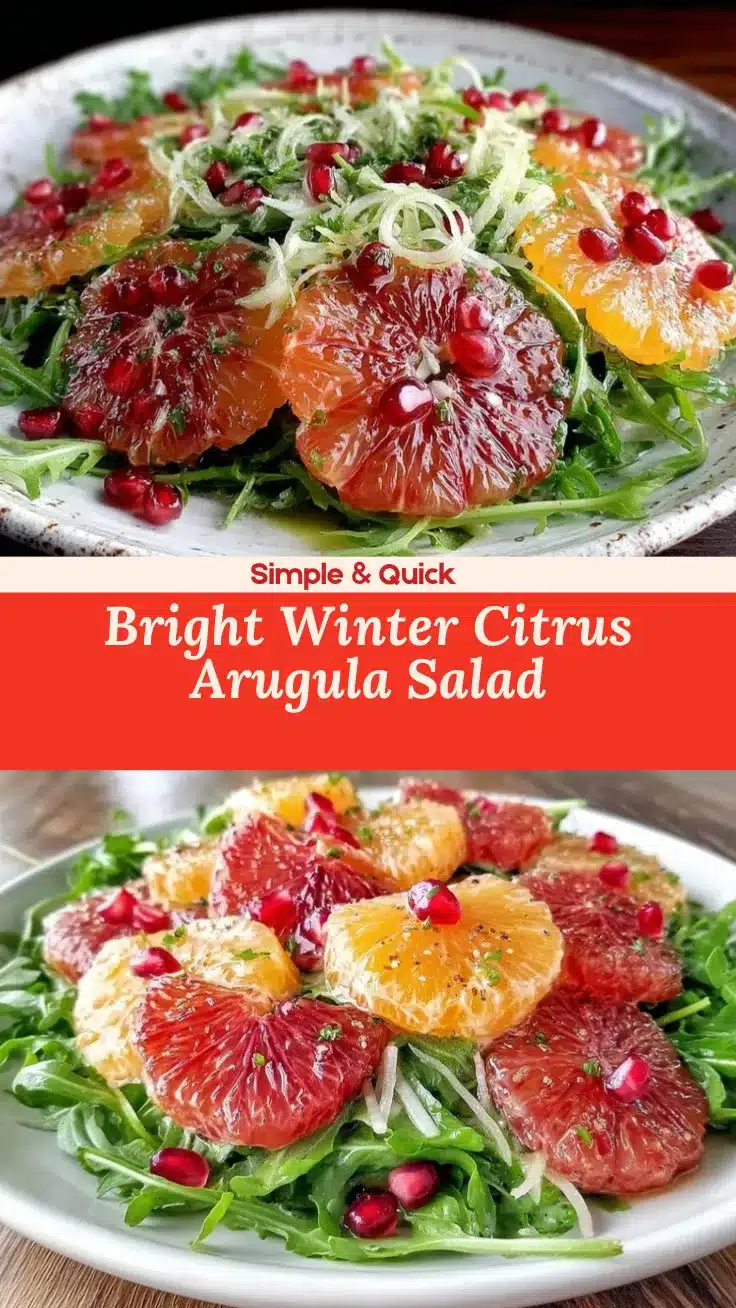
Vibrant Winter Citrus Salad with Arugula and Pomegranate

A bright, tangy, and refreshing winter salad combining peppery arugula, juicy citrus segments, and crunchy pomegranate seeds, dressed with a simple honey-balsamic vinaigrette.
- Prep Time: 15 minutes
- Cook Time: 0 minutes
- Total Time: 15 minutes
- Yield: 4 servings 1x
- Category: Salad
- Cuisine: American
Ingredients
- 4 cups arugula (about 120g), washed and dried
- 3 cups assorted citrus fruits, peeled and segmented (2 medium oranges, 2 small grapefruits, 1 medium tangelo or tangerine)
- ½ cup pomegranate seeds (about 80g), fresh preferred
- ¼ small red onion, thinly sliced (optional)
- A handful fresh mint leaves, roughly chopped or torn
- 3 tablespoons extra virgin olive oil
- 1 tablespoon honey
- 1 tablespoon aged balsamic vinegar
- Sea salt and freshly ground black pepper, to taste
- Optional toppings: toasted almonds or walnuts, feta cheese crumbles
Instructions
- Prepare the citrus: Wash fruits thoroughly, peel skin and remove white pith. Segment fruits by cutting between membranes to get about 3 cups total. This takes about 10-12 minutes.
- Dry the arugula: Use a salad spinner or pat dry gently with a towel to remove excess water (2-3 minutes).
- Slice the red onion thinly. To mellow sharpness, soak slices in cold water for 5 minutes then drain.
- Make the dressing: Whisk together olive oil, honey, balsamic vinegar, salt, and pepper in a small bowl. Adjust seasoning to taste (about 2 minutes).
- Assemble the salad: In a mixing bowl, combine arugula, citrus segments, pomegranate seeds, sliced onion, and mint leaves. Drizzle dressing over and toss gently but thoroughly (3-4 minutes).
- Optional toppings: Toast nuts in a dry skillet over medium heat for 3-5 minutes, shaking frequently. Let cool before adding. Add nuts or feta if desired.
- Serve immediately on a platter or bowl. If prepping ahead, keep dressing separate until serving.
Notes
Use a sharp knife and take your time segmenting citrus to avoid bitter pith and juice loss. Toss salad gently to avoid bruising citrus. Add pomegranate seeds just before serving to maintain crunch. Dressing can be made vegan by substituting honey with maple syrup or agave nectar. Store salad and dressing separately if prepping ahead.
Nutrition
- Serving Size: 1 serving (about 1.5
- Calories: 150
- Sugar: 12
- Sodium: 80
- Fat: 11
- Saturated Fat: 1.5
- Carbohydrates: 15
- Fiber: 3
- Protein: 2
Keywords: winter salad, citrus salad, arugula salad, pomegranate, healthy salad, easy salad, vegan option, holiday salad