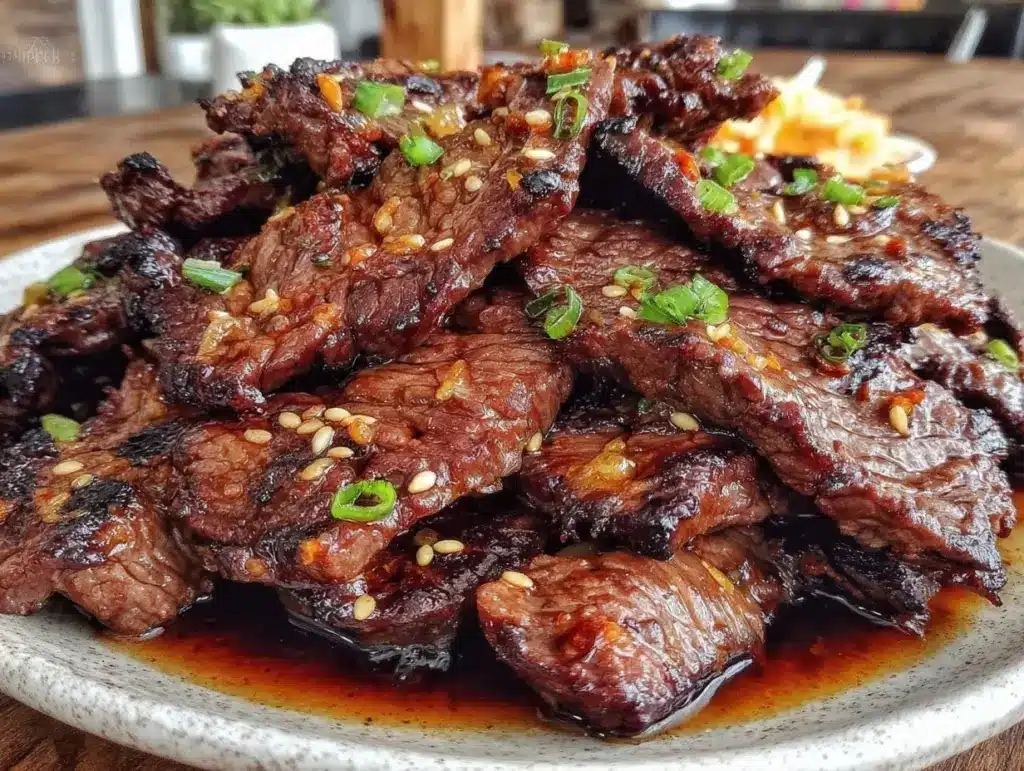
The sizzle and aroma of Korean bulgogi beef cooking in a hot pan is something that instantly pulls me back to cozy evenings spent with friends and family. Honestly, the first time I tried making this irresistible Korean bulgogi beef recipe, I was hooked. It’s not just any beef dish—it’s a perfect blend of sweet, savory, and slightly smoky flavors wrapped around tender, thinly sliced meat. This recipe has become my go-to when I want to whip up a quick yet impressive meal in about 30 minutes.
What I love most about this Korean bulgogi beef recipe is that it’s easy enough for a busy weeknight but still feels special enough for guests. Over the years, I’ve tested and tweaked it to get that balance just right—trust me, the marinade is the magic here. If you’ve ever been intimidated by Korean cooking, this recipe breaks it down into simple steps that anyone can follow.
Whether you’re new to Korean cuisine or a longtime fan, this homemade bulgogi recipe offers a mouthwatering experience that’s both authentic and accessible. Plus, being able to create this at home means you can enjoy that restaurant-quality taste whenever you want. So, if you’re ready for an easy, flavorful, and totally crave-worthy dinner, this Korean bulgogi beef recipe is the one to try next.
Why You’ll Love This Recipe
After making this Korean bulgogi beef recipe more times than I can count, I can honestly say it ticks all the boxes for a weeknight favorite. Here’s why it’s such a winner:
- Quick & Easy: From start to finish in about 30 minutes—perfect when you’re short on time but want something satisfying.
- Simple Ingredients: You don’t need any exotic spices or hard-to-find products. Most of these ingredients are kitchen staples or easy to grab at your local grocery store.
- Perfect for Any Occasion: Whether it’s a casual dinner, a potluck, or a fun weekend treat, bulgogi fits right in.
- Crowd-Pleaser: My family always asks for seconds, and I’ve had friends rave about this one after trying it.
- Unbelievably Delicious: The marinade’s sweet and savory combo caramelizes beautifully, giving that signature bulgogi flavor and tender texture.
What sets this recipe apart from others I’ve tried? It’s the little details—like using pear in the marinade for natural sweetness and tenderizing the beef just right. Plus, I blend the marinade ingredients to create a silky texture that coats the beef evenly. It’s comfort food that’s also kind of fancy without the fuss.
Honestly, sinking your teeth into this bulgogi beef is like a warm hug after a long day. It’s the kind of recipe that invites you to slow down and savor every bite, whether you’re eating solo or sharing with loved ones.
What Ingredients You Will Need
This Korean bulgogi beef recipe calls for straightforward and wholesome ingredients that come together to pack a flavorful punch. Most are pantry staples or easy to find at any market.
- Beef (1 lb / 450g): Thinly sliced ribeye or sirloin works best for tenderness and flavor.
- Pear (½ medium): Asian pear is traditional, grated to add natural sweetness and help tenderize the beef.
- Soy Sauce (¼ cup / 60 ml): Use low-sodium if preferred; I like Kikkoman for consistent flavor.
- Brown Sugar (2 tbsp / 25g): Adds a deep, caramel sweetness to balance the soy.
- Garlic (3 cloves): Minced fresh garlic gives that punchy, aromatic base.
- Ginger (1 tsp): Freshly grated for a hint of warmth and zest.
- Sesame Oil (1 tbsp / 15 ml): Toasted sesame oil brings that nutty, signature Korean flavor.
- Green Onions (2 stalks): Sliced thinly to mix into the marinade and garnish.
- Black Pepper (½ tsp): Freshly ground adds subtle heat.
- Onion (½ medium): Thinly sliced to add sweetness and texture.
- Optional Sesame Seeds (1 tsp): For garnish and a slight crunch.
- Optional Gochujang (1 tbsp): Korean chili paste for a mild spicy kick if you like a bit of heat.
If you can’t find Asian pear, a ripe apple or even a bit of pineapple juice works similarly to tenderize. And don’t worry if you don’t have gochujang on hand—this recipe is fantastic without it, too.
Equipment Needed
- Sharp Knife and Cutting Board: Essential for thinly slicing the beef and vegetables. I find a good chef’s knife makes all the difference in speed and uniformity.
- Grater: To grate the pear (or apple) finely for the marinade. A microplane works perfectly.
- Mixing Bowl: For combining the marinade ingredients and soaking the beef.
- Large Skillet or Cast Iron Pan: For cooking the bulgogi. A cast iron pan helps get that nice sear and caramelization.
- Tongs or Chopsticks: To turn the beef quickly without breaking it apart.
- Measuring Cups and Spoons: For precise ingredient amounts, which really matter in balancing flavors.
If you don’t have a cast iron pan, a heavy-bottomed stainless steel skillet will work just fine. And while a mandoline can slice onions thinly, a steady hand with a knife is just as effective. For budget-friendly options, basic kitchen sets from your local store do the job beautifully.
Detailed Preparation Method
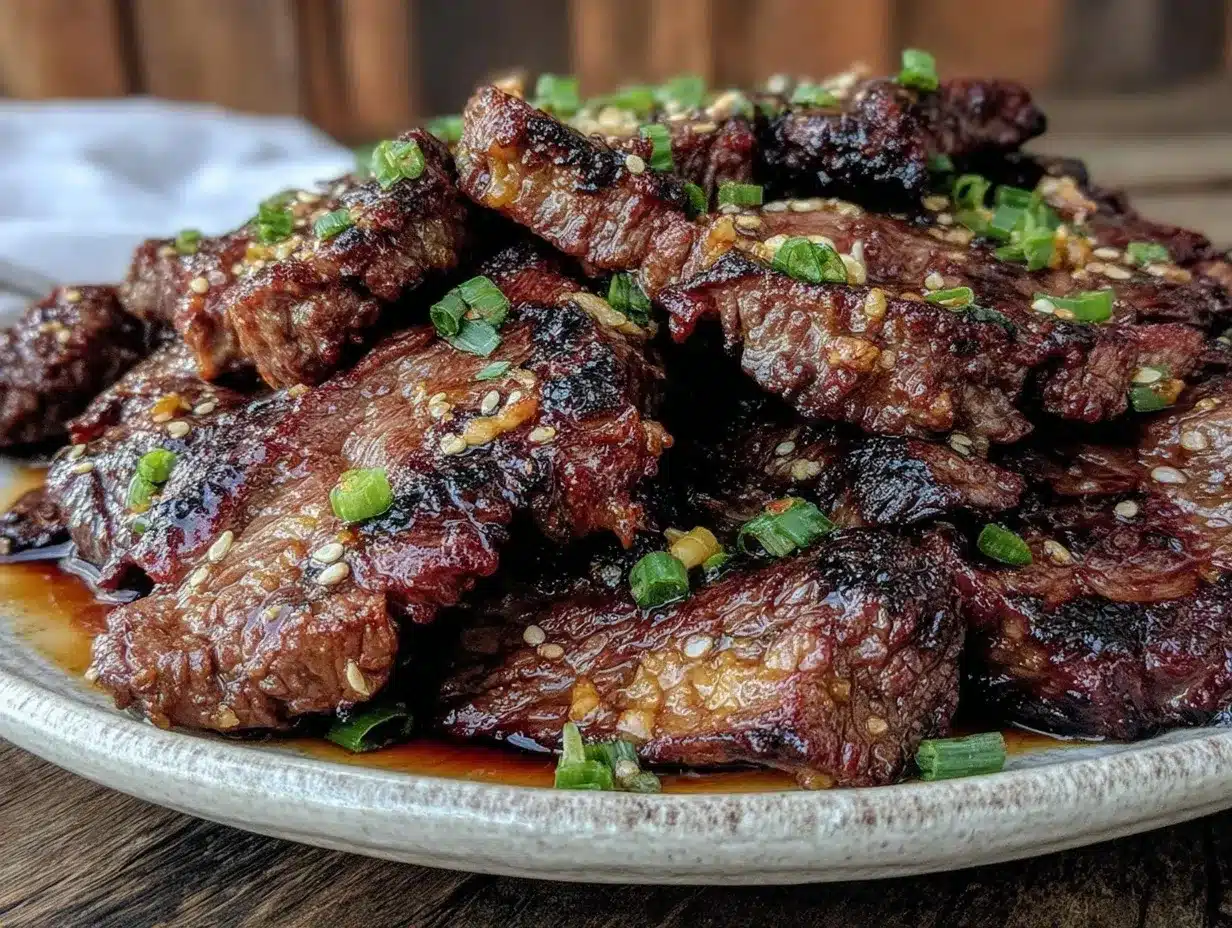
- Prep the Beef: Start by thinly slicing 1 pound (450 g) of ribeye or sirloin against the grain. If the beef is too thick, place it in the freezer for 15 minutes to firm up, making slicing easier. Aim for slices about 1/8-inch (3 mm) thick.
- Grate the Pear: Using a fine grater or microplane, grate half a medium Asian pear (about ½ cup or 120 ml). This adds natural sweetness and tenderizes the meat. If you don’t have Asian pear, a sweet apple or a tablespoon of pineapple juice can substitute.
- Mix the Marinade: In a large mixing bowl, combine the grated pear, ¼ cup (60 ml) soy sauce, 2 tablespoons (25 g) brown sugar, 3 minced garlic cloves, 1 teaspoon (5 ml) freshly grated ginger, 1 tablespoon (15 ml) toasted sesame oil, ½ teaspoon (1 g) black pepper, and optional 1 tablespoon (15 g) gochujang for a spicy twist. Stir well until the sugar dissolves.
- Add Vegetables: Thinly slice half a medium onion and 2 green onion stalks. Mix these into the marinade for extra flavor and crunch.
- Marinate the Beef: Add the sliced beef to the marinade, tossing to coat thoroughly. Cover the bowl with plastic wrap and let it marinate for at least 15 minutes at room temperature, or up to 1 hour in the refrigerator for deeper flavor. Don’t skip this step—marination is key to tender, flavorful bulgogi.
- Heat the Pan: Place a large skillet or cast iron pan over medium-high heat. Once hot, add a small drizzle of sesame oil or neutral oil to prevent sticking.
- Cook the Beef: Add the marinated beef and onions in a single layer (you may need to do this in batches). Cook for about 2-3 minutes per side until the beef is caramelized and cooked through but still tender. Avoid overcrowding the pan to keep that beautiful sear.
- Finish and Serve: Transfer the cooked bulgogi to a serving plate. Sprinkle with toasted sesame seeds and additional sliced green onions if desired. Serve immediately with steamed rice and side dishes like kimchi or pickled vegetables.
Pro tip: Keep an eye on the heat—too high and the marinade sugars can burn quickly. Moderate heat and patience lead to that melt-in-your-mouth texture and perfect caramelization.
Cooking Tips & Techniques
Getting bulgogi just right takes a few insider tricks I’ve picked up over the years. First, choose the right cut of beef. Ribeye or sirloin thinly sliced is ideal because they have enough fat to stay juicy but cook quickly.
When marinating, don’t rush it. Even 15 minutes makes a difference, but an hour in the fridge is even better if your schedule allows. The natural enzymes in the pear help tenderize without making the meat mushy.
Another tip: cook the beef in batches if needed. Overcrowding drops the pan temperature and leads to steaming instead of searing, which means no caramelized edges (and that’s the best part!).
If you want a smokier flavor, a quick char on a grill or broiler after pan-frying adds a lovely depth. I’ve tried this when hosting friends, and it definitely impresses.
Lastly, don’t forget to taste the marinade before adding the beef. Adjust sweetness or saltiness as needed to suit your palate. A little extra sugar can help if your pear isn’t very sweet.
Variations & Adaptations
This Korean bulgogi beef recipe is wonderfully flexible. Here are a few ways I’ve adapted it to keep things fresh or to fit different dietary needs:
- Spicy Bulgogi: Add extra gochujang or a sprinkle of red pepper flakes to the marinade for a fiery kick.
- Gluten-Free Option: Use tamari or a gluten-free soy sauce alternative. Make sure your gochujang is gluten-free or omit it.
- Vegetarian Twist: Swap beef with thick slices of king oyster mushrooms or marinated tofu. Cook similarly for a meatless version that still delivers bold flavor.
- Low-Sugar Version: Reduce or omit the brown sugar and rely on the pear’s sweetness, adding a splash of orange juice if needed to balance flavors.
- Slow Cooker Bulgogi: Marinate as usual, then slow cook on low for 4-5 hours for a tender, fall-apart version.
Personally, I once tried adding finely chopped shiitake mushrooms to the marinade for extra umami, and it was a hit. Feel free to experiment and make this recipe your own.
Serving & Storage Suggestions
Serve your irresistible Korean bulgogi beef hot, straight from the pan, ideally with fluffy steamed jasmine or short-grain rice. For a traditional touch, wrap the beef in fresh lettuce leaves with a dab of ssamjang (Korean dipping sauce) and some sliced garlic.
This dish pairs beautifully with simple sides like kimchi, pickled radishes, or sautéed spinach with garlic. For drinks, a cold Korean beer or a lightly sweetened iced green tea complements the flavors nicely.
Leftovers store well in an airtight container in the fridge for up to 3 days. When reheating, add a splash of water or broth, cover, and warm gently in a skillet to keep the meat juicy. Avoid microwaving directly as it can dry out the beef.
Flavors often deepen after a day, so leftovers can taste even better the next day. I sometimes pack it for lunch and enjoy it cold or at room temperature—it never disappoints.
Nutritional Information & Benefits
This Korean bulgogi beef recipe packs protein, iron, and essential vitamins thanks to the lean beef and fresh ingredients. The use of natural sweeteners like pear reduces the need for added sugars, making it a cleaner, more wholesome meal.
One serving (about 4 ounces of cooked beef) provides approximately 280 calories, 25 grams of protein, 12 grams of fat, and minimal carbs, depending on rice or sides served. It fits nicely into balanced diets and is especially good for anyone looking to maintain muscle or keep energy levels steady.
Be mindful if you have soy allergies, as soy sauce is a main ingredient, but low-sodium tamari or coconut aminos can be good alternatives. Overall, this dish offers a satisfying and nourishing option that feels indulgent but remains health-conscious.
Conclusion
To wrap it up, this irresistible Korean bulgogi beef recipe is a shining example of how simple ingredients and a little time can produce something truly memorable. It’s easy to make, incredibly flavorful, and perfect for so many occasions.
Don’t hesitate to tweak the marinade or try the variations to match your taste or dietary needs—this recipe welcomes creativity. For me, bulgogi is more than just a meal; it’s a delicious way to bring people together around the table.
If you give this recipe a try, I’d love to hear your thoughts or any fun twists you’ve added. Share your experience in the comments or spread the love by sharing this recipe with friends. Happy cooking!
FAQs
What cut of beef is best for bulgogi?
Thinly sliced ribeye or sirloin is ideal because these cuts balance tenderness and flavor well. You can also use chuck or brisket if thinly sliced.
Can I make bulgogi without Asian pear?
Yes! Substitute with a ripe apple, pineapple juice, or even a bit of kiwi to tenderize the beef naturally.
How long should I marinate the beef?
At least 15 minutes at room temperature is good, but marinating for up to 1 hour in the fridge enhances flavor and tenderness.
Is bulgogi spicy?
Traditionally, bulgogi is mildly sweet and savory, but you can add gochujang or red pepper flakes to make it spicy.
Can I prepare bulgogi ahead of time?
Absolutely! You can marinate the beef a day ahead and store it in the fridge. Cook fresh when ready for the best texture and flavor.
Pin This Recipe!
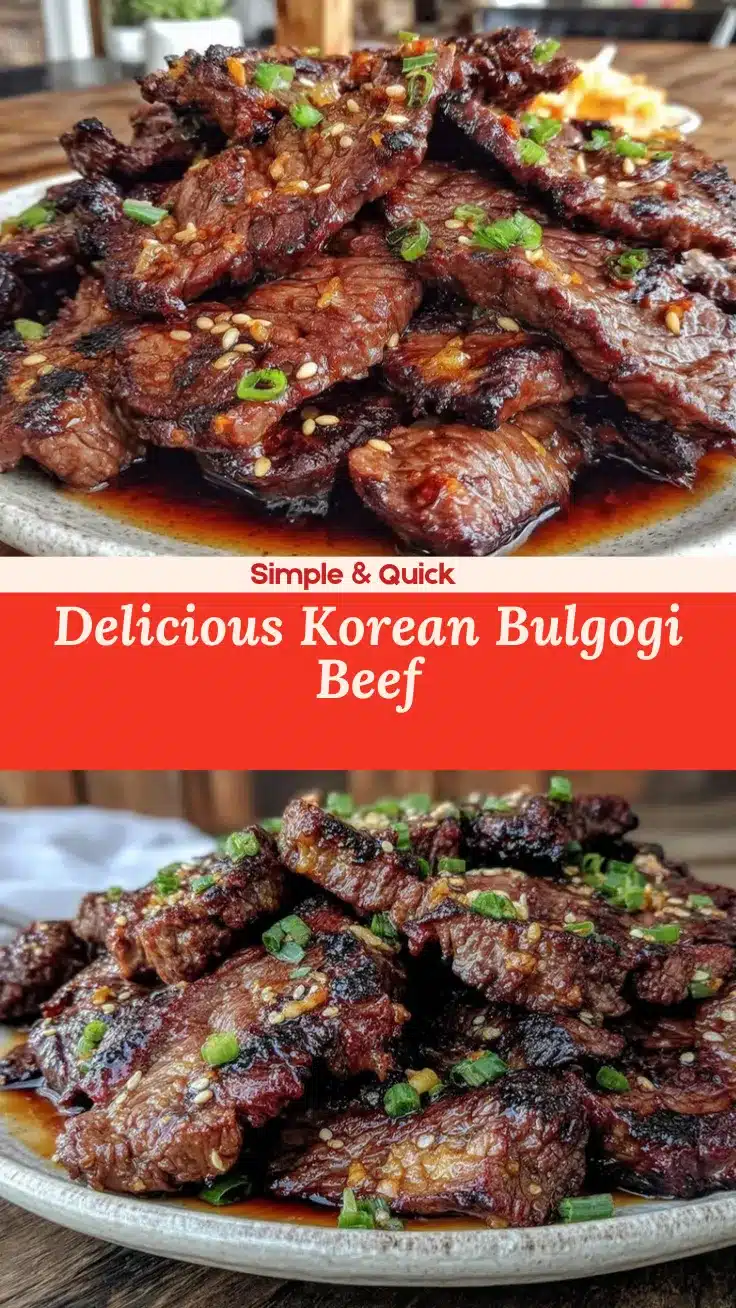
Irresistible Korean Bulgogi Beef Recipe

A quick and easy homemade Korean bulgogi beef recipe that delivers sweet, savory, and smoky flavors with tender, thinly sliced meat. Perfect for a 30-minute dinner that’s both authentic and accessible.
- Prep Time: 15 minutes
- Cook Time: 15 minutes
- Total Time: 30 minutes
- Yield: 4 servings 1x
- Category: Main Course
- Cuisine: Korean
Ingredients
- 1 lb (450 g) thinly sliced ribeye or sirloin beef
- ½ medium Asian pear, grated (about ½ cup or 120 ml)
- ¼ cup (60 ml) soy sauce (low-sodium preferred)
- 2 tbsp (25 g) brown sugar
- 3 cloves garlic, minced
- 1 tsp (5 ml) freshly grated ginger
- 1 tbsp (15 ml) toasted sesame oil
- 2 stalks green onions, thinly sliced
- ½ medium onion, thinly sliced
- ½ tsp (1 g) freshly ground black pepper
- Optional: 1 tsp sesame seeds for garnish
- Optional: 1 tbsp (15 g) gochujang (Korean chili paste) for spice
Instructions
- Thinly slice 1 lb (450 g) ribeye or sirloin against the grain to about 1/8-inch (3 mm) thickness. If beef is too thick, freeze for 15 minutes to firm up before slicing.
- Grate half a medium Asian pear using a fine grater or microplane (about ½ cup or 120 ml). Substitute with a sweet apple or 1 tbsp pineapple juice if needed.
- In a large mixing bowl, combine grated pear, ¼ cup (60 ml) soy sauce, 2 tbsp (25 g) brown sugar, 3 minced garlic cloves, 1 tsp (5 ml) grated ginger, 1 tbsp (15 ml) toasted sesame oil, ½ tsp (1 g) black pepper, and optional 1 tbsp (15 g) gochujang. Stir until sugar dissolves.
- Thinly slice ½ medium onion and 2 green onion stalks; mix into the marinade.
- Add sliced beef to the marinade and toss to coat thoroughly. Cover and marinate at least 15 minutes at room temperature or up to 1 hour in the refrigerator.
- Heat a large skillet or cast iron pan over medium-high heat. Add a small drizzle of sesame oil or neutral oil to prevent sticking.
- Add marinated beef and onions in a single layer (cook in batches if needed). Cook 2-3 minutes per side until caramelized and cooked through but still tender. Avoid overcrowding the pan.
- Transfer cooked bulgogi to a serving plate. Sprinkle with toasted sesame seeds and additional sliced green onions if desired. Serve immediately with steamed rice and side dishes like kimchi or pickled vegetables.
Notes
Marinate beef at least 15 minutes for tenderness; up to 1 hour in fridge for deeper flavor. Cook in batches to avoid overcrowding and ensure caramelization. Substitute Asian pear with apple or pineapple juice if unavailable. Adjust sweetness or saltiness of marinade to taste. For smokier flavor, finish with a quick char on grill or broiler. Leftovers keep well refrigerated for up to 3 days; reheat gently in skillet with splash of water or broth.
Nutrition
- Serving Size: About 4 ounces (113
- Calories: 280
- Fat: 12
- Protein: 25
Keywords: Korean bulgogi, bulgogi beef recipe, easy Korean dinner, Korean marinade, quick beef recipe, Korean BBQ, weeknight dinner