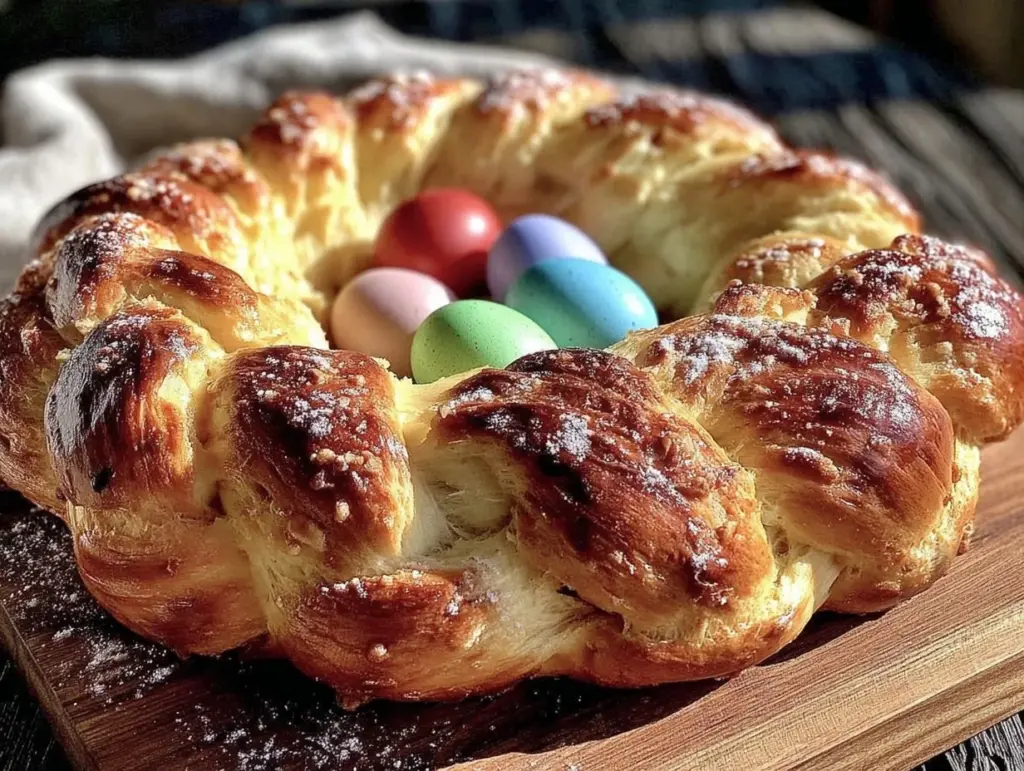
“Mom, why are the eggs in the bread different colors every year?” my niece asked as she poked at one of the bright red eggs nestled in the braided dough. I laughed, remembering my own childhood Easter mornings filled with that same curiosity and excitement. Making classic Italian Easter bread with vibrant colored eggs isn’t just about baking; it’s about holding onto a tradition that feels like a warm hug from the past.
I first stumbled upon this recipe in my Nonna’s kitchen—well, actually, I kind of forced my way in during a hectic holiday weekend when dinner plans had gone sideways. The kitchen was a whirlwind of flour dust and fragrant orange zest, and I watched her skillfully braid the dough while slipping colorful eggs into the folds. At first, I thought it was just a pretty decoration, but it turns out those eggs carry a special meaning, symbolizing rebirth and new beginnings.
That first attempt was more of a hopeful mess than a masterpiece, but the tangy sweetness combined with the soft, pillowy texture had me hooked. Since then, I’ve made this bread multiple times each spring—sometimes with a few tweaks, sometimes sticking close to the original, always ending with that same quiet satisfaction. It’s become my go-to when I want to feel a little closer to family and heritage, even if we’re miles apart.
What really sticks with me is how this bread turns the ordinary act of baking into a ritual full of color, warmth, and stories. It’s the kind of recipe that invites you to slow down, braid your worries away, and share something meaningful with the people around you. And honestly? That’s why this classic Italian Easter bread with vibrant colored eggs has stayed in my heart—and on my table—year after year.
Why You’ll Love This Classic Italian Easter Bread Recipe
Making this classic Italian Easter bread isn’t just about the final product—it’s about the whole experience. After countless tries and family feedback, I can say this recipe hits all the right notes for anyone looking to bring a bit of tradition and joy into their kitchen.
- Quick & Easy: It comes together in about 2 hours, including rising time, making it perfect for busy spring mornings or last-minute plans.
- Simple Ingredients: You probably already have everything at home—flour, sugar, eggs, and a touch of citrus zest to brighten things up.
- Perfect for Easter & Spring Celebrations: Whether it’s brunch, a family gathering, or just a cozy weekend treat, this bread fits right in.
- Crowd-Pleaser: Kids adore the colorful eggs, and adults appreciate the subtle orange and anise flavors that make each bite memorable.
- Unbelievably Delicious: The soft, sweet dough balances the aromatic zest and gives you a slightly chewy crust that’s just right.
This recipe stands apart because of its gentle orange zest and the way the eggs are woven right into the bread, creating a stunning visual and symbolic centerpiece. Plus, I’ve found that using a splash of anise extract adds a subtle twist that honors the authentic flavors without overwhelming the palate. It’s comfort food with a little Italian soul, perfect for impressing guests or just treating yourself.
Every time I bake this bread, I’m reminded why it’s more than just a recipe—it’s a way to connect, celebrate, and create memories around the table. And that’s the kind of kitchen magic you want to come back to again and again.
What Ingredients You Will Need
This classic Italian Easter bread uses simple, wholesome ingredients to deliver a bold flavor and satisfying texture without fuss. Almost everything is a pantry staple, and substitutions are straightforward if you need them.
- All-purpose flour – 4 cups (500 g), for that soft, tender crumb
- Granulated sugar – 1/2 cup (100 g), to add just the right sweetness
- Active dry yeast – 2 1/4 teaspoons (1 packet), the magic behind the rise
- Warm whole milk – 1 cup (240 ml), to activate the yeast and enrich the dough
- Unsalted butter – 1/4 cup (60 g), melted and slightly cooled (adds richness)
- Large eggs – 3, room temperature (2 for dough, 1 for egg wash)
- Orange zest – from 1 large orange (brings fresh citrus aroma)
- Anise extract – 1 teaspoon (optional, but highly recommended for authentic flavor)
- Salt – 1 teaspoon, to balance sweetness
- Vibrantly colored hard-boiled eggs – 6 (traditional bright red, green, or dyed your favorite colors)
Pro tip: I prefer using King Arthur Flour for consistent texture, and for the anise extract, McCormick’s brand gives a nice, mellow flavor without overpowering the bread. If you’re avoiding dairy, swap whole milk for almond or oat milk and use coconut oil instead of butter—your bread will still turn out soft and delicious.
For the eggs, you can either dye them yourself with natural or store-bought coloring, or use pre-colored Easter eggs for convenience. In spring, swapping out the orange zest for lemon zest offers a slightly different but equally delightful aroma.
Equipment Needed
- Large mixing bowl: To combine and proof your dough comfortably.
- Measuring cups and spoons: Accuracy matters, especially with yeast and salt.
- Stand mixer with dough hook (optional): Makes kneading easier but hand-kneading works just fine.
- Baking sheet or round pan: To bake the braided bread.
- Parchment paper or silicone baking mat: Prevents sticking and helps with even baking.
- Small bowl: For egg wash.
- Kitchen towel or plastic wrap: To cover dough during rising.
If you don’t have a stand mixer, don’t sweat it—hand kneading for about 10 minutes works well and lets you feel when the dough reaches that perfect elasticity. For budget-friendly baking, using parchment paper is a lifesaver for cleanup and prevents the bottom from burning, which I’ve definitely learned the hard way.
Preparation Method
- Activate the yeast: In a small bowl, whisk together 1 cup (240 ml) warm milk (about 110°F/43°C), 1 teaspoon sugar, and 2 1/4 teaspoons active dry yeast. Let it sit for 5–7 minutes until foamy and bubbly. If the mixture doesn’t foam, your yeast might be inactive—start over with fresh yeast.
- Mix the dough: In a large mixing bowl or stand mixer, combine 4 cups (500 g) all-purpose flour, 1/2 cup (100 g) sugar, 1 teaspoon salt, and the orange zest from one large orange. Add the melted butter, 2 large eggs, anise extract (if using), and the activated yeast mixture. Stir with a wooden spoon or use the mixer on low speed to combine.
- Knead the dough: Knead by hand on a lightly floured surface or with your mixer’s dough hook for 8–10 minutes until the dough is smooth, elastic, and slightly tacky but not sticky. Add a tablespoon of flour at a time if it’s too sticky. The dough should spring back when poked.
- First rise: Lightly oil a large bowl, place the dough inside, cover with a kitchen towel or plastic wrap, and let it rise in a warm, draft-free spot for 1 to 1.5 hours, or until doubled in size.
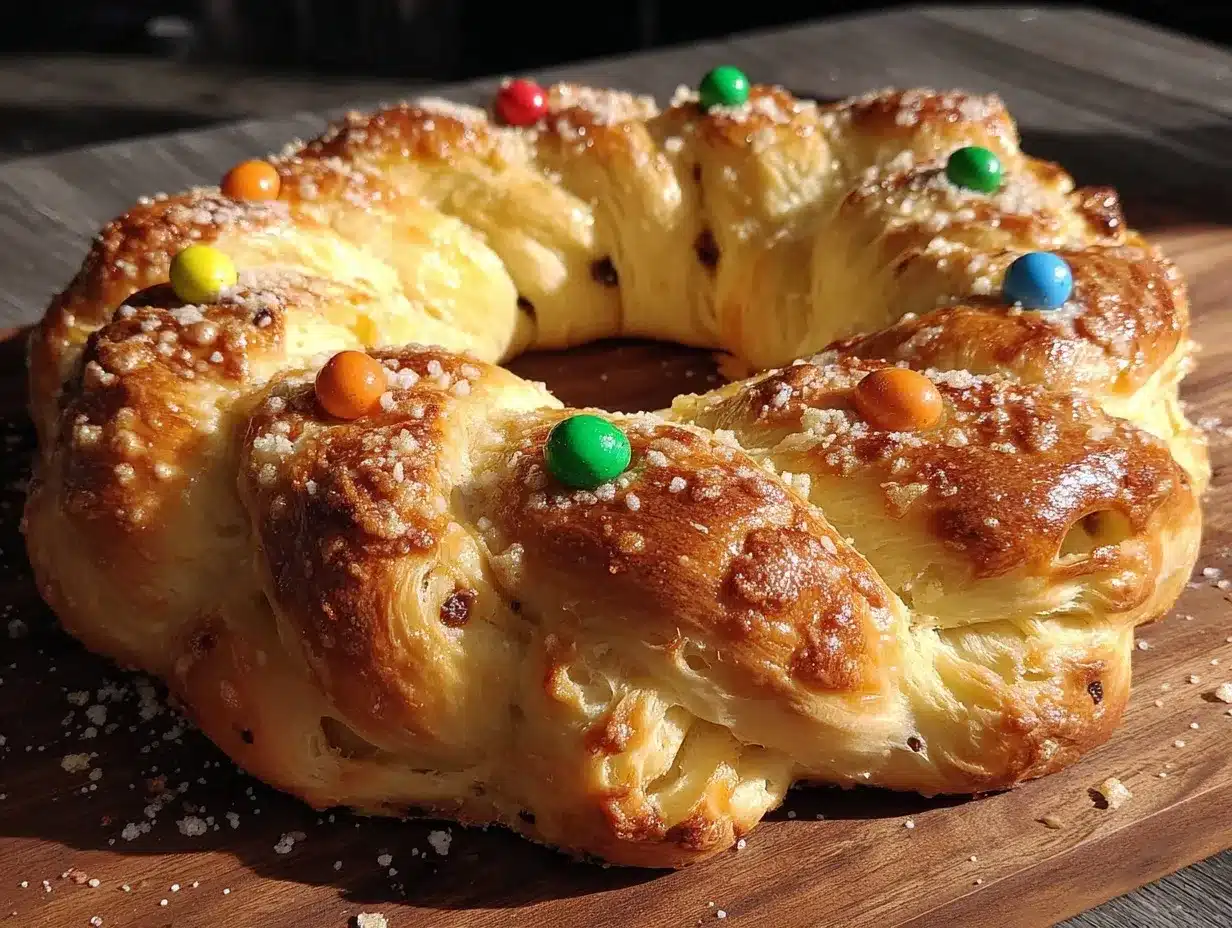
- Shape the bread: Punch down the dough gently and divide it into three equal portions. Roll each into a long rope, about 18 inches (45 cm) long. Braid the ropes together, then form the braid into a circle on a parchment-lined baking sheet. Tuck the vibrant colored eggs into the braid, spacing evenly, and gently press them into the dough so they stay put during baking.
- Second rise: Cover the braided dough loosely with a towel and let it rise again for 30-40 minutes until puffed and nearly doubled.
- Egg wash and bake: Preheat your oven to 350°F (175°C). Beat the remaining egg and brush it gently over the bread for a shiny golden crust. Bake for 25-30 minutes until the bread is golden brown and sounds hollow when tapped underneath. If the bread browns too fast, tent it with foil halfway through baking.
- Cool and serve: Let the bread cool on a wire rack for at least 20 minutes before slicing. The colors of the eggs will have baked into the dough, creating a beautiful and festive display.
Quick tip: If you want a more pronounced orange flavor, add a teaspoon of orange blossom water along with the zest. And if you notice the dough is a bit dry during kneading, a splash of warm milk can bring it back just right.
Cooking Tips & Techniques
Getting this classic Italian Easter bread just right takes a few little tricks I’ve picked up over time. The biggest challenge is the dough’s texture—it should feel soft but not sticky. I’ve learned that gradual flour additions during kneading make a big difference in the final crumb.
Another tip: don’t rush the rising times. The dough needs to double properly to get that light, airy quality. If your kitchen is cold, place the dough bowl in the oven with just the light on, or next to a warm stove, to encourage a good rise.
The braided shape is part of the fun but can feel intimidating. I find rolling the ropes evenly and keeping a gentle but firm grip helps. If the dough feels too sticky while braiding, dust your hands lightly with flour rather than adding to the dough itself.
When inserting the colored eggs, press them just enough to secure but not bury them. And the egg wash really makes the crust shine, so don’t skip it—even if you’re in a hurry.
Finally, watch the oven closely in the last 10 minutes. Sometimes the eggshells crack, which is normal, but if the bread is browning unevenly, rotate the pan for even baking. I’ve had great success baking this alongside savory sides like green bean casserole to round out the meal.
Variations & Adaptations
This recipe is pretty classic, but I’ve tried a few variations that bring new life to the bread:
- Gluten-Free Version: Substitute all-purpose flour with a gluten-free blend and add a teaspoon of xanthan gum to mimic the elasticity. The texture changes a bit but stays delicious.
- Flavor Variations: Swap orange zest for lemon or add a teaspoon of vanilla extract for a different aromatic profile. For a nutty crunch, sprinkle slivered almonds on top after egg wash.
- Egg-Free Option: Omit the eggs in the dough and replace with an extra 1/4 cup (60 ml) of milk plus 1 tablespoon ground flaxseed mixed with 3 tablespoons water as an egg substitute. Use a vegan egg wash or milk for brushing.
- Seasonal Freshness: In spring, I sometimes fold in a handful of chopped dried cherries or fresh blueberries for a subtle fruity twist that pairs beautifully with the festive colors.
One time, I tried a savory spin with rosemary and parmesan, inspired by a Parker House rolls recipe I love. It wasn’t traditional but ended up being a crowd favorite for Easter brunch!
Serving & Storage Suggestions
This Italian Easter bread is best enjoyed fresh and slightly warm. I like to slice it thick, letting the soft crumb and chewy crust shine through. It pairs wonderfully with a smear of butter or a drizzle of honey for breakfast or brunch.
For a festive table, place the bread centerpiece surrounded by fresh spring greens or alongside bright vegetable sides like the vibrant sautéed green beans with lemon zest. A cup of strong coffee or lightly spiced tea rounds out the experience perfectly.
To store, wrap the bread tightly in plastic wrap or place in an airtight container. It keeps well at room temperature for up to 2 days. For longer storage, freeze sliced portions in a resealable bag for up to 3 months. Reheat gently in a 325°F (160°C) oven for 10 minutes or toast slices for a fresh-out-of-the-oven feel.
Over time, the flavors mellow and the bread becomes even easier to slice, making it great for sandwiches or French toast the next day.
Nutritional Information & Benefits
Estimated per serving (1 slice, about 70g): 180 calories, 6g fat, 28g carbohydrates, 4g protein.
This bread provides a moderate amount of protein from the eggs and milk, with the orange zest adding a subtle vitamin C boost. The anise extract is more aromatic than nutritional but contributes to digestion traditionally. Since it’s made with simple ingredients, it fits well into balanced diets and can be adapted for gluten-free or dairy-free needs.
Keep in mind, the vibrant eggs contribute protein and essential nutrients, making the bread not only festive but a bit more nourishing than your typical sweet bread.
Conclusion
This classic Italian Easter bread with vibrant colored eggs is more than just a recipe—it’s a slice of heritage, a celebration of spring, and a delicious way to bring family and friends together. Whether you stick with the traditional version or customize it to your taste, this bread has a way of making any table feel special.
I love how each bite brings a little sunshine and a lot of warmth, perfect for moments when you want comfort with a touch of festivity. If you give it a try, I’d be thrilled to hear how you made it your own—share your stories and tweaks, and let’s keep this tradition alive, one loaf at a time.
FAQs About Classic Italian Easter Bread
Can I use regular food coloring to dye the eggs?
Yes! Regular food coloring works well for hard-boiled eggs. Natural dyes like beet juice or turmeric are great alternatives if you prefer natural ingredients.
How do I store leftover Easter bread?
Wrap it tightly in plastic wrap or an airtight container at room temperature for up to 2 days, or freeze sliced portions for up to 3 months.
Can I make this bread ahead of time?
Absolutely! You can prepare the dough the night before and let it rise slowly in the refrigerator, then shape and bake the next day.
What can I substitute for anise extract?
If you’re not a fan of anise, vanilla extract or a tiny pinch of ground fennel seeds can provide a similar sweet, aromatic note.
Is this recipe suitable for kids to help with?
Definitely! Kids love braiding the dough and placing the colorful eggs. Just supervise the oven parts and help with kneading if needed.
Pin This Recipe!
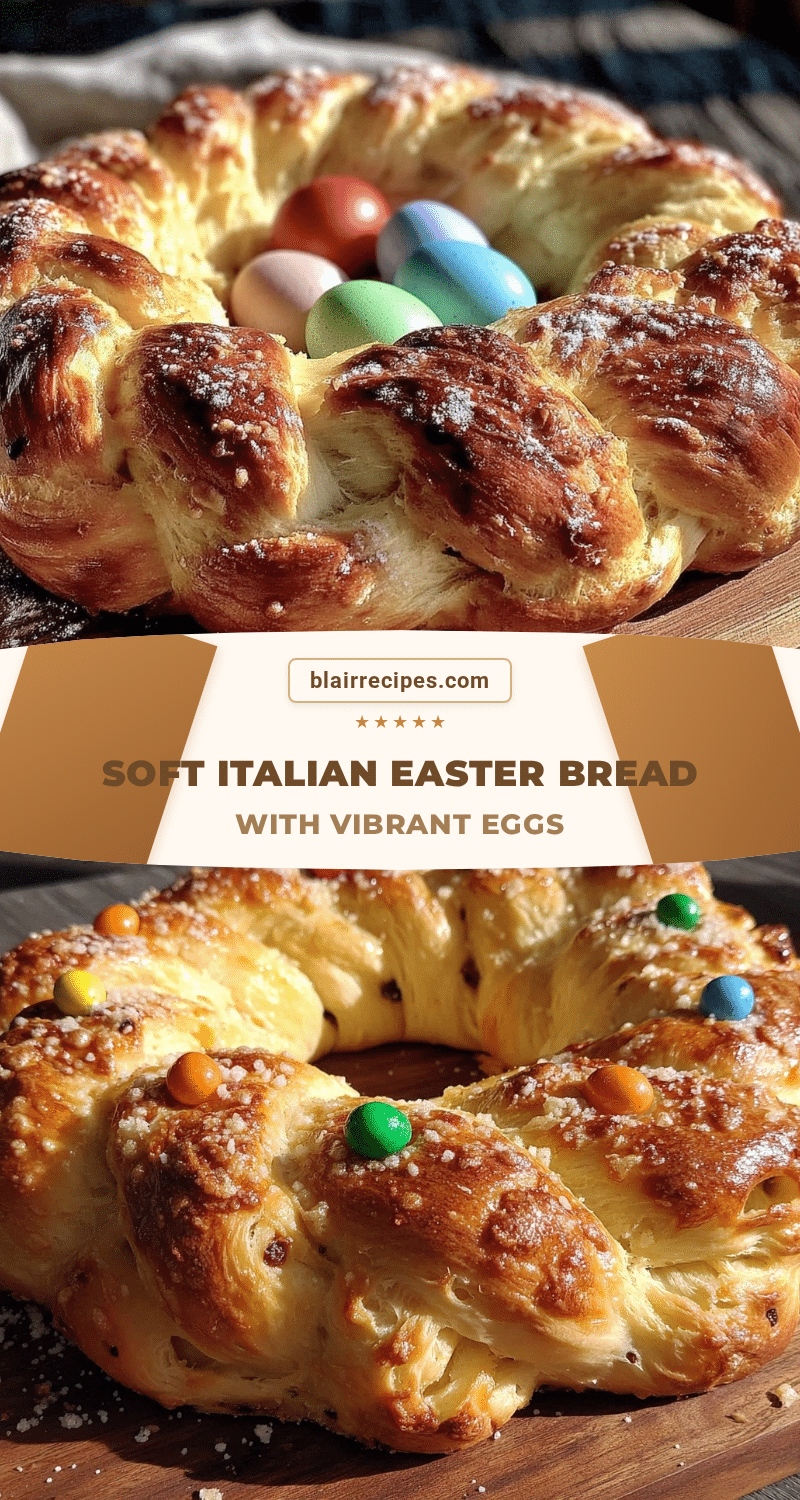
Classic Italian Easter Bread Recipe with Vibrant Colored Eggs

A traditional Italian Easter bread featuring a soft, sweet dough braided with vibrant colored eggs, flavored with orange zest and anise extract. Perfect for spring celebrations and family gatherings.
- Prep Time: 20 minutes
- Cook Time: 30 minutes
- Total Time: 2 hours 30 minutes
- Yield: 8 servings 1x
- Category: Bread
- Cuisine: Italian
Ingredients
- 4 cups (500 g) all-purpose flour
- 1/2 cup (100 g) granulated sugar
- 2 1/4 teaspoons (1 packet) active dry yeast
- 1 cup (240 ml) warm whole milk
- 1/4 cup (60 g) unsalted butter, melted and slightly cooled
- 3 large eggs, room temperature (2 for dough, 1 for egg wash)
- Zest of 1 large orange
- 1 teaspoon anise extract (optional)
- 1 teaspoon salt
- 6 vibrantly colored hard-boiled eggs (traditional bright red, green, or dyed your favorite colors)
Instructions
- Activate the yeast: In a small bowl, whisk together 1 cup (240 ml) warm milk (about 110°F/43°C), 1 teaspoon sugar, and 2 1/4 teaspoons active dry yeast. Let it sit for 5–7 minutes until foamy and bubbly.
- Mix the dough: In a large mixing bowl or stand mixer, combine 4 cups (500 g) all-purpose flour, 1/2 cup (100 g) sugar, 1 teaspoon salt, and the orange zest. Add the melted butter, 2 large eggs, anise extract (if using), and the activated yeast mixture. Stir to combine.
- Knead the dough: Knead by hand on a lightly floured surface or with a mixer’s dough hook for 8–10 minutes until smooth, elastic, and slightly tacky but not sticky. Add flour as needed.
- First rise: Lightly oil a large bowl, place the dough inside, cover with a kitchen towel or plastic wrap, and let it rise in a warm, draft-free spot for 1 to 1.5 hours until doubled in size.
- Shape the bread: Punch down the dough, divide into three equal portions, roll each into 18-inch ropes. Braid the ropes and form into a circle on a parchment-lined baking sheet. Tuck the colored eggs evenly into the braid, pressing gently.
- Second rise: Cover loosely and let rise for 30-40 minutes until puffed and nearly doubled.
- Egg wash and bake: Preheat oven to 350°F (175°C). Beat the remaining egg and brush over the bread. Bake for 25-30 minutes until golden brown and hollow sounding when tapped. Tent with foil if browning too fast.
- Cool and serve: Let cool on a wire rack for at least 20 minutes before slicing.
Notes
If dough is too sticky, add flour gradually during kneading. For a stronger orange flavor, add 1 teaspoon orange blossom water with the zest. Use a warm, draft-free spot for rising or place dough in oven with light on. Rotate pan during baking if browning unevenly. Substitute dairy with almond or oat milk and coconut oil for dairy-free version. Gluten-free version requires gluten-free flour blend and xanthan gum. Egg-free option uses flaxseed mixture as egg substitute and vegan milk for wash.
Nutrition
- Serving Size: 1 slice (about 70g)
- Calories: 180
- Fat: 6
- Carbohydrates: 28
- Protein: 4
Keywords: Italian Easter bread, braided bread, colored eggs, orange zest bread, anise extract bread, traditional Easter bread, festive bread