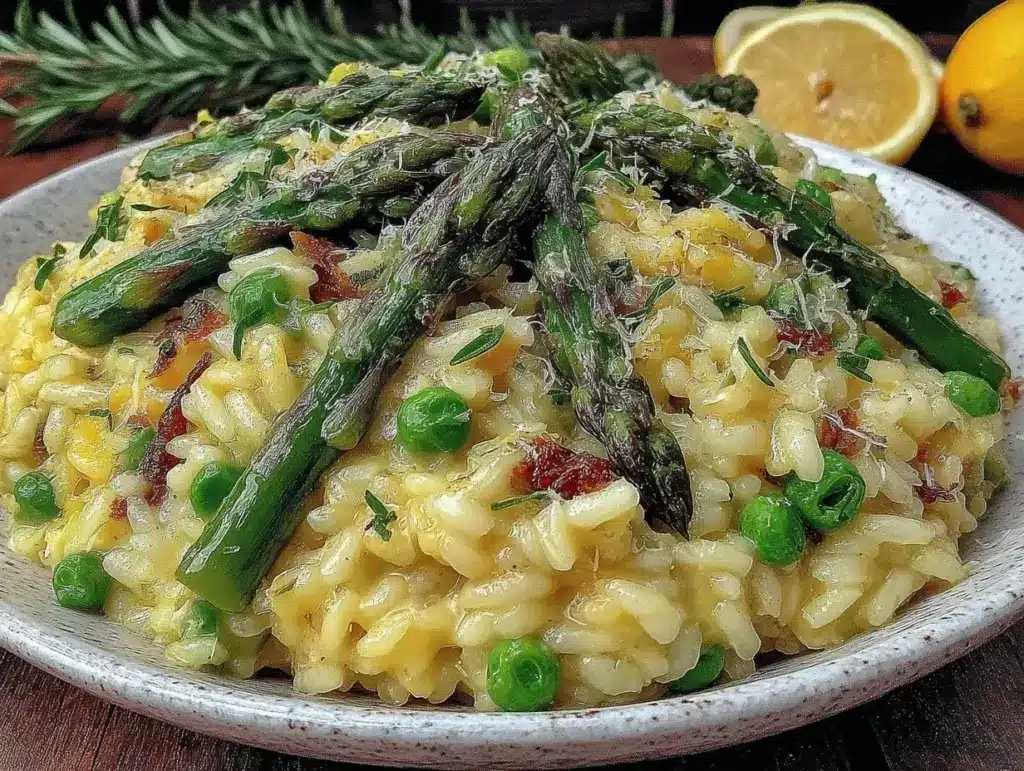
“Are you sure this is going to work?” my friend asked, eyeing the mound of raw arborio rice and the heap of fresh asparagus on my counter. I had just texted her about my latest kitchen experiment—this creamy spring risotto primavera with asparagus and peas. Honestly, I was a bit skeptical myself at first. Risotto always sounded fancy and complicated, and I figured the peas might get lost in the mix. But here I was, stirring away in my little kitchen on a quiet Saturday afternoon, the gentle hum of spring outside matching the soft sizzle from the stove.
That first bite, though—wow. The creaminess was just right, with the tender snap of asparagus and the sweet pop of peas balancing every mouthful. It wasn’t just a meal; it felt like a little celebration of spring in a bowl. I’ve made this recipe more times than I can count since, and every time, it hits the spot—whether it’s a busy weeknight or a casual lunch with friends. The texture, the fresh flavors, the comforting warmth—it all came together better than I ever expected.
What really sticks with me is how this risotto doesn’t demand fancy ingredients or hours of stirring endlessly. It’s approachable but still feels special, and somehow it’s become my go-to when I want something that looks impressive but tastes like a warm hug. Maybe it’s that quiet moment you get when the kitchen smells like spring and you’re just savoring something made with care. That’s why this recipe ended up staying in my rotation—and why I think you’ll find it just as hard to put down.
Why You’ll Love This Recipe
This creamy spring risotto primavera with asparagus and peas is one of those dishes that somehow feels both indulgent and fresh. Here’s what makes it a keeper in my kitchen:
- Quick & Easy: It comes together in about 35 minutes, perfect when you want a fresh homemade meal without spending hours.
- Simple Ingredients: No need for fancy or hard-to-find items—just pantry staples and fresh spring veggies.
- Perfect for Spring Meals: The bright green asparagus and sweet peas make it ideal for seasonal lunches or dinners.
- Crowd-Pleaser: I’ve served this to friends and family alike, and it always gets rave reviews—even from picky eaters.
- Unbelievably Delicious: The texture is creamy and dreamy, with just the right bite from the arborio rice.
What sets this recipe apart is the balance of flavors and the method I use to coax maximum creaminess without drowning the risotto in butter or cheese. Also, rather than relying on heavy cream, I stir in a little Parmesan and a splash of lemon juice at the end to brighten everything up. This isn’t just another risotto recipe—it’s the one that feels like spring on a plate, all while being surprisingly easy to pull off.
Honestly, after the first few tries, I found myself making it multiple times a week. It’s the kind of dish that makes you close your eyes after the first bite and say, “Yep, that’s the good stuff.” Whether you’re looking to impress guests with minimal effort or just want a cozy meal that feels fresh and satisfying, this risotto primavera fits the bill.
What Ingredients You Will Need
This recipe uses simple, wholesome ingredients to deliver bold flavor and satisfying texture without the fuss. Most of these are pantry staples, with a couple of fresh spring touches that make all the difference.
- Arborio rice (1 ½ cups / 300g): The star of the dish—its high starch content gives risotto that creamy texture. I recommend using Carolina® or Lundberg Family Farms for consistent quality.
- Fresh asparagus (1 bunch, about 1 lb / 450g): Trimmed and cut into 1-inch pieces. Look for firm, bright green stalks for the best snap.
- Frozen or fresh peas (1 cup / 150g): Sweetness in every bite. Frozen peas work well when fresh aren’t available.
- Yellow onion (1 small, finely chopped): Adds a subtle sweetness and depth.
- Garlic (2 cloves, minced): Just enough to bring warmth without overpowering.
- Vegetable or chicken broth (4 cups / 1 liter): Use low-sodium broth to control saltiness.
- Dry white wine (½ cup / 120ml, optional): Adds acidity and complexity—skip if you prefer or replace with extra broth.
- Parmesan cheese (⅔ cup / 60g, grated): Stirred in at the end for umami richness. I prefer Parmigiano-Reggiano for its sharp, nutty flavor.
- Butter (3 tablespoons / 45g): For that silky finish.
- Olive oil (2 tablespoons / 30ml): For sautéing veggies and rice.
- Lemon zest and juice (from 1 lemon): Freshens and lifts the whole dish.
- Salt and black pepper: To taste, added gradually.
- Fresh herbs (optional): A handful of chopped parsley or basil adds a pretty, fresh note.
Substitutions you can try:
- Use almond milk or a light coconut milk instead of broth for a dairy-free twist.
- Swap Parmesan with nutritional yeast for a vegan-friendly umami boost.
- Substitute the asparagus with broccoli florets or green beans if you want to mix it up—similar freshness, just a different crunch.
Equipment Needed
- Large sauté pan or wide skillet: A heavy-bottomed pan works best to evenly cook the rice without burning. I use my trusty 12-inch stainless steel skillet, but a non-stick one is fine for beginners.
- Medium saucepan: To keep your broth warm. This helps the rice cook evenly without dropping the temperature.
- Wooden spoon or heat-resistant spatula: Essential for stirring gently but consistently.
- Microplane or fine grater: For zesting lemon and grating Parmesan cheese.
- Measuring cups and spoons: For accuracy, especially with liquids.
If you don’t have a microplane, a small box grater works fine for zest and cheese. For budget-friendly options, a simple heavy-bottomed frying pan and a ladle to add broth gradually will do the trick. Just make sure to keep the broth warm on the stove—it’s a little trick I picked up that makes all the difference.
Preparation Method
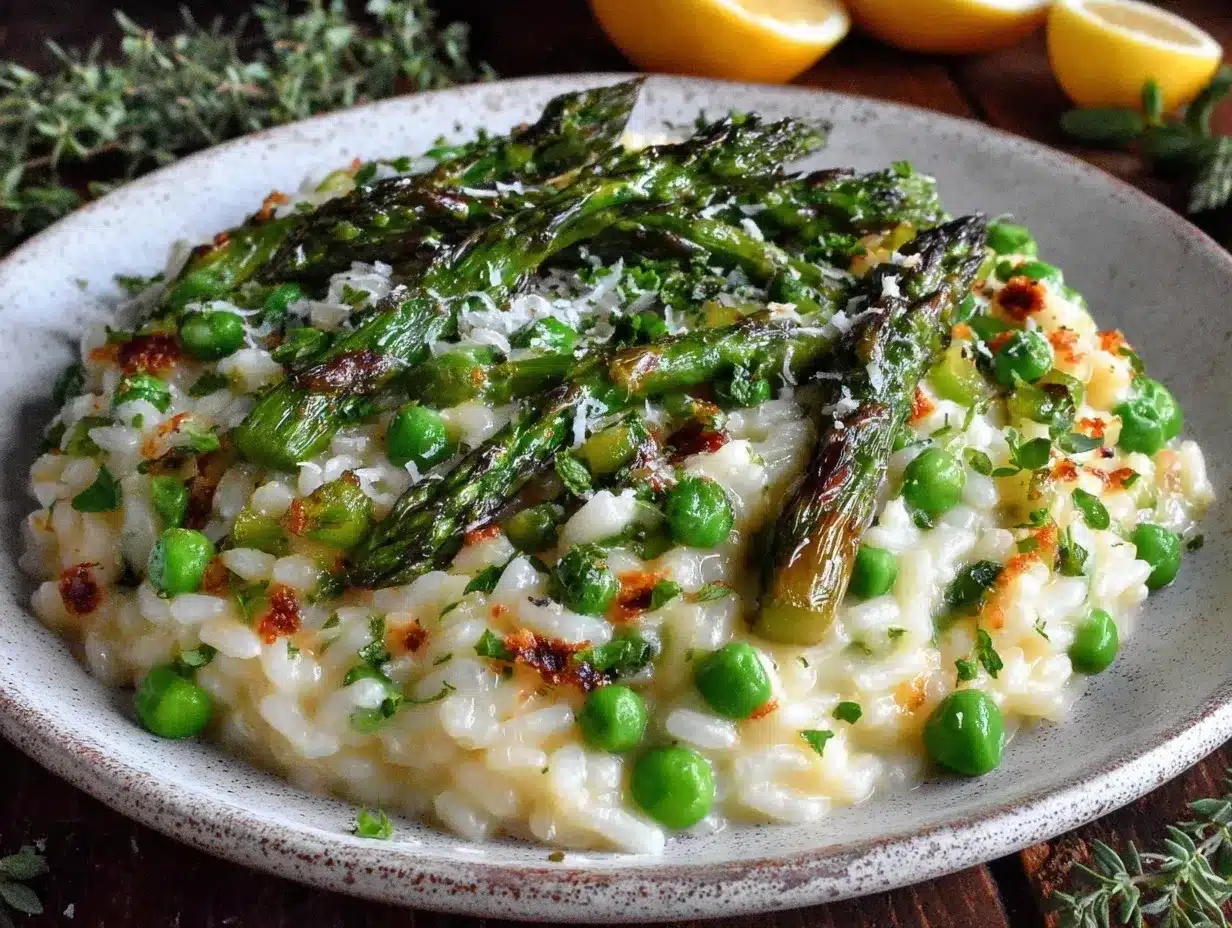
- Prep the broth and veggies: Pour your broth into a medium saucepan and keep it on low heat to stay hot but not boiling. While it warms, wash and trim the asparagus, then cut into 1-inch pieces. If using fresh peas, shell them; otherwise, keep frozen peas handy.
- Sauté aromatics: Heat 2 tablespoons olive oil in your large sauté pan over medium heat. Add the finely chopped onion and cook until soft and translucent, about 4-5 minutes. Toss in the minced garlic and stir for another 30 seconds, until fragrant.
- Toast the rice: Add the arborio rice to the pan, stirring to coat every grain with oil and aromatics. Cook for 2-3 minutes until the edges of the rice look translucent but the center remains opaque. This step helps develop flavor and texture.
- Deglaze with wine: Pour in the white wine and stir continuously until the liquid has mostly absorbed. This adds acidity and depth—if skipping wine, substitute with a ladle of broth here instead.
- Cook the risotto: Begin adding warm broth one ladle at a time, stirring gently but constantly. Wait for each addition to be nearly absorbed before adding the next. This slow process releases the starches that give risotto its signature creaminess. It usually takes about 18-20 minutes.
- Add asparagus and peas: When the rice is just tender but still with a slight bite (after about 12 minutes), stir in your asparagus pieces and peas. Continue adding broth and stirring until the rice is creamy and cooked through.
- Finish with butter, cheese, and lemon: Remove the pan from heat. Stir in butter, grated Parmesan, lemon zest, and a squeeze of lemon juice. Taste and season with salt and pepper as needed.
- Garnish and serve: Sprinkle with fresh chopped herbs if using, and serve immediately while warm and creamy.
Note: Keep your stirring gentle—vigorous stirring can break the grains and make the risotto gluey. If you find the risotto too thick, add a splash more broth or a little warm water to loosen it up before serving.
Cooking Tips & Techniques
Risotto might seem intimidating, but a few little tricks make it way more manageable—and delicious.
- Keep the broth warm: Adding cold broth cools the rice and slows cooking. Warm broth helps maintain an even temperature for creamy, even results.
- Be patient with stirring: You don’t have to stir nonstop, but don’t leave it unattended either. Frequent stirring helps release starch from the rice, giving that luscious texture.
- Choose the right rice: Arborio is classic, but Carnaroli or Vialone Nano varieties also work great if you want to experiment.
- Don’t overcook your veggies: Adding asparagus and peas partway through ensures they stay vibrant and crisp, not mushy.
- Adjust seasoning at the end: Parmesan adds saltiness, so wait until the very last step to season with salt and pepper to avoid oversalting.
- Use fresh lemon zest for brightness: It cuts through the richness and makes the whole dish feel lighter and fresher.
- Personal mishap alert: Once, I accidentally sautéed the onions too high and ended up with brown bits that gave a slightly bitter note. Lesson learned—medium heat is your friend here!
Variations & Adaptations
This risotto primavera is wonderfully flexible—perfect for tweaking based on what you have or your dietary needs.
- Seasonal swap: In summer, try swapping asparagus and peas for fresh zucchini ribbons and cherry tomatoes for a sweeter, lighter twist.
- Dairy-free version: Use vegan butter and nutritional yeast instead of Parmesan and butter. Coconut cream can be stirred in at the end for extra creaminess.
- Protein boost: Add cooked grilled chicken, shrimp, or crispy pancetta for a heartier meal. Just stir in at the end to keep everything tender.
- Herbal twist: Mix in fresh tarragon or chives instead of parsley to vary the herbal notes.
- Texture variation: Toast pine nuts or slivered almonds to sprinkle on top, adding a satisfying crunch contrast.
One variation I love is stirring in a spoonful of mascarpone cheese at the end for an even richer, silkier finish, especially on chilly spring evenings.
Serving & Storage Suggestions
This risotto primavera is best served hot and fresh—the creamy texture starts to firm up as it cools. I like to plate it with a sprinkle of extra Parmesan and a twist of fresh black pepper.
Pair it with a crisp green salad or some sautéed green beans with lemon zest and pine nuts for a colorful spring meal that feels light but satisfying.
If you need to store leftovers, transfer the risotto into an airtight container and refrigerate for up to 2 days. When reheating, add a splash of broth or water and warm gently on the stove while stirring to bring back the creamy texture. Microwave reheating works too, but watch the timing to avoid drying it out.
Flavors tend to deepen a bit overnight, so leftovers can be surprisingly delicious the next day—just remember to loosen it up before serving.
Nutritional Information & Benefits
This creamy spring risotto primavera with asparagus and peas offers a balanced mix of carbohydrates, protein, and fats. Here’s a rough estimate per serving (for 4 servings):
| Nutrient | Amount |
|---|---|
| Calories | 370 kcal |
| Protein | 11 g |
| Fat | 12 g |
| Carbohydrates | 52 g |
| Fiber | 5 g |
| Sodium | 550 mg (varies with broth) |
Asparagus and peas are excellent sources of vitamins A, C, and K, plus fiber and antioxidants. The Parmesan adds calcium and protein. This recipe is naturally gluten-free as long as you use gluten-free broth. It’s a wholesome, nutrient-packed dish that feels indulgent but supports a balanced diet.
Conclusion
This creamy spring risotto primavera with asparagus and peas has carved out a cozy spot in my meal rotation—and I hope it finds one in yours too. Its comforting creaminess combined with fresh, vibrant veggies makes it feel special without requiring a day in the kitchen. Plus, it’s flexible enough to suit different tastes and dietary needs.
Don’t hesitate to make it your own: swap veggies, add herbs, or toss in a protein. I love hearing how readers put their spin on this recipe, so feel free to share your twists and tips in the comments. Cooking something that tastes this good and feels this fresh? Honestly, that’s a win every time.
Frequently Asked Questions
Can I use frozen asparagus and peas for this risotto?
Yes! Frozen peas work perfectly, and if you use frozen asparagus, just thaw and drain it well before adding to avoid extra water in the risotto.
What if I don’t have white wine? Can I skip it?
Absolutely. You can replace the wine with extra broth. The flavor won’t be quite the same but still delicious and creamy.
How do I know when the risotto is done?
The rice should be tender but still have a slight bite (al dente). The texture will be creamy and slightly loose—if it’s too thick, add a bit more broth or water.
Can I make this risotto vegan?
Yes! Use vegetable broth, vegan butter, and nutritional yeast instead of Parmesan. Coconut cream can add richness at the end.
Is it possible to prepare risotto ahead of time?
Risotto is best fresh, but you can make it a day ahead. Store leftovers in the fridge and reheat gently with a splash of broth to bring back creaminess.
For a fresh side to complement this dish, try the honey roasted butternut squash with rosemary. Its sweet and savory notes pair beautifully with the bright risotto flavors.
Pin This Recipe!
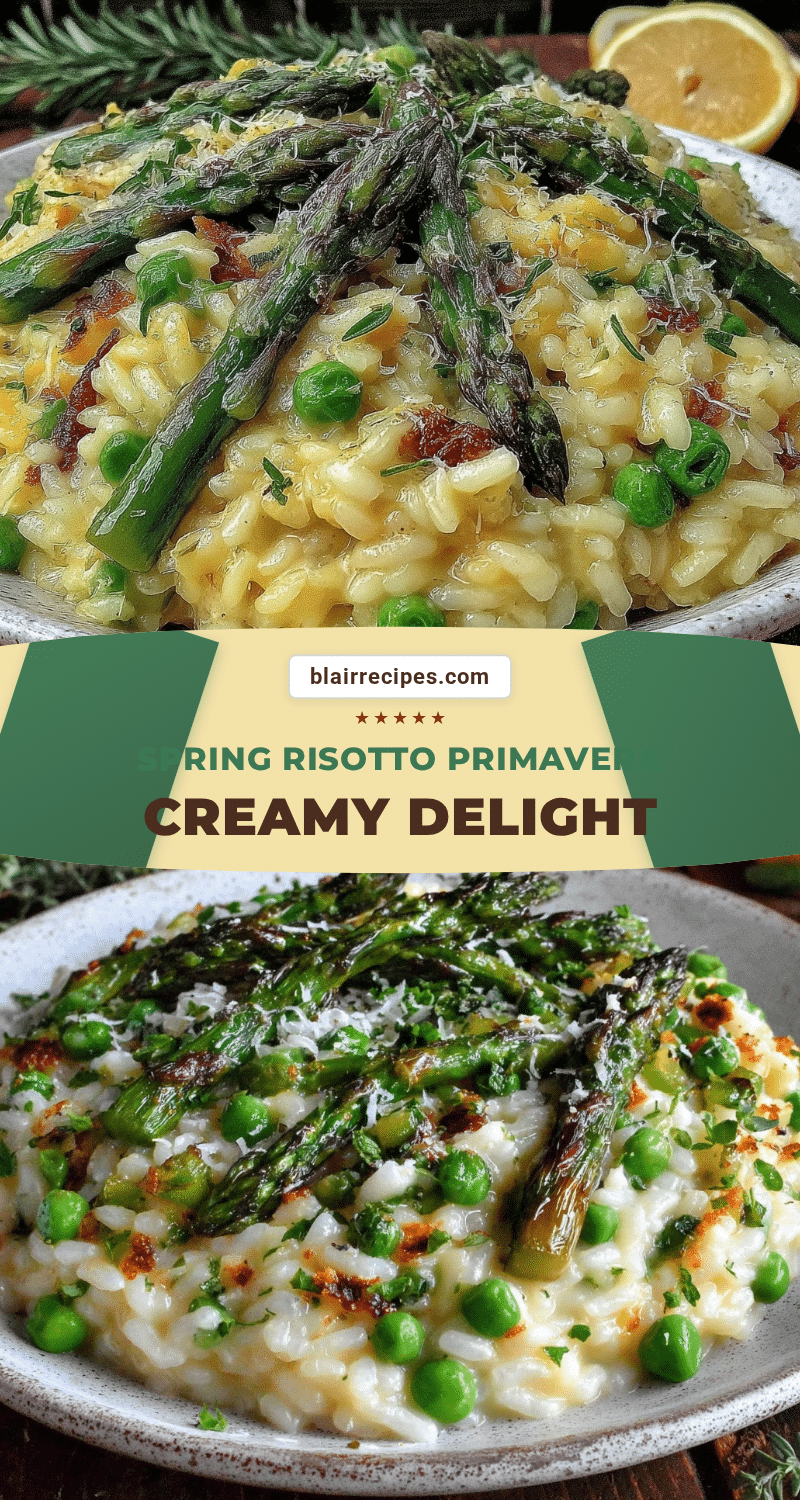
Creamy Spring Risotto Primavera Recipe with Asparagus and Peas

A creamy and fresh risotto primavera featuring tender asparagus and sweet peas, perfect for a quick and easy spring meal that feels indulgent yet wholesome.
- Prep Time: 10 minutes
- Cook Time: 25 minutes
- Total Time: 35 minutes
- Yield: 4 servings 1x
- Category: Main Course
- Cuisine: Italian
Ingredients
- 1 ½ cups (300g) arborio rice
- 1 bunch (about 1 lb / 450g) fresh asparagus, trimmed and cut into 1-inch pieces
- 1 cup (150g) frozen or fresh peas
- 1 small yellow onion, finely chopped
- 2 cloves garlic, minced
- 4 cups (1 liter) low-sodium vegetable or chicken broth
- ½ cup (120ml) dry white wine (optional)
- ⅔ cup (60g) grated Parmesan cheese
- 3 tablespoons (45g) butter
- 2 tablespoons (30ml) olive oil
- Zest and juice of 1 lemon
- Salt and black pepper, to taste
- Fresh herbs (parsley or basil), optional
Instructions
- Pour broth into a medium saucepan and keep on low heat to stay hot but not boiling. Wash and trim asparagus, then cut into 1-inch pieces. Shell fresh peas if using, or keep frozen peas ready.
- Heat olive oil in a large sauté pan over medium heat. Add chopped onion and cook until soft and translucent, about 4-5 minutes. Add minced garlic and stir for 30 seconds until fragrant.
- Add arborio rice to the pan, stirring to coat with oil and aromatics. Cook for 2-3 minutes until edges look translucent but center remains opaque.
- Pour in white wine and stir continuously until mostly absorbed. If skipping wine, substitute with a ladle of broth.
- Add warm broth one ladle at a time, stirring gently but constantly. Wait for each addition to be nearly absorbed before adding the next. Continue for about 18-20 minutes.
- After about 12 minutes, stir in asparagus pieces and peas. Continue adding broth and stirring until rice is creamy and cooked through.
- Remove pan from heat. Stir in butter, grated Parmesan, lemon zest, and lemon juice. Season with salt and pepper to taste.
- Garnish with fresh chopped herbs if using and serve immediately while warm and creamy.
Notes
Keep broth warm to maintain even cooking temperature. Stir gently to avoid breaking rice grains and making risotto gluey. If risotto is too thick, add a splash of broth or warm water to loosen before serving. Use medium heat to avoid burning onions. For vegan version, substitute butter and Parmesan with vegan alternatives and use vegetable broth.
Nutrition
- Serving Size: 1 cup risotto per se
- Calories: 370
- Sugar: 4
- Sodium: 550
- Fat: 12
- Saturated Fat: 7
- Carbohydrates: 52
- Fiber: 5
- Protein: 11
Keywords: risotto, primavera, asparagus, peas, spring recipe, creamy risotto, easy risotto, vegetarian, homemade meal