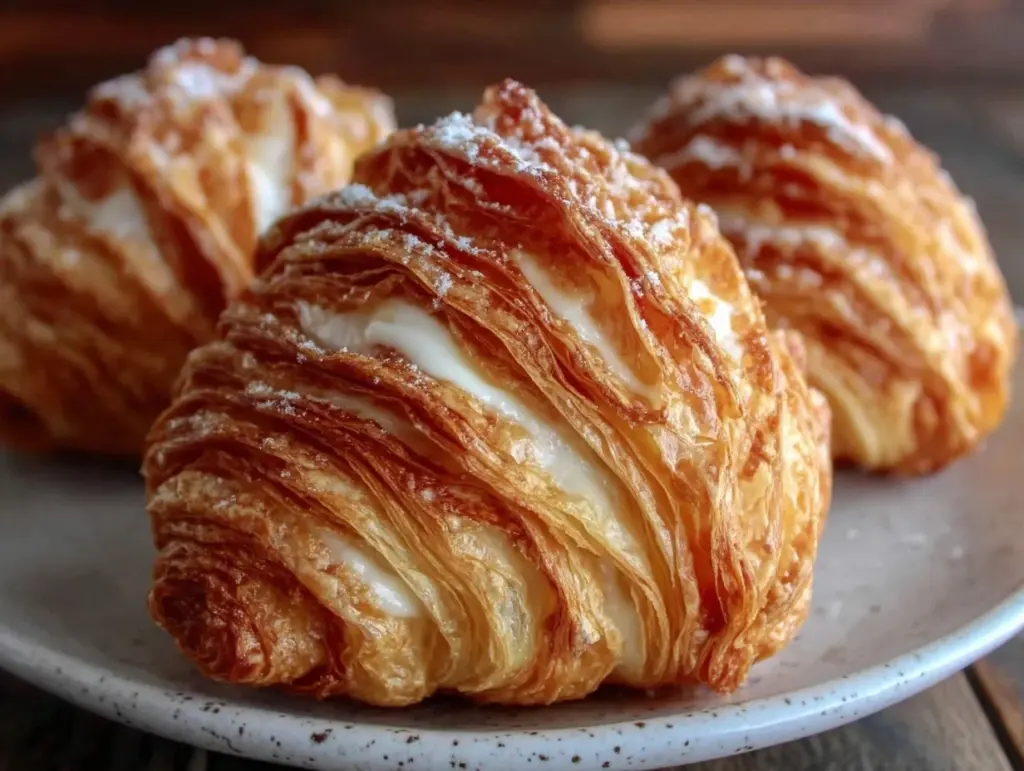
“You’ve got to try this sfogliatella!” my friend Luca insisted over coffee one drizzly afternoon, waving a flaky pastry like it was magic. That moment stuck with me—not just because of the way the light caught those buttery layers, but because I’d never seen a pastry quite like it. Sfogliatella, an Italian classic from Naples, is this wild, crispy shell that somehow manages to be both delicate and substantial. The ricotta filling? Pure silk. Honestly, I was skeptical at first—ricotta in a pastry always sounded a bit bland to me—but Luca’s enthusiasm was contagious.
So, I rolled up my sleeves and gave it a go. The first time I baked sfogliatella, the kitchen smelled like a warm bakery on a busy Sunday morning. The pastry’s edges crackled as I bit into it—that satisfying crunch followed by the creamy, slightly sweet ricotta inside. It was like discovering a hidden gem in the middle of a hectic week. Since then, I’ve made this crispy Italian sfogliatella pastry with creamy ricotta filling almost every weekend, tweaking the filling just a bit here and there (sometimes a hint of orange zest, sometimes a dash of cinnamon) but always keeping that signature crispy texture.
What I love most? It’s not just a dessert; it’s a little ritual—one that turns a simple kitchen into a cozy Italian trattoria. If you’re someone who appreciates a good crunch and a creamy center, this recipe might just become your new favorite too. It’s not fancy or complicated, but it carries a quiet promise of comfort and a touch of indulgence that lingers long after the last crumb disappears.
Why You’ll Love This Recipe
This crispy Italian sfogliatella pastry with creamy ricotta filling is one of those recipes that makes you feel like you’re treating yourself without any fuss—trust me, I wouldn’t keep coming back to it otherwise. Here’s why it’s a winner in my kitchen:
- Quick & Easy: You can have these beautiful pastries ready in about 90 minutes, perfect for a weekend treat or impressing guests without too much hassle.
- Simple Ingredients: No need for exotic or hard-to-find items. Most ingredients are pantry staples or easy to find at your local grocery store.
- Perfect for Brunch or Special Occasions: Whether you’re hosting a laid-back brunch or want a sweet ending to a cozy dinner, these pastries fit right in.
- Crowd-Pleaser: I’ve never met anyone who didn’t smile after tasting one. Kids, adults, even picky eaters seem to love that crunchy outside and creamy inside combo.
- Unbelievably Delicious: The layers of crisp, flaky pastry paired with the creamy, slightly sweet ricotta filling is a texture and flavor combo that feels like comfort food with a little Italian soul.
What sets this recipe apart is the attention to the sfogliatella dough itself—the way it’s rolled and folded to create those signature layers that shatter delightfully with each bite. Plus, the ricotta filling is whipped to a smooth, luscious texture with a hint of citrus that brightens every mouthful. This isn’t just any ricotta pastry; it’s the version I trust to bring a little Naples into my kitchen.
And honestly, it’s comforting to know that a recipe this satisfying is doable at home. No fancy bakery needed.
What Ingredients You Will Need
This crispy Italian sfogliatella pastry recipe uses simple, wholesome ingredients to bring together bold texture and a creamy, flavorful filling without any fuss. Most of these are pantry staples, and a few tips on choosing the best ricotta and citrus will make a real difference in your final pastry.
- For the dough:
- All-purpose flour – 2 cups (250g), sifted for a light texture
- Semolina flour – ½ cup (70g), adds that characteristic crunch and structure
- Cold unsalted butter – ¾ cup (170g), cut into small cubes (use high-quality European-style butter if possible for better flavor)
- Granulated sugar – 2 tablespoons
- Salt – ½ teaspoon
- Cold water – about ¾ cup (180ml), adjusted as needed to bring dough together
- For the ricotta filling:
- Whole milk ricotta cheese – 1 ½ cups (375g), well-drained (I prefer Galbani brand for its creamy texture)
- Granulated sugar – ⅓ cup (65g), adjust to your sweetness preference
- Large egg – 1, room temperature
- Semolina flour – 2 tablespoons (helps thicken the filling)
- Fresh orange zest – 1 teaspoon (adds a bright, fresh note; lemon zest works too)
- Vanilla extract – 1 teaspoon
- Cinnamon – ¼ teaspoon (optional, but highly recommended for warmth)
- For brushing and finishing:
- Egg wash – 1 large egg beaten with 1 tablespoon water
- Powdered sugar for dusting (optional)
If you want a gluten-free alternative, swapping the all-purpose flour with a blend like Bob’s Red Mill gluten-free flour works well, but the texture will be slightly different. For a dairy-free version, try ricotta-style cottage cheese made from almond or cashew milk, though the filling might be less creamy.
Equipment Needed
- Rolling pin: Essential for rolling out the dough paper-thin. A French-style rolling pin gives better control, but any sturdy rolling pin will do.
- Mixing bowls: Use medium and large bowls for dough and filling prep.
- Pastry brush: For the egg wash to get that golden, shiny finish on the pastry.
- Baking sheets: Two rimmed sheets lined with parchment paper or silicone mats for easy clean-up and even baking.
- Kitchen scale: Optional but highly recommended for precise measurements, especially with flour and ricotta.
- Fine grater or microplane: For zesting citrus—fresh zest really lifts the filling.
- Clean kitchen towel or plastic wrap: To cover dough and keep it from drying out during resting.
If you don’t have a pastry brush, a clean small spoon or even your fingertips can work for egg wash application (just be gentle!). For rolling the dough, if you’re short on space, rolling in batches on a large cutting board is a handy trick I picked up.
Preparation Method
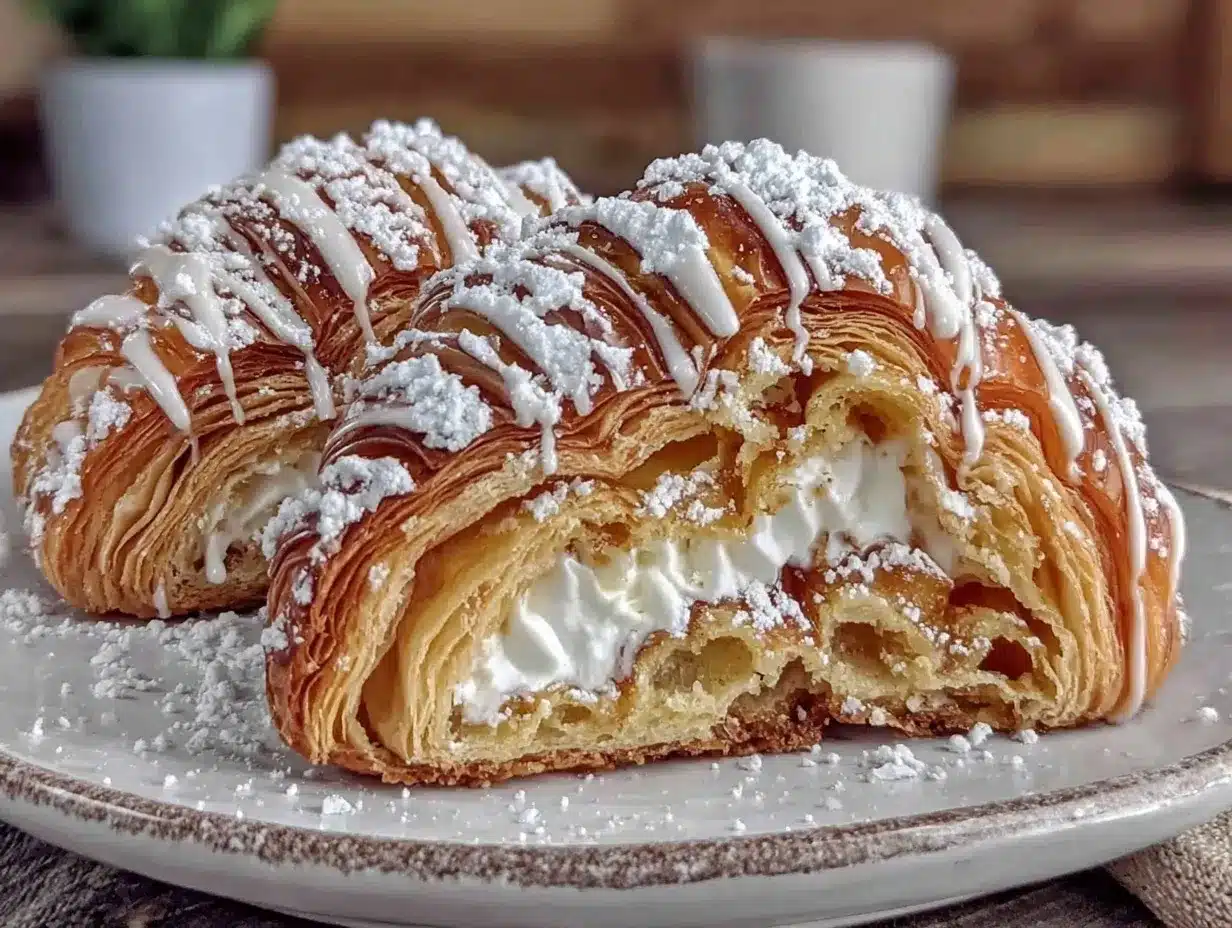
- Make the dough: In a large bowl, whisk together all-purpose flour, semolina flour, sugar, and salt. Add the cold cubed butter and rub it into the flour mix with your fingertips until the mixture resembles coarse breadcrumbs with some pea-sized bits of butter remaining. This gives the dough its flaky layers.
- Add cold water: Gradually pour in the cold water, mixing gently with your hands or a wooden spoon until the dough starts to come together. You may not need all the water—use just enough to form a firm, cohesive dough. Wrap it tightly in plastic wrap and refrigerate for at least 30 minutes to rest.
- Prepare the ricotta filling: While the dough rests, drain the ricotta in a fine sieve or cheesecloth for 15 minutes to remove excess moisture. In a medium bowl, combine the drained ricotta, sugar, egg, semolina flour, orange zest, vanilla extract, and cinnamon (if using). Mix until smooth and creamy—no lumps! Cover and chill until ready to use.
- Roll out the dough: After resting, divide the dough into two equal portions. On a lightly floured surface, roll one portion into a large rectangle about 12×10 inches (30×25 cm) and very thin—aim for almost translucent.
- Create the layers: Brush the surface of the rolled dough lightly with melted butter or oil (optional for extra flakiness). Starting from the long edge, roll the dough tightly into a log, like a jelly roll. Wrap in plastic and chill for 15 minutes to firm up.
- Slice and shape: Cut the chilled log into 1-inch (2.5 cm) slices. Take each slice and gently flatten it with your palm, then fold or pinch the edges to form the iconic shell shape of sfogliatella, leaving a cavity for the filling.
- Fill the pastries: Spoon about 1 tablespoon (15 ml) of the ricotta filling into each pastry shell, being careful not to overfill to avoid bursting during baking.
- Egg wash and bake: Place the filled pastries on parchment-lined baking sheets. Brush each one thoroughly with egg wash to get that golden crust. Bake at 375°F (190°C) for 30-35 minutes or until the pastries are puffed, golden, and crisp. Rotate the pans halfway for even browning.
- Cool and serve: Let the sfogliatella cool on wire racks for 10 minutes. Dust with powdered sugar if you like. Serve warm or at room temperature for the perfect crunch and creamy bite.
Cooking Tips & Techniques
Getting that signature crisp and flaky sfogliatella pastry takes a little patience, but a few tricks can make the process smoother:
- Keep the butter cold: When working the dough, cold butter is key to creating flaky layers. If it softens too much, pop the dough in the fridge for 10 minutes before continuing.
- Roll thin but carefully: The thinner the dough, the crisper the layers. Use a light touch to avoid tearing, and dust lightly with flour to prevent sticking.
- Chilling between steps: Resting the dough after mixing and again after rolling helps relax the gluten and firm up the butter, leading to better texture.
- Drain ricotta thoroughly: Excess moisture in the filling can make the pastry soggy. Let the ricotta sit in a fine sieve for at least 15 minutes.
- Don’t overfill: Too much filling can cause the pastry to burst or leak while baking. A tablespoon per pastry is enough.
- Use an egg wash generously: This encourages beautiful browning and adds a subtle sheen.
- Watch your oven temperature: Baking at 375°F (190°C) gives a balance between cooking the filling thoroughly and crisping the pastry without burning.
Early on, I learned the hard way that skipping the chilling steps leads to a tough pastry (lesson painfully learned). Also, attempt to fold the pastries gently—forcing the dough can flatten those lovely layers. Multitasking helps too—while the dough rests, you can prep the filling or tidy up your kitchen, making the whole process feel less daunting.
Variations & Adaptations
This crispy Italian sfogliatella pastry with creamy ricotta filling is wonderfully versatile. Here are some ways to switch things up depending on your mood or dietary needs:
- Flavor twists: Add finely chopped candied orange peel or a splash of limoncello to the filling for a citrusy zing. For a more autumnal version, stir in some pumpkin puree and warm spices like nutmeg and cloves.
- Dietary adaptations: Swap all-purpose flour with a gluten-free blend for gluten sensitivities. Use coconut or almond ricotta alternatives for a dairy-free version, though expect a slight texture change.
- Sweet or savory: While this recipe leans sweet, I’ve tried a savory version with ricotta mixed with herbs, garlic, and sautéed spinach—equally delicious and perfect for brunch. Pair it with a side of lemon zest and pine nut green beans to round out the meal.
- Different cooking methods: Although baking is traditional, some have experimented with air-frying the sfogliatella for a crispier, lighter crust and shorter cooking time.
- Personal variation: I sometimes sprinkle crushed pistachios on top before baking for a nutty crunch and a pop of color—trust me, it’s a showstopper.
Serving & Storage Suggestions
These pastries are best enjoyed fresh and warm when the contrast between crispy layers and creamy filling is at its peak. Serve them alongside a cup of strong espresso or a lightly brewed tea for a perfect Italian-style treat. If you’re serving a brunch or dessert spread, pairing sfogliatella with dishes like a cozy green bean casserole or honey-glazed carrots offers a nice balance of flavors.
To store, place cooled pastries in an airtight container. They keep well at room temperature for up to 24 hours but are best eaten within the day. For longer storage, refrigerate for up to 3 days. Reheat in a 350°F (175°C) oven for about 5-7 minutes to revive the crispness. Avoid microwaving, as it tends to soften the pastry layers.
Interestingly, the flavors meld subtly overnight, making cold sfogliatella a different but enjoyable experience—less crisp, more chewy, and the filling’s citrus notes become more pronounced.
Nutritional Information & Benefits
Each crispy Italian sfogliatella pastry with creamy ricotta filling clocks in at roughly 220-250 calories, depending on size and exact ingredients. The ricotta provides a good source of protein and calcium, while the semolina flour in the dough adds a pleasant nutty flavor and some fiber.
This recipe is not particularly low-fat, thanks to the butter and ricotta, but it’s a satisfying indulgence that balances richness with fresh citrus flavors. For those watching carbs, swapping to almond flour or reducing sugar in the filling can help. Be mindful of potential allergens—this recipe contains dairy, gluten, and eggs.
From a wellness perspective, I appreciate that this pastry brings real ingredients to the table without artificial additives. The citrus zest brightens the flavor naturally, reducing the need for excess sugar.
Conclusion
This crispy Italian sfogliatella pastry with creamy ricotta filling has become my go-to treat when I want something that feels special but isn’t complicated. From the time it takes to prep to the joy of biting into flaky, crispy layers with that luscious filling, it’s a recipe that sticks with you. I encourage you to make it your own—maybe add your favorite zest or a little nutty crunch.
It’s a sweet reminder that sometimes, simple ingredients and a bit of care can create magic in the kitchen. I look forward to hearing how your sfogliatella turns out and what twists you add to make it truly yours.
Frequently Asked Questions
What is sfogliatella pastry?
Sfogliatella is a traditional Italian pastry from Naples known for its thin, layered, crispy shell and creamy ricotta-based filling. The name means “small leaf,” referring to the flaky layers.
Can I use store-bought pastry dough for sfogliatella?
While you can try puff pastry as a shortcut, it won’t replicate the signature layered crunch of traditional sfogliatella dough. Making the dough from scratch is recommended for authentic texture.
How do I prevent the ricotta filling from being watery?
Drain the ricotta thoroughly using a fine sieve or cheesecloth for at least 15 minutes before mixing. This prevents excess moisture that can make the pastry soggy.
Can I freeze sfogliatella pastries?
Yes, you can freeze the assembled but unbaked pastries on a baking sheet, then transfer them to a freezer bag. Bake from frozen, adding a few extra minutes. Frozen baked sfogliatella can be reheated in the oven for crispiness.
What’s the best way to store leftovers?
Store cooled pastries in an airtight container at room temperature for up to 24 hours or refrigerate for up to 3 days. Reheat in the oven to restore crispness—avoid microwaving to keep layers flaky.
Pin This Recipe!
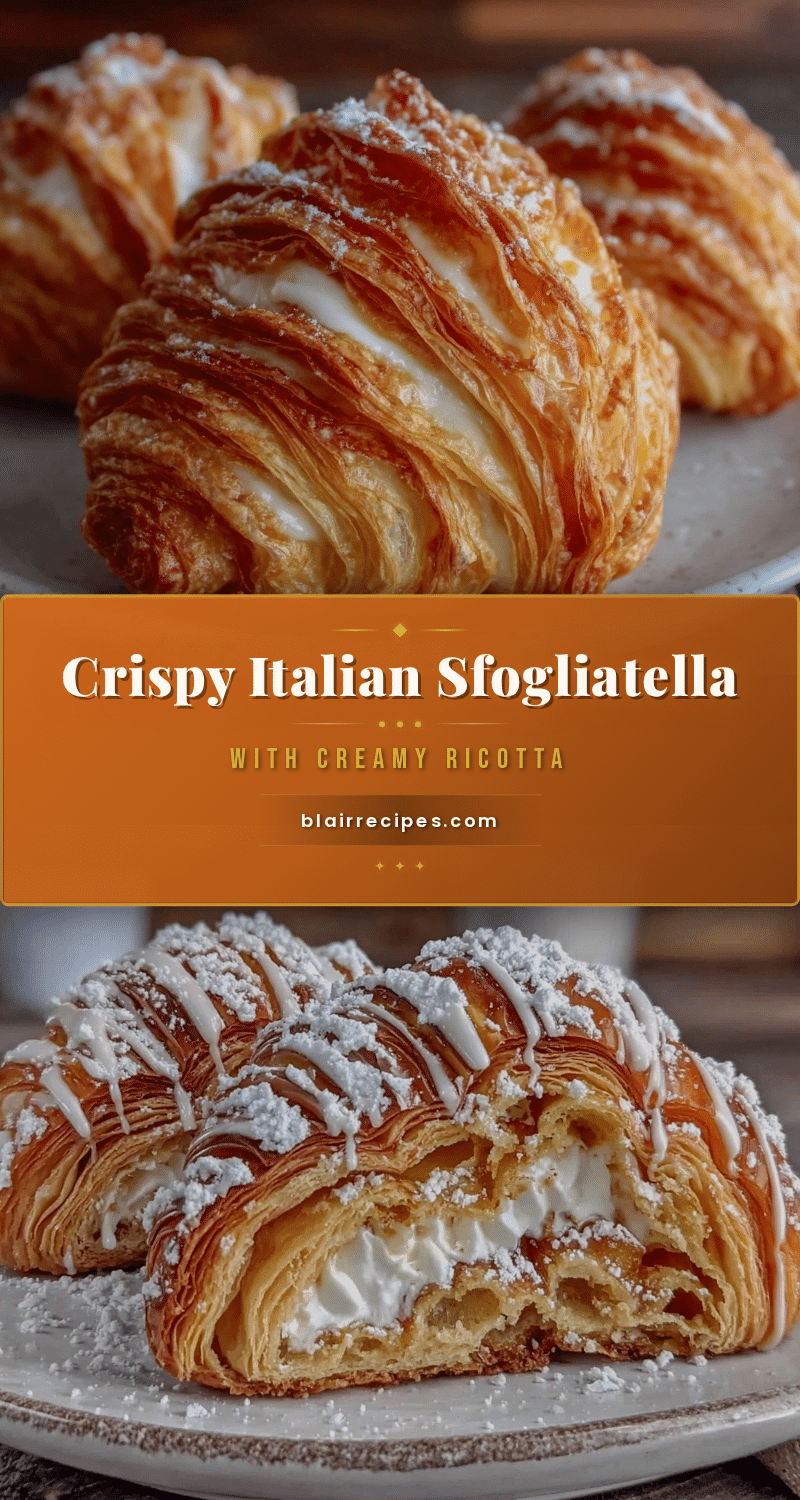
Crispy Italian Sfogliatella Pastry Recipe with Creamy Ricotta Filling Made Easy

A traditional Italian pastry from Naples featuring a crispy, flaky shell with a smooth, slightly sweet ricotta filling, perfect for brunch or special occasions.
- Prep Time: 45 minutes
- Cook Time: 30-35 minutes
- Total Time: 75-80 minutes
- Yield: 12 pastries 1x
- Category: Dessert
- Cuisine: Italian
Ingredients
- 2 cups (250g) all-purpose flour, sifted
- ½ cup (70g) semolina flour
- ¾ cup (170g) cold unsalted butter, cut into small cubes
- 2 tablespoons granulated sugar
- ½ teaspoon salt
- about ¾ cup (180ml) cold water, adjusted as needed
- 1½ cups (375g) whole milk ricotta cheese, well-drained
- ⅓ cup (65g) granulated sugar
- 1 large egg, room temperature
- 2 tablespoons semolina flour
- 1 teaspoon fresh orange zest
- 1 teaspoon vanilla extract
- ¼ teaspoon cinnamon (optional)
- 1 large egg beaten with 1 tablespoon water (egg wash)
- Powdered sugar for dusting (optional)
Instructions
- In a large bowl, whisk together all-purpose flour, semolina flour, sugar, and salt.
- Add cold cubed butter and rub into the flour mixture with fingertips until it resembles coarse breadcrumbs with some pea-sized bits of butter remaining.
- Gradually add cold water, mixing gently until dough forms a firm, cohesive ball. Wrap in plastic wrap and refrigerate for at least 30 minutes.
- Drain ricotta in a fine sieve or cheesecloth for 15 minutes to remove excess moisture.
- In a medium bowl, combine drained ricotta, sugar, egg, semolina flour, orange zest, vanilla extract, and cinnamon if using. Mix until smooth and creamy. Cover and chill.
- Divide rested dough into two equal portions. On a lightly floured surface, roll one portion into a 12×10 inch rectangle, very thin and almost translucent.
- Optionally brush dough surface lightly with melted butter or oil for extra flakiness.
- Roll dough tightly from the long edge into a log, wrap in plastic, and chill for 15 minutes.
- Slice chilled log into 1-inch slices. Flatten each slice gently with palm and fold or pinch edges to form shell shape, leaving cavity for filling.
- Fill each pastry shell with about 1 tablespoon of ricotta filling, avoiding overfilling.
- Place filled pastries on parchment-lined baking sheets and brush thoroughly with egg wash.
- Bake at 375°F (190°C) for 30-35 minutes until puffed, golden, and crisp, rotating pans halfway through baking.
- Cool pastries on wire racks for 10 minutes. Dust with powdered sugar if desired. Serve warm or at room temperature.
Notes
Keep butter cold to ensure flaky layers. Roll dough very thin but carefully to avoid tearing. Chill dough after mixing and after rolling for better texture. Drain ricotta thoroughly to prevent soggy pastry. Do not overfill pastries to avoid bursting. Use egg wash generously for golden, shiny crust. Bake at 375°F for balanced cooking and crispness. Reheat in oven to restore crispness; avoid microwaving.
Nutrition
- Serving Size: 1 pastry
- Calories: 235
- Sugar: 8
- Sodium: 150
- Fat: 13
- Saturated Fat: 8
- Carbohydrates: 25
- Fiber: 1
- Protein: 6
Keywords: sfogliatella, Italian pastry, ricotta filling, crispy pastry, Naples dessert, flaky pastry, creamy ricotta, brunch dessert