
Introduction
I remember the first time I made this Easy Spring Vegetable Frittata with Goat Cheese—it wasn’t some grand Sunday brunch plan but more of a last-minute rescue mission. I had just come home after an unexpectedly busy morning, the fridge looking pretty sad except for a handful of spring veggies and a small log of goat cheese I’d forgotten about. Honestly, I wasn’t sure if it would work out, but I figured, why not? Toss it all together, and if it was a flop, I’d just order something later.
What surprised me was how the simple, bright flavors of those spring veggies danced with the creamy tang of the goat cheese, all wrapped up in fluffy eggs. The kitchen smelled like a tiny spring garden, and that light, fresh taste hit the spot after a hectic day. Since then, this frittata has become my go-to for those times I want something quick, satisfying, and just a little bit special without fussing over complicated recipes.
It’s funny how a recipe born out of a near-empty fridge and a rushed afternoon became a staple for me, the kind of dish that feels like a gentle reset. You know that moment when you close your eyes after a bite and just breathe? Yeah, this frittata does that. It’s simple but somehow soulful, and that’s why it stuck with me.
Why You’ll Love This Recipe
- Quick & Easy: Comes together in about 25 minutes, perfect when you don’t want to spend ages cooking but still want something homemade.
- Simple Ingredients: Uses fresh spring vegetables and goat cheese—nothing fancy or hard to find, just good stuff you might already have.
- Perfect for Brunch: Whether it’s a weekend treat or a casual midweek meal, this frittata fits right in with relaxed, feel-good vibes.
- Crowd-Pleaser: The creamy goat cheese and tender veggies make it a hit with kids and adults alike—plus, it looks impressive without much effort.
- Unbelievably Delicious: The texture is fluffy and moist, with bursts of tangy cheese and fresh veggie crunch that keep every bite interesting.
This isn’t just another veggie frittata. The secret is in balancing the seasoning and timing the veggies so they stay bright but tender. The goat cheese isn’t just thrown on top; it’s gently folded in, melting into the eggs and creating pockets of creamy goodness. After testing countless variations, this recipe felt like the perfect harmony of spring flavors and creamy texture. It’s the kind of dish that makes brunch feel like a celebration—even on a random weekday.
What Ingredients You Will Need
This recipe sticks to fresh, simple ingredients that come together with ease. The veggies bring vibrant color and a slight crunch, while the goat cheese lends a creamy tang that ties everything together. Most are pantry staples or easy to find in spring markets, and substitutions are simple if needed.
- Eggs (6 large, room temperature) – the base for that fluffy, rich frittata texture.
- Goat cheese (4 ounces, crumbled) – I like using a creamy, tangy variety like Montrachet for the best melt.
- Asparagus (1 cup, trimmed and cut into 1-inch pieces) – fresh, tender stalks add a nice bite.
- Peas (1/2 cup, fresh or frozen) – a sweet pop that brightens the dish.
- Green onions (3, thinly sliced) – mild onion flavor that blends beautifully.
- Baby spinach (1 cup, roughly chopped) – adds color and mild earthiness.
- Olive oil (2 tablespoons) – for sautéing the vegetables.
- Milk or cream (1/4 cup, whole milk recommended) – for a tender egg texture, but dairy-free milk works too.
- Salt and pepper (to taste) – simple seasoning to make everything pop.
- Fresh herbs (optional: 1 tablespoon chopped chives or parsley) – adds a fresh finish if you have them on hand.
If you want to switch things up, feel free to swap asparagus with zucchini or add a handful of chopped fresh herbs like dill or tarragon for a springtime twist. For a dairy-free version, try vegan cream cheese or omit the goat cheese entirely—though I promise the tangy cheese is worth it!
Equipment Needed

- Oven-safe skillet (8 to 10-inch, cast iron or non-stick) – essential for starting on the stove and finishing in the oven.
- Mixing bowl – to whisk the eggs and milk together.
- Whisk or fork – for beating the eggs smoothly.
- Spatula or wooden spoon – to gently stir the veggies while sautéing.
- Measuring cups and spoons – for accuracy in the milk and seasoning.
If you don’t have an oven-safe skillet, a regular skillet plus a baking dish works fine: sauté the veggies and eggs in the skillet, then transfer to a greased baking dish to finish cooking. I’ve done it both ways, and the skillet method just saves a step and adds a nice crust on the bottom.
For cast iron lovers, this recipe really shines—once you get that hot skillet going, the frittata cooks evenly and browns beautifully. Just remember to oil the pan well to avoid sticking.
Preparation Method
- Preheat your oven to 375°F (190°C). This gives your frittata a nice finish without overcooking the veggies.
- Prepare the vegetables: Trim and cut the asparagus into 1-inch pieces. Slice the green onions thinly and roughly chop the spinach.
- Heat olive oil in your oven-safe skillet over medium heat. Once shimmering, add the asparagus and sauté for about 3-4 minutes, until just tender but still bright green.
- Add peas and green onions to the skillet, stirring occasionally for another 2 minutes. You want the veggies cooked, but not mushy—just tender enough to bite.
- Toss in the spinach and cook until wilted, about 1 minute. Remove the skillet from heat.
- In a mixing bowl, whisk together the eggs, milk, salt, and pepper until smooth and slightly frothy. This helps the frittata stay light and fluffy.
- Gently fold in the crumbled goat cheese and fresh herbs (if using) into the egg mixture.
- Pour the egg mixture evenly over the sautéed vegetables in the skillet. Give the pan a little shake to level everything out.
- Place the skillet in the preheated oven and bake for 12-15 minutes, or until the eggs are set and lightly golden on top. A knife inserted near the center should come out clean.
- Let it cool for 5 minutes before slicing. This helps the frittata firm up and makes serving easier.
If you notice the edges cooking faster than the center, gently loosen them with a spatula halfway through baking to prevent sticking. And if your goat cheese is a bit crumbly, folding it in rather than sprinkling on top keeps it melting evenly throughout.
Cooking Tips & Techniques
One thing I’ve learned is not to rush the vegetable sauté step. You want them tender but still vibrant—overcooking leads to a dull frittata. Medium heat and frequent stirring work best.
Whisking the eggs with a bit of milk or cream makes all the difference for texture. You get a silkier, lighter result rather than dry eggs. Also, letting the eggs come to room temperature before mixing helps them cook more evenly.
Using an oven-safe skillet is a game-changer. It allows you to start on the stovetop, where you control the veggie texture, and finish in the oven for perfect doneness. If you don’t have one, transfer carefully to a baking dish to avoid messes.
Watch the baking time closely. Ovens vary, and you want a slightly golden top but not dry eggs. If the frittata puffs up quickly but looks wet in the center, give it a couple more minutes and check again.
Finally, don’t skip the resting time after baking. It’s tempting to dig in immediately, but letting it settle makes slicing cleaner and flavors mellow beautifully.
Variations & Adaptations
- Vegetarian twist: Add sautéed mushrooms or roasted red peppers for more depth and color.
- Gluten-free option: This recipe is naturally gluten-free, making it perfect for those avoiding wheat.
- Herb swap: Try fresh dill, tarragon, or basil instead of parsley for different flavor profiles.
- Cheese alternatives: Swap goat cheese for feta or ricotta if you prefer milder or creamier textures.
- Seasonal variation: In summer, use fresh zucchini and cherry tomatoes instead of asparagus and peas.
Once, I made this frittata with leftover roasted beets and a sprinkle of toasted walnuts—it was a happy accident that brought out earthy sweetness and crunch. Feel free to experiment based on what’s fresh or what you have on hand.
Serving & Storage Suggestions
This frittata is best served warm or at room temperature, making it ideal for leisurely brunches or packed lunches. Slice it into wedges and pair with a crisp green salad or crusty bread for a balanced meal.
For drinks, a light white wine like Sauvignon Blanc or a sparkling lemonade complements the bright spring flavors nicely.
Store leftovers in an airtight container in the fridge for up to 3 days. Reheat gently in a skillet or microwave to keep the texture tender—avoid overheating or it can dry out.
It also freezes well: wrap individual slices tightly and thaw in the fridge overnight before reheating. The flavors mellow over time, often tasting even better the next day.
Nutritional Information & Benefits
Each serving of this frittata packs a balanced mix of protein, vitamins, and healthy fats. Eggs provide high-quality protein and essential nutrients like vitamin D and choline, while the spring vegetables add fiber, vitamin C, and antioxidants.
Goat cheese contributes calcium and beneficial probiotics that support digestion. Using olive oil adds heart-healthy monounsaturated fats.
This recipe is naturally gluten-free and relatively low-carb, making it suitable for many dietary preferences. If you’re watching calories, the moderate portion size and fresh ingredients make it a nourishing choice without feeling heavy.
Conclusion
This Easy Spring Vegetable Frittata with Goat Cheese has found a cozy spot in my kitchen repertoire because it’s simple, fresh, and satisfying without any fuss. It’s the kind of recipe that adapts to what you have, yet never disappoints in flavor or texture.
Whether you’re feeding a crowd or just treating yourself, it’s easy to make your own with seasonal tweaks or favorite cheeses. Honestly, it’s become a little ritual—something I reach for when I want a meal that feels thoughtful but doesn’t take hours.
Give it a try, play around with the veggies you love, and let me know how it turns out. I’m always curious to hear your twists and stories!
FAQs
Can I make this frittata ahead of time?
Yes! You can prepare it the day before and reheat slices gently in a pan or microwave. It also tastes great cold for a quick snack.
What can I use if I don’t have goat cheese?
Feta, ricotta, or cream cheese are good substitutes, each bringing a different texture and flavor but keeping the creamy element.
Is this recipe suitable for a dairy-free diet?
You can omit the goat cheese or use a dairy-free cheese alternative. Just note the flavor will be less tangy.
Can I add meat to this frittata?
Absolutely! Cooked bacon, sausage, or ham work well. Just add them during the vegetable sauté step.
How do I know when the frittata is fully cooked?
It should be set in the center and lightly golden on top. A knife inserted near the middle should come out clean or with just a few moist crumbs.
Pin This Recipe!
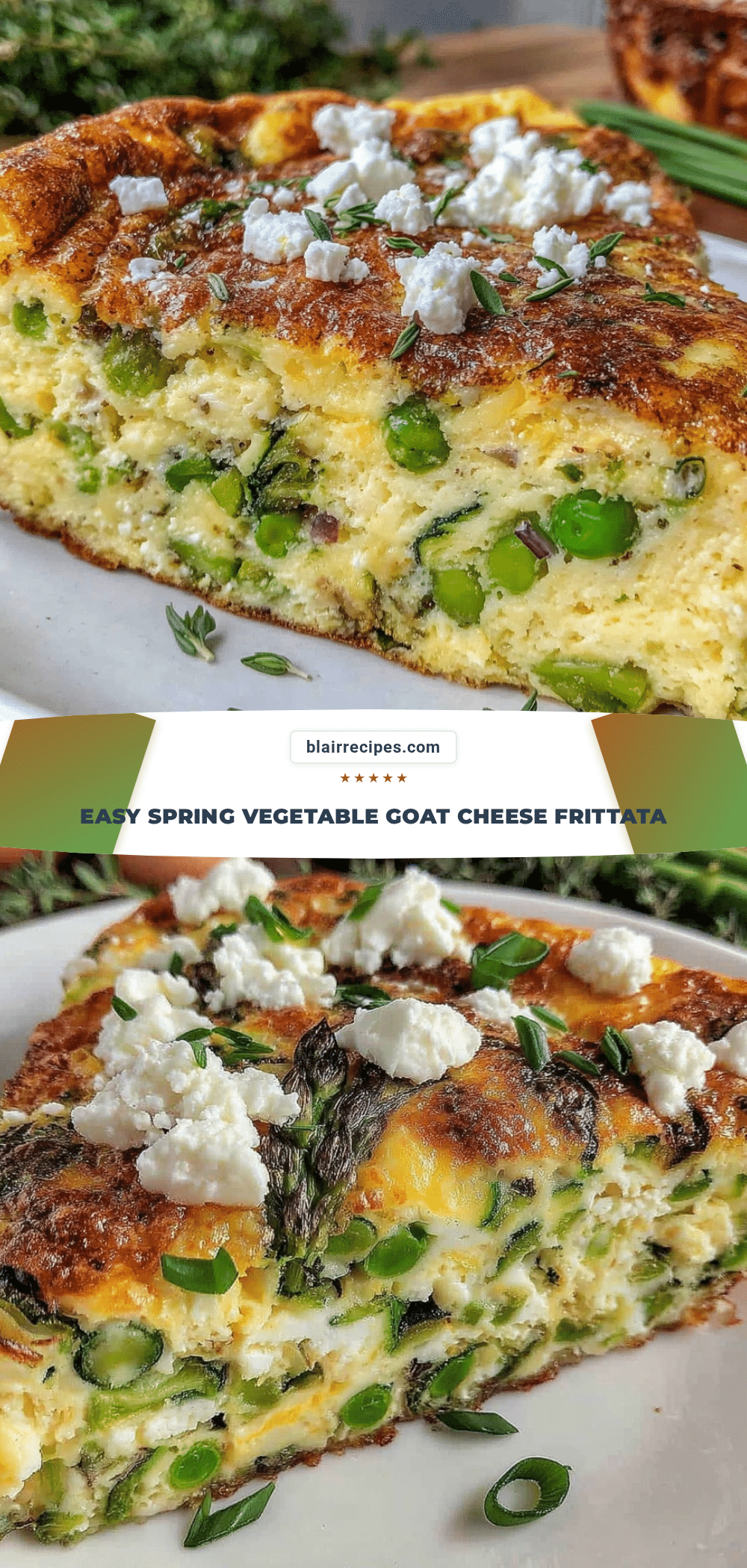
Easy Spring Vegetable Frittata with Goat Cheese

A quick and easy frittata featuring fresh spring vegetables and creamy goat cheese, perfect for a satisfying brunch or light meal.
- Prep Time: 10 minutes
- Cook Time: 15 minutes
- Total Time: 25 minutes
- Yield: 4 servings 1x
- Category: Main Course
- Cuisine: American
Ingredients
- 6 large eggs, room temperature
- 4 ounces goat cheese, crumbled
- 1 cup asparagus, trimmed and cut into 1-inch pieces
- 1/2 cup peas, fresh or frozen
- 3 green onions, thinly sliced
- 1 cup baby spinach, roughly chopped
- 2 tablespoons olive oil
- 1/4 cup whole milk or cream
- Salt and pepper, to taste
- 1 tablespoon fresh herbs (optional: chopped chives or parsley)
Instructions
- Preheat your oven to 375°F (190°C).
- Prepare the vegetables: trim and cut the asparagus into 1-inch pieces, slice the green onions thinly, and roughly chop the spinach.
- Heat olive oil in an oven-safe skillet over medium heat. Once shimmering, add the asparagus and sauté for 3-4 minutes until just tender but still bright green.
- Add peas and green onions to the skillet, stirring occasionally for another 2 minutes until tender.
- Toss in the spinach and cook until wilted, about 1 minute. Remove the skillet from heat.
- In a mixing bowl, whisk together the eggs, milk, salt, and pepper until smooth and slightly frothy.
- Gently fold in the crumbled goat cheese and fresh herbs (if using) into the egg mixture.
- Pour the egg mixture evenly over the sautéed vegetables in the skillet. Give the pan a little shake to level everything out.
- Place the skillet in the preheated oven and bake for 12-15 minutes, or until the eggs are set and lightly golden on top. A knife inserted near the center should come out clean.
- Let it cool for 5 minutes before slicing to help the frittata firm up and make serving easier.
Notes
Do not overcook the vegetables; keep them tender but vibrant. Whisk eggs with milk for a silkier texture. Use an oven-safe skillet for best results or transfer to a baking dish if unavailable. Let the frittata rest 5 minutes before slicing for cleaner cuts.
Nutrition
- Serving Size: 1 wedge (1/4 of frit
- Calories: 230
- Sugar: 2
- Sodium: 280
- Fat: 17
- Saturated Fat: 6
- Carbohydrates: 5
- Fiber: 1
- Protein: 14
Keywords: spring vegetable frittata, goat cheese frittata, easy brunch recipe, vegetarian frittata, gluten-free brunch