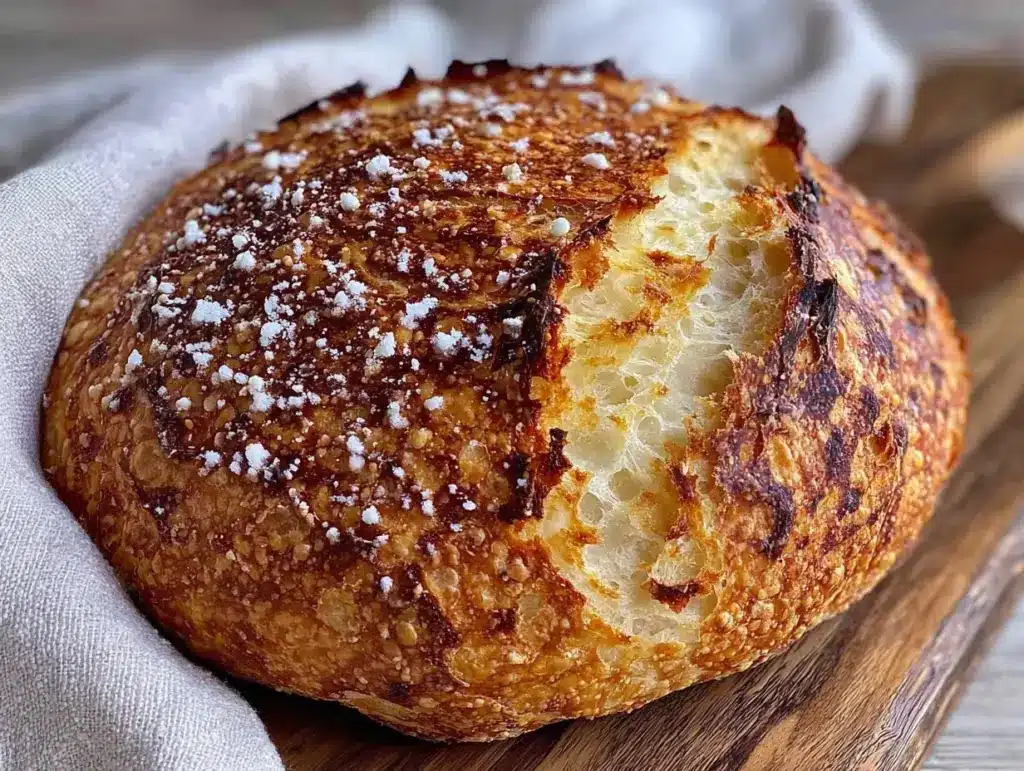
The smell of freshly baked sourdough bread with its crackling, crispy crust wafting through the kitchen is honestly one of life’s simple pleasures. I first stumbled upon this effortless no-knead sourdough bread recipe during a busy week when I craved homemade bread but didn’t have time for the usual kneading and fuss. Let me tell you, it was a game changer.
As someone who loves baking but hates feeling tied down by complicated methods, this recipe quickly became my go-to. It’s got all the charm of traditional sourdough with that tangy depth, but without the arm workout. Plus, the crispy crust? Absolutely next-level.
Whether you’re a sourdough newbie intimidated by starter maintenance or a seasoned baker wanting a reliable, fuss-free loaf, this recipe fits the bill. After testing it a dozen times (sometimes twice a week!), I’m confident it’s perfect for anyone craving that bakery-quality crust and chewy crumb right at home. So, if you’ve been dreaming of effortless no-knead sourdough bread with a crispy crust, you’re in the right place.
Why You’ll Love This Recipe
This effortless no-knead sourdough bread recipe isn’t just about convenience—it’s about delivering a loaf that makes you feel proud every time you pull it out of the oven. Here’s why you’ll fall for it:
- Minimal Hands-On Time: Just mix and forget — the dough does all the work as it slowly ferments overnight.
- Simple Ingredients: Flour, water, salt, and your trusty sourdough starter. No fancy additives—just pure, wholesome goodness.
- Perfect Crispy Crust: The magic of baking in a covered Dutch oven seals in steam, creating that irresistible crackly exterior.
- Impress Without Stress: Great for weekend brunches, cozy dinners, or gifting homemade bread that looks like a pro made it.
- Flexible Timing: You can adjust fermentation to fit your schedule, so it’s super forgiving for busy lives.
- Reliable Results: After baking this loaf over and over, I can honestly say it’s one of the easiest ways to get consistent sourdough success.
This isn’t just another no-knead bread recipe. It’s the one that nails the crust-to-crumb ratio, feels light on your to-do list, and tastes like a warm, crusty hug. Trust me, once you try it, you won’t go back.
What Ingredients You Will Need
This recipe uses simple, wholesome ingredients to deliver bold flavor and that ideal chewy texture without any fuss. Most are pantry staples, so you probably have them on hand already.
- Unbleached all-purpose flour (500g / 4 cups) – I prefer Bob’s Red Mill for consistent texture.
- Active sourdough starter (100g / ½ cup) – bubbly and fed within the last 8-12 hours.
- Water (375g / 1 ½ cups) – lukewarm, around 75°F (24°C) to encourage fermentation.
- Salt (10g / 2 tsp) – fine sea salt works best to blend evenly.
Optional:
- Whole wheat flour (swap up to 100g / ¾ cup for a nuttier flavor)
- Rice flour (for dusting to prevent sticking)
Make sure your sourdough starter is bubbly and active—that’s the secret to getting a lively rise without any kneading. If you don’t have a starter yet, don’t worry; you can find easy guides online or use a bit of store-bought live culture sourdough starter to jumpstart your baking.
Equipment Needed
- Large mixing bowl: Big enough to hold the dough as it expands. Glass or plastic works fine.
- Dutch oven or heavy lidded pot: This is key for that crispy crust. If you don’t have one, a heavy casserole dish with a lid can work.
- Bread proofing basket or bowl lined with a clean kitchen towel: For shaping and proofing the dough.
- Bench scraper or spatula: Helpful for folding and handling sticky dough.
- Kitchen scale: Highly recommended for measuring ingredients with precision (especially flour and water).
Honestly, I’ve tried this recipe with just a mixing bowl and Dutch oven, and it turned out fantastic every time. If you’re on a budget, you can skip the fancy proofing basket and use a bowl lined with a floured towel instead. Also, keeping your Dutch oven seasoned and clean ensures great heat retention and prevents sticking.
Detailed Preparation Method
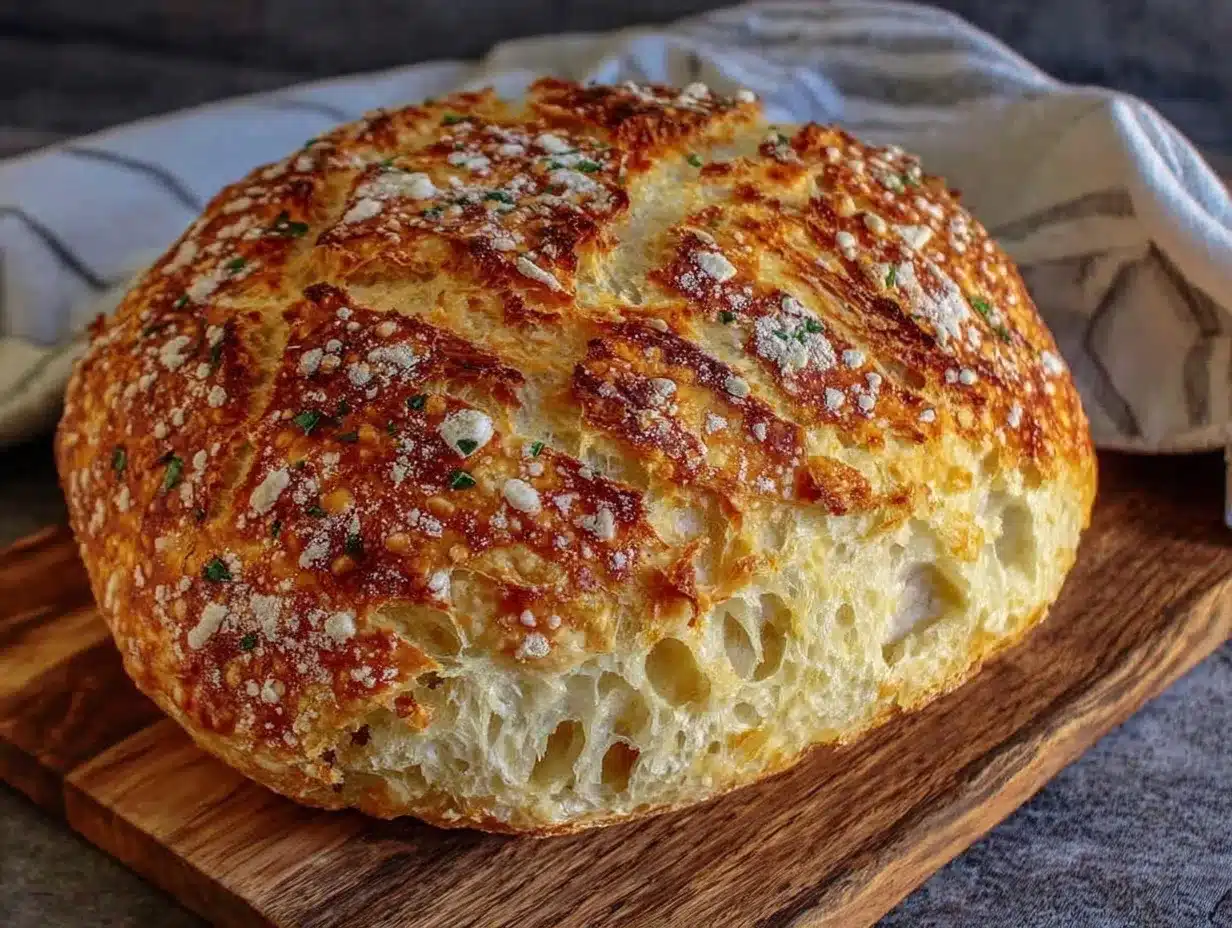
- Mix the dough (10 minutes): In your large bowl, combine 500g (4 cups) unbleached all-purpose flour, 375g (1 ½ cups) lukewarm water, and 100g (½ cup) active sourdough starter. Stir with a spoon or your hand until all the flour is hydrated. The dough will be shaggy and sticky—that’s perfect. Cover the bowl with a damp towel or plastic wrap.
- First fermentation (12-18 hours): Let the dough rest at room temperature (around 70-75°F / 21-24°C) overnight. You’ll see bubbles forming and the dough will rise and look airy. This slow fermentation develops that signature tang and texture.
- Add salt and fold (5 minutes): Sprinkle 10g (2 tsp) salt over the dough. Wet your hands and fold the dough over itself inside the bowl a few times. This strengthens the gluten gently without kneading. Cover again.
- Bulk fermentation with folds (2-3 hours): Every 30 minutes, perform 3-4 folds: reach under the dough, stretch it up, and fold it over. Do this 3-4 times total during this period. The dough will become smoother and more elastic.
- Shape the dough (10 minutes): Lightly flour your work surface and turn the dough out. Shape it into a tight round loaf by folding the edges under and cupping it with your hands. Place it seam-side up in a well-floured proofing basket or bowl lined with a floured towel. Cover with a towel.
- Final proof (1-2 hours): Let the dough rest at room temperature until it’s slightly puffy but not doubled. You can test by gently poking — if the indentation springs back slowly, it’s ready.
- Preheat oven and Dutch oven (45 minutes): Place your Dutch oven with its lid inside the oven and preheat to 450°F (230°C). This preheating is crucial for that crispy crust.
- Score and bake (45-50 minutes): Carefully remove the hot Dutch oven. Turn the dough out seam-side down onto parchment paper. Using a sharp knife or razor blade, score a shallow slash on top. Transfer dough with parchment into the Dutch oven, cover with lid, and bake for 30 minutes.
- Finish baking uncovered (15-20 minutes): Remove lid and bake until the crust is deep golden and crackly. The loaf should sound hollow when tapped on the bottom.
- Cool completely: Transfer the bread to a wire rack and let cool for at least 1 hour before slicing. The crumb needs this time to set.
Pro tip: Don’t rush the cooling step! Cutting too early will make the crumb gummy. Also, scoring helps control where the bread expands — you can get creative here.
Cooking Tips & Techniques
- Use a kitchen scale: Measuring by weight makes a huge difference in bread consistency. Flour volume can vary, but weight is reliable.
- Hydration matters: This recipe has around 75% hydration, which means the dough is sticky but manageable. If it feels too wet, add a tablespoon of flour; too dry, add a splash of water.
- Be patient with fermentation: Sourdough is all about time. Warmer kitchens speed things up; cooler ones slow it down. Adjust accordingly.
- Folding, not kneading: Folding helps develop gluten gently. Don’t skip it or your bread might be dense.
- Hot Dutch oven trick: Preheating your Dutch oven creates steam that crisps the crust beautifully. Use oven mitts and be cautious handling it.
- Don’t skip scoring: It not only looks pretty but prevents the loaf from bursting unpredictably in the oven.
Honestly, I once forgot to preheat my Dutch oven and ended up with a pale, soft crust. Lesson learned! Also, if your starter isn’t bubbly, give it a few more feedings before baking.
Variations & Adaptations
- Whole wheat sourdough: Swap 100g (¾ cup) of all-purpose flour with whole wheat flour for a nuttier, heartier loaf.
- Seeded crust: Sprinkle sesame, poppy, or sunflower seeds on top after scoring for extra crunch and flavor.
- Gluten-free version: Replace flour with a gluten-free blend and add xanthan gum (consult a gluten-free sourdough guide). The rising time may vary.
- Overnight cold fermentation: After shaping, proof the dough in the fridge for 12-24 hours to deepen flavor and make scheduling easier.
- Herb-infused bread: Add chopped rosemary or thyme into the dough during mixing for a fragrant twist.
One of my favorite tweaks is the cold fermentation method—it allows me to bake fresh bread in the morning with minimal morning effort. Just pull it from the fridge and bake!
Serving & Storage Suggestions
Serve this no-knead sourdough bread fresh at room temperature for the best flavor. The crust will be crisp, and the crumb chewy and tangy. It pairs beautifully with butter, olive oil, or your favorite jams.
For an easy breakfast, toast thick slices and top with avocado or soft cheese. It also complements soups and stews wonderfully.
To store, wrap the bread in a clean kitchen towel and keep at room temperature for up to two days. For longer storage, slice and freeze in airtight bags. Toast slices straight from the freezer for best results.
When reheating, briefly bake in a 350°F (175°C) oven for 5-10 minutes to refresh the crust’s crispness. The flavors actually deepen a bit after a day, so leftovers can be surprisingly delicious.
Nutritional Information & Benefits
This sourdough bread is made with natural fermentation, which helps break down gluten and makes nutrients more digestible. A typical slice (about 60g) offers roughly:
| Calories | 160 |
|---|---|
| Carbohydrates | 33g |
| Protein | 6g |
| Fat | 1g |
| Fiber | 2g |
Because it’s made with only four ingredients and no preservatives, it’s a wholesome choice. People sensitive to gluten sometimes find sourdough easier to digest thanks to the natural fermentation process.
Just a heads up: this recipe contains gluten and is not suitable for those with celiac disease unless adapted with gluten-free flour blends.
Conclusion
If you’ve been searching for a way to enjoy homemade sourdough bread without the intimidating kneading and complicated steps, this effortless no-knead sourdough bread recipe is your new best friend. It delivers that perfect crispy crust and tender crumb every time, without stealing your entire day.
Feel free to tweak it to suit your taste—whether that’s adding seeds, herbs, or trying a whole wheat blend. I love how this recipe fits into my busy life while still satisfying my craving for artisan-quality bread. Give it a try and let me know how your loaf turns out!
Don’t forget to share your baking stories, questions, or tweaks in the comments. Happy baking!
FAQs
How do I know if my sourdough starter is ready to use?
Your starter should be bubbly, doubled in size within 8-12 hours after feeding, and have a pleasant, tangy aroma. A simple float test can help—drop a spoonful in water; if it floats, it’s ready.
Can I use bread flour instead of all-purpose flour?
Yes! Bread flour has more protein, which can lead to a chewier texture and better gluten development, but all-purpose flour works perfectly fine in this recipe.
What if I don’t have a Dutch oven?
You can bake the bread on a preheated baking stone or heavy baking sheet and create steam by placing a tray of hot water in the oven. Results may vary, but you’ll still get a nice crust.
Can I shorten the fermentation time?
While you can speed things up by using warmer water and a warm spot, slow fermentation is key for flavor and texture. Rushing may lead to less flavorful bread and a denser crumb.
How do I prevent the dough from sticking during shaping?
Use plenty of flour on your hands, work surface, and proofing basket. A bench scraper can also help handle sticky dough without tearing.
Pin This Recipe!
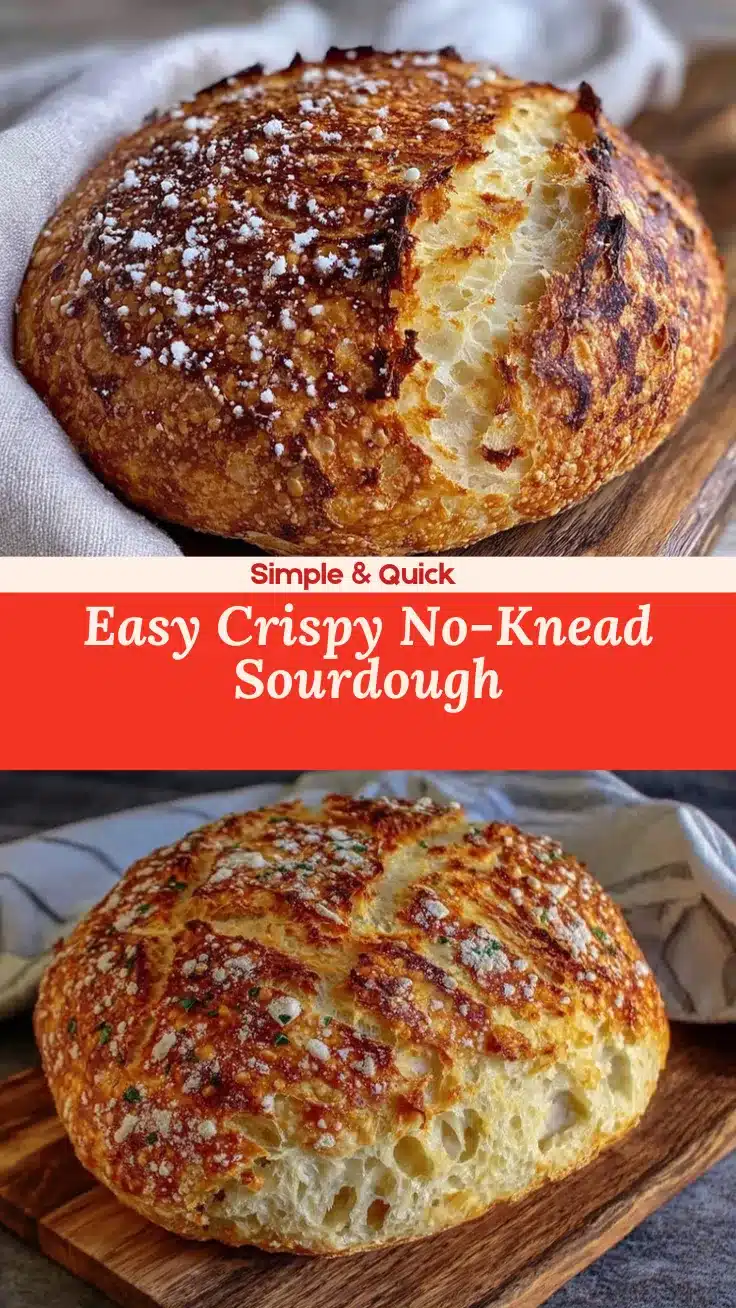
Effortless No-Knead Sourdough Bread Recipe for Perfect Crispy Crust Every Time

A simple no-knead sourdough bread recipe that delivers a perfect crispy crust and chewy crumb with minimal hands-on time, using just flour, water, salt, and sourdough starter.
- Prep Time: 15 minutes
- Cook Time: 1 hour 5 minutes
- Total Time: 14-20 hours
- Yield: 1 loaf (about 1.5 pounds) 1x
- Category: Bread
- Cuisine: American
Ingredients
- 4 cups (500g) unbleached all-purpose flour
- 1/2 cup (100g) active sourdough starter, bubbly and fed within the last 8-12 hours
- 1 1/2 cups (375g) lukewarm water (around 75°F / 24°C)
- 2 teaspoons (10g) fine sea salt
- Optional: up to 3/4 cup (100g) whole wheat flour (to swap for all-purpose flour for nuttier flavor)
- Optional: rice flour for dusting to prevent sticking
Instructions
- Mix the dough (10 minutes): In a large bowl, combine 4 cups (500g) unbleached all-purpose flour, 1 1/2 cups (375g) lukewarm water, and 1/2 cup (100g) active sourdough starter. Stir until all flour is hydrated. Cover with a damp towel or plastic wrap.
- First fermentation (12-18 hours): Let the dough rest at room temperature (70-75°F / 21-24°C) overnight until bubbly and risen.
- Add salt and fold (5 minutes): Sprinkle 2 teaspoons (10g) salt over the dough. Wet hands and fold dough over itself a few times. Cover again.
- Bulk fermentation with folds (2-3 hours): Every 30 minutes, perform 3-4 folds by stretching and folding the dough over itself, repeating 3-4 times total.
- Shape the dough (10 minutes): Lightly flour work surface, turn dough out, shape into a tight round loaf, and place seam-side up in a floured proofing basket or bowl lined with a floured towel. Cover with a towel.
- Final proof (1-2 hours): Let dough rest at room temperature until slightly puffy but not doubled. Test by gently poking; indentation should spring back slowly.
- Preheat oven and Dutch oven (45 minutes): Place Dutch oven with lid inside oven and preheat to 450°F (230°C).
- Score and bake (45-50 minutes): Remove hot Dutch oven, turn dough seam-side down onto parchment paper, score top with a sharp knife, transfer dough with parchment into Dutch oven, cover, and bake for 30 minutes.
- Finish baking uncovered (15-20 minutes): Remove lid and bake until crust is deep golden and crackly. Loaf should sound hollow when tapped on bottom.
- Cool completely: Transfer bread to wire rack and cool at least 1 hour before slicing.
Notes
Use a kitchen scale for accuracy. Hydration is about 75%; adjust flour or water if dough feels too wet or dry. Preheat Dutch oven thoroughly for best crust. Do not rush cooling to avoid gummy crumb. Scoring controls bread expansion and adds aesthetic appeal.
Nutrition
- Serving Size: 1 slice (about 60g)
- Calories: 160
- Sodium: 400
- Fat: 1
- Carbohydrates: 33
- Fiber: 2
- Protein: 6
Keywords: no-knead sourdough bread, sourdough recipe, crispy crust bread, easy sourdough, artisan bread, homemade bread, no-knead bread