
“You really think rhubarb belongs on pork chops?” my skeptical partner asked one evening as I stirred a bubbling crimson sauce on the stove. Honestly, I was half-doubting myself too. Rhubarb, that tart and slightly grassy stalk, usually found in pies or jams, seemed a bit out of place for dinner. But after a long, chaotic day packed with work calls and juggling family schedules, I just wanted something quick that felt a little special.
I had some rhubarb leftover from my weekend farmer’s market haul and a couple of pork chops waiting in the fridge. On a whim, I tossed together a rhubarb sauce infused with fresh herbs from my windowsill garden. The tangy-sweet sauce caught me off guard; it cut through the richness of the pork so well. That night, we ended up quietly savoring every bite, the kitchen filled with the warm scent of rosemary and thyme.
It wasn’t love at first sight but more of a slow melt-in-the-mouth kind of affection. Now, whenever I see rhubarb in the market, I think of that night — how a simple, easy sauce turned an ordinary pork chop dinner into something memorable without fuss or fancy ingredients. This flavorful rhubarb sauce for pork chops with fresh herb garnish has stuck with me because it’s honest comfort food with a twist, perfect for those evenings when you want a little extra but don’t want to complicate things.
Why You’ll Love This Recipe
After testing this rhubarb sauce multiple times, I can say with confidence it’s a keeper for busy cooks and flavor seekers alike. Here’s why:
- Quick & Easy: Ready in under 20 minutes, it’s perfect for weeknight dinners when time’s tight but you want something tasty.
- Simple Ingredients: No obscure items here — rhubarb, a few fresh herbs, and basic pantry staples come together effortlessly.
- Perfect for Dinner: Whether you’re serving a casual family meal or a small gathering, this sauce adds that wow factor without stress.
- Crowd-Pleaser: From kids to adults, the tangy-sweet balance always gets compliments, even from the pickiest eaters.
- Unbelievably Delicious: The fresh herb garnish brightens the sauce, making each bite layered and vibrant rather than heavy or one-note.
This isn’t just any rhubarb sauce slapped on pork chops. The magic lies in simmering the rhubarb just right — enough to soften but still keep a slight bite — combined with a hint of fresh rosemary and thyme that I swear makes a big difference. It’s like comfort food but with a clever twist that keeps you coming back for more. Plus, it pairs beautifully with a variety of sides, whether you want to keep it classic or mix things up a bit.
What Ingredients You Will Need
This recipe relies on straightforward, wholesome ingredients that you probably already have or can easily find. Each one plays a part: the rhubarb brings tartness, the herbs add freshness, and a touch of sweetness balances everything.
- Rhubarb stalks: About 3 cups chopped (roughly 450g) — fresh is best, but frozen works if thawed and drained.
- Granulated sugar: ½ cup (100g) — adjust to taste depending on the tartness of your rhubarb.
- Water: ½ cup (120ml) — helps soften the rhubarb without boiling it dry.
- Fresh rosemary: 1 teaspoon finely chopped — adds an earthy note (dried can be used in a pinch, but fresh is ideal).
- Fresh thyme: 1 teaspoon leaves stripped — complements rosemary with its subtle minty aroma.
- Apple cider vinegar: 1 tablespoon — adds brightness and a slight tang to balance sweetness.
- Salt: a pinch — enhances all flavors.
- Black pepper: freshly ground, to taste.
- Unsalted butter: 1 tablespoon — adds richness and smooths the sauce texture.
Ingredient tips: When picking rhubarb, look for firm, vibrant stalks without blemishes. If you want to swap out sugar, honey or maple syrup work well but add a different flavor profile. For a gluten-free and paleo-friendly twist, this sauce is naturally compliant since it uses only whole-food ingredients.
And hey, if you’re looking for a side that pairs perfectly with this sauce and pork chops, try the honey roasted butternut squash with rosemary. The sweetness and herbs complement the rhubarb sauce beautifully.
Equipment Needed
- Medium saucepan: A 2-quart (2-liter) pan works well for simmering the rhubarb sauce.
- Chef’s knife and cutting board: For chopping rhubarb and herbs safely and efficiently.
- Wooden spoon or silicone spatula: For stirring without scratching your pan.
- Measuring cups and spoons: To keep the balance of flavors right.
- Fine mesh strainer (optional): If you prefer a smoother sauce, you can strain out the solids.
Honestly, you don’t need fancy gadgets here. I’ve made this sauce in everything from a basic non-stick pan to my trusty stainless steel pot. If you’re using a cast iron skillet, just be mindful not to overheat the sauce or scorch the sugars. And a quick tip — keep your knives sharp for clean cuts on the rhubarb stalks; it makes the prep faster and safer.
Preparation Method
- Prepare the rhubarb: Rinse and trim the rhubarb stalks, then chop into roughly 1/2-inch (1.2 cm) pieces. This size helps the rhubarb soften evenly without turning mushy. (Prep time: 5 minutes)
- Combine ingredients in the saucepan: Place the chopped rhubarb, sugar, and water into your medium saucepan. Stir gently to distribute the sugar evenly.
- Simmer the sauce: Bring the mixture to a gentle boil over medium heat, then reduce to low. Let it simmer uncovered for about 10-12 minutes, stirring occasionally. You’ll notice the rhubarb breaking down and the sauce thickening. If it looks too dry, add a splash more water.
- Add herbs and seasoning: Stir in the chopped rosemary, thyme, apple cider vinegar, salt, and pepper. Continue simmering for 2-3 minutes to let the flavors meld together.
- Finish with butter: Remove from heat and stir in the butter until melted and glossy. This step rounds out the acidity and adds a silky texture.
- Adjust consistency: If you prefer a smoother sauce, carefully pour it through a fine mesh strainer into a bowl, pressing gently to extract as much flavor as possible. Otherwise, leave it chunky for more texture.
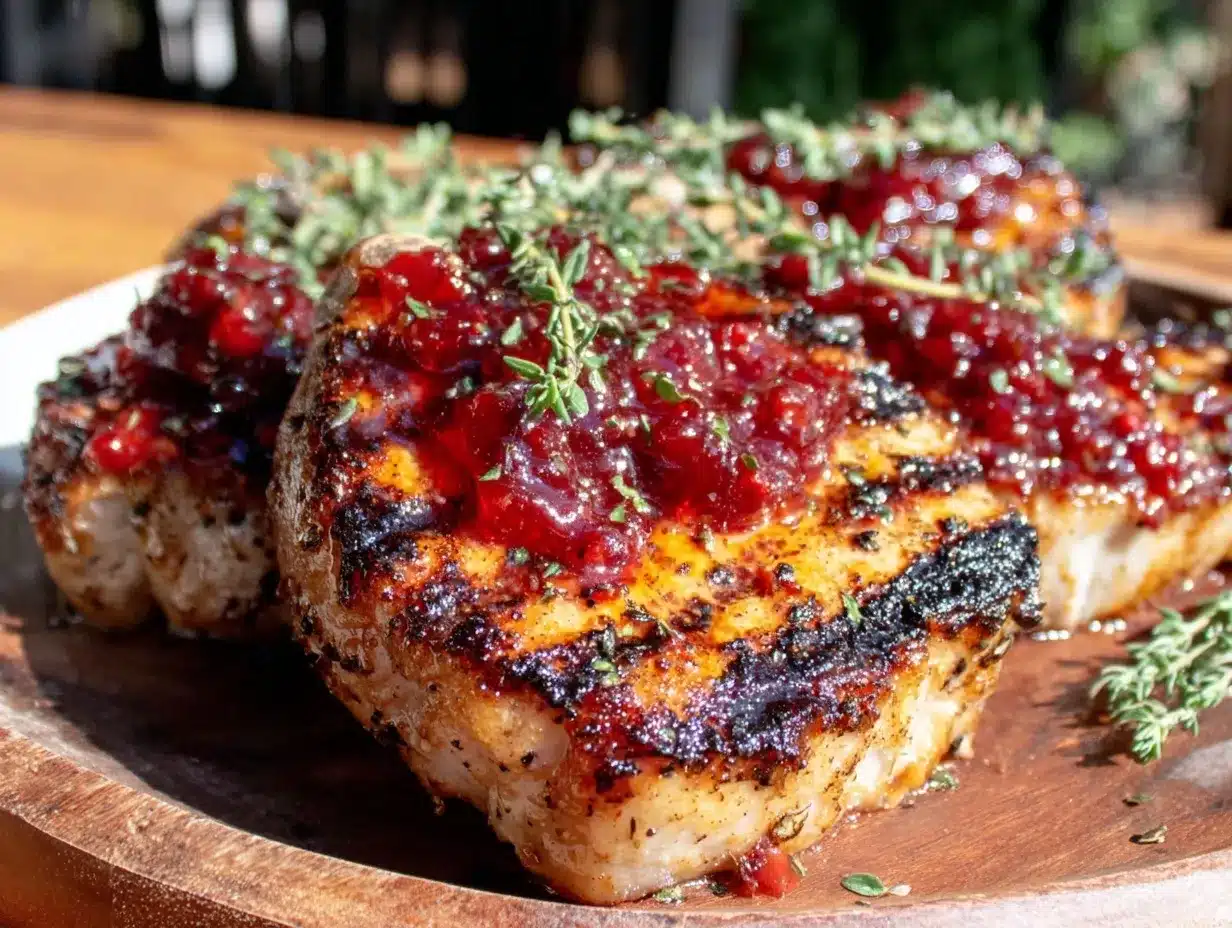
- Serve warm: Spoon generously over your cooked pork chops and garnish with a few fresh herb sprigs for a pop of color and aroma.
Pro tip: Keep an eye on the simmer — rhubarb can quickly go from tender to mushy. The goal is a sauce that still has a little body, not a puree. This recipe works wonderfully with grilled, pan-seared, or oven-roasted pork chops.
Cooking Tips & Techniques
One lesson I learned the hard way: don’t rush the simmer. Rhubarb needs gentle coaxing to break down properly and meld with the sugar and herbs. Too high heat and you risk a burnt, bitter mess. Low and slow wins here.
Also, balancing the tartness is key. Rhubarb’s natural sharpness can overpower the dish if you’re not careful. I recommend starting with less sugar and tasting as it cooks. You can always add more, but you can’t take it out once it’s in.
When it comes to herbs, fresh is best — dried rosemary can be too harsh, and thyme loses its brightness. If you must use dried, halve the quantity and add it earlier in the cooking process to soften the flavors.
Multitasking tip: While the sauce simmers, you can easily prepare sides like the sautéed green beans with lemon zest and pine nuts to round out the meal. This keeps your timing tight but the flavors fresh.
Lastly, don’t skip the butter finish. It’s a small step, but it ties the whole sauce together, giving it that irresistible sheen and richness that feels just right with pork chops.
Variations & Adaptations
If you want to mix things up, this rhubarb sauce recipe is pretty forgiving and lends itself to a few tasty tweaks:
- Spicy kick: Add a pinch of red pepper flakes or a dash of cayenne to the sauce for warmth and contrast.
- Fruit swap: Replace half the rhubarb with fresh strawberries or raspberries for a sweeter, more complex sauce — perfect in late spring.
- Vegan version: Skip the butter and finish with a splash of olive oil or a dollop of coconut cream for richness.
- Herb variations: Experiment with tarragon or sage instead of rosemary and thyme for a different herbaceous note.
- Cooking method: This sauce can be gently cooked in a slow cooker on low for 1-2 hours if you want to prep ahead and keep flavors mellow.
Personally, I tried adding a touch of ginger once — it gave the sauce a subtle warmth that paired surprisingly well with the pork. It’s fun to play around and find your perfect balance.
Serving & Storage Suggestions
This rhubarb sauce tastes best served warm, spooned generously over freshly cooked pork chops. The fresh herb garnish adds a lovely pop of green and a burst of aroma right before serving. For a well-rounded plate, I often add some lightly roasted or sautéed vegetables — like the bright and zesty green bean casserole that brings a creamy contrast to the tangy sauce.
To store, keep the sauce in an airtight container in the refrigerator for up to 4 days. It thickens as it cools, so gently reheat over low heat with a splash of water or broth to loosen before serving again.
If you want to save it longer, freeze in small portions for up to 2 months. Thaw overnight in the fridge and reheat slowly. The flavors deepen over time, making leftovers even more interesting.
Nutritional Information & Benefits
This rhubarb sauce is relatively low in calories but packs a flavorful punch. A typical serving (about ¼ cup or 60 ml) contains roughly 70 calories, mostly from natural sugars. Rhubarb is rich in vitamin K and dietary fiber, which supports digestion. The addition of fresh herbs brings antioxidants and subtle anti-inflammatory benefits.
Because it uses simple, whole ingredients without added preservatives or artificial additives, it’s a wholesome choice. Plus, it’s naturally gluten-free and can easily be made vegan by skipping the butter. Just watch the sugar if you’re managing blood sugar levels — you can reduce it or swap for a low-glycemic sweetener.
From a wellness perspective, the bright acidity of rhubarb helps cut through the richness of pork, making the meal feel lighter and easier to digest — a nice balance that doesn’t leave you feeling weighed down.
Conclusion
Flavorful rhubarb sauce for pork chops with fresh herb garnish is one of those unexpected kitchen wins that you keep coming back to. It’s simple, quick, and tastes like you put in way more effort than you did. The fresh herbs add just the right amount of brightness, making the sauce feel lively and inviting rather than heavy.
Feel free to make this recipe your own — tweak the herbs, add a pinch of spice, or even change up the fruit. I love how adaptable it is, and that it brings something fresh to a classic pork chop dinner. It’s a recipe that’s become a cozy staple around here, and I hope it finds a place in your kitchen too.
If you try it, I’d really love to hear how you made it your own or what sides you paired it with. Sharing those little tweaks always makes cooking feel a bit more like a conversation. Here’s to many delicious meals ahead!
FAQs
Can I use frozen rhubarb for this sauce?
Yes! Just thaw and drain the rhubarb before cooking to avoid excess water diluting the sauce.
What cuts of pork work best with this rhubarb sauce?
Pork chops are ideal, especially bone-in or center-cut. You can also try pork tenderloin or pork loin steaks for great results.
Can I make this sauce ahead of time?
Absolutely. Make it a day in advance and gently reheat before serving. Flavors tend to deepen overnight.
How do I store leftover sauce?
Keep it in an airtight container in the fridge for up to 4 days or freeze up to 2 months.
Is this sauce spicy?
Not by default — it’s tangy and slightly sweet. You can add spices like cayenne or ginger for a little heat if you like.
Pin This Recipe!

Flavorful Rhubarb Sauce for Pork Chops with Easy Homemade Herb Garnish

A quick and easy tangy-sweet rhubarb sauce infused with fresh rosemary and thyme, perfect for enhancing the flavor of pork chops. This sauce is simple, wholesome, and adds a unique twist to your dinner.
- Prep Time: 5 minutes
- Cook Time: 15 minutes
- Total Time: 20 minutes
- Yield: 4 servings 1x
- Category: Main Course
- Cuisine: American
Ingredients
- 3 cups chopped rhubarb stalks (about 450g or 1.5 cups US volume)
- ½ cup granulated sugar (100g)
- ½ cup water (120ml or 4 fl oz)
- 1 teaspoon fresh rosemary, finely chopped
- 1 teaspoon fresh thyme leaves
- 1 tablespoon apple cider vinegar
- Pinch of salt
- Freshly ground black pepper, to taste
- 1 tablespoon unsalted butter
Instructions
- Rinse and trim the rhubarb stalks, then chop into roughly ½-inch (1.2 cm) pieces.
- Place the chopped rhubarb, sugar, and water into a medium saucepan. Stir gently to distribute the sugar evenly.
- Bring the mixture to a gentle boil over medium heat, then reduce to low. Let it simmer uncovered for about 10-12 minutes, stirring occasionally, until the rhubarb breaks down and the sauce thickens. Add a splash more water if it looks too dry.
- Stir in the chopped rosemary, thyme, apple cider vinegar, salt, and pepper. Continue simmering for 2-3 minutes to let the flavors meld together.
- Remove from heat and stir in the butter until melted and glossy.
- If desired, strain the sauce through a fine mesh strainer for a smoother texture, or leave it chunky for more texture.
- Serve warm spooned generously over cooked pork chops and garnish with fresh herb sprigs.
Notes
Keep the simmer low and slow to avoid burning or bitterness. Adjust sugar to balance tartness. Fresh herbs are preferred for best flavor. Butter finish adds richness and sheen. Sauce can be strained for smoothness or left chunky. Can be made vegan by substituting butter with olive oil or coconut cream. Sauce pairs well with grilled, pan-seared, or oven-roasted pork chops.
Nutrition
- Serving Size: About ¼ cup (60 ml)
- Calories: 70
- Sugar: 10
- Sodium: 50
- Fat: 3
- Saturated Fat: 1.8
- Carbohydrates: 11
- Fiber: 1
- Protein: 0.2
Keywords: rhubarb sauce, pork chops, herb garnish, quick sauce, easy dinner, fresh herbs, tangy sauce, homemade sauce