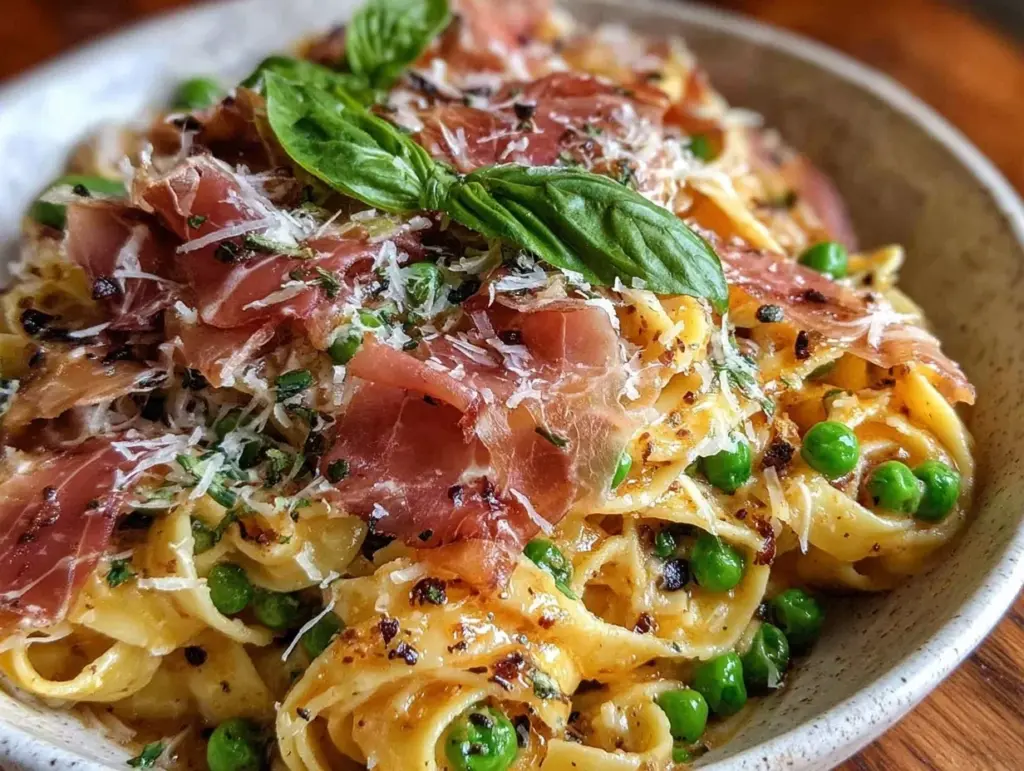
It was one of those unexpectedly warm spring evenings when the idea for this flavorful spring pea and prosciutto pasta first took hold. I remember standing in my kitchen, glancing out at the garden bursting with fresh herbs, and feeling the urge to whip up something light but satisfying—something that captured that crisp, green freshness you only get this time of year. Honestly, I wasn’t even sure if the combination of sweet spring peas and salty prosciutto would work together, but the moment I tossed them with fresh herbs and al dente pasta, I knew I had stumbled onto a keeper.
The thing about this pasta is that it’s deceptively simple. You know, sometimes the best meals come from little spontaneous ideas, not hours of planning. I’ve made it a handful of times in the last few weeks—sometimes for a quick solo dinner after a long day, other times for casual gatherings where folks kept asking for seconds (and the recipe!). That balance of creamy pasta, the pop of tender peas, and that punch of prosciutto with fragrant herbs is just something special. It’s like spring wrapped up in a bowl, and honestly, it’s become my go-to whenever I want something fresh but comforting.
What’s stuck with me is how this recipe isn’t just about the flavors, but the feeling it brings—light enough to remind you of warmer days, yet hearty enough to leave you pleasantly full. It’s a quiet kind of joy, perfect for those moments when you want to slow down and savor something real. And that’s why I keep coming back to it.
Why You’ll Love This Recipe
- Quick & Easy: Ready in about 25 minutes, it fits perfectly into busy weeknights or those last-minute dinner plans.
- Simple Ingredients: You don’t need a fancy pantry; just fresh peas, prosciutto, pasta, and herbs you likely have on hand.
- Perfect for Spring: Celebrates seasonal peas and fresh herbs at their peak, making it an ideal dish for springtime meals.
- Crowd-Pleaser: The salty, sweet, and herbal flavors blend in a way that gets everyone asking for more—kids and adults alike.
- Unbelievably Delicious: The creamy pasta texture combined with the bright herbaceous notes and savory prosciutto makes each bite memorable.
- This recipe isn’t just another pasta dish; the secret lies in gently cooking the peas to keep their sweetness and texture intact, and folding in fresh herbs at the last moment for a burst of garden-fresh flavor.
- It’s the kind of meal that feels homemade and special without fuss—perfect for impressing guests or treating yourself to something lovely after a long day.
What Ingredients You Will Need
This recipe uses simple, wholesome ingredients to deliver bold flavor and satisfying texture without the fuss. Most are pantry staples or easy to find in spring markets, and there’s room to swap or adapt depending on what you have.
- Pasta: 12 ounces (340 grams) of your favorite pasta shape—fettuccine, linguine, or even penne work beautifully.
- Fresh spring peas: 1 ½ cups (about 225 grams) shelled fresh peas—if fresh aren’t available, frozen peas work fine but try to thaw them first.
- Prosciutto: 4 ounces (115 grams), thinly sliced and roughly torn—look for a quality brand like San Daniele or Parma for the best flavor.
- Fresh herbs: ¼ cup chopped fresh basil, 2 tablespoons fresh mint, and 2 tablespoons fresh parsley—all finely chopped for a bright herbaceous punch.
- Garlic: 2 cloves, minced—adds a subtle savory depth without overpowering.
- Olive oil: 3 tablespoons extra-virgin olive oil—choose a fruity one to complement the peas and herbs.
- Lemon: Zest and juice of 1 lemon—this lifts the entire dish with a fresh citrus note.
- Parmesan cheese: ½ cup (50 grams) freshly grated, plus extra for serving—adds nuttiness and creaminess.
- Salt and pepper: To taste—season carefully, especially since prosciutto adds saltiness.
Substitution tip: If you’re avoiding pork, try swapping prosciutto for thinly sliced smoked turkey or omit altogether and boost herbs and lemon for brightness. For a dairy-free version, use nutritional yeast in place of Parmesan.
Equipment Needed
- Large pot for boiling pasta
- Colander or strainer for draining pasta and peas
- Large skillet or sauté pan for cooking garlic, peas, and prosciutto
- Sharp knife and chopping board for herbs and garlic
- Microplane or fine grater for lemon zest and Parmesan
- Tongs or pasta fork to toss pasta with sauce
If you don’t have a microplane, a small box grater works fine for zest and cheese but be gentle to avoid over-grating. I’ve made this recipe with both cast iron pans and non-stick skillets—the non-stick is easier for tossing at the end, especially if you’re multitasking!
Preparation Method
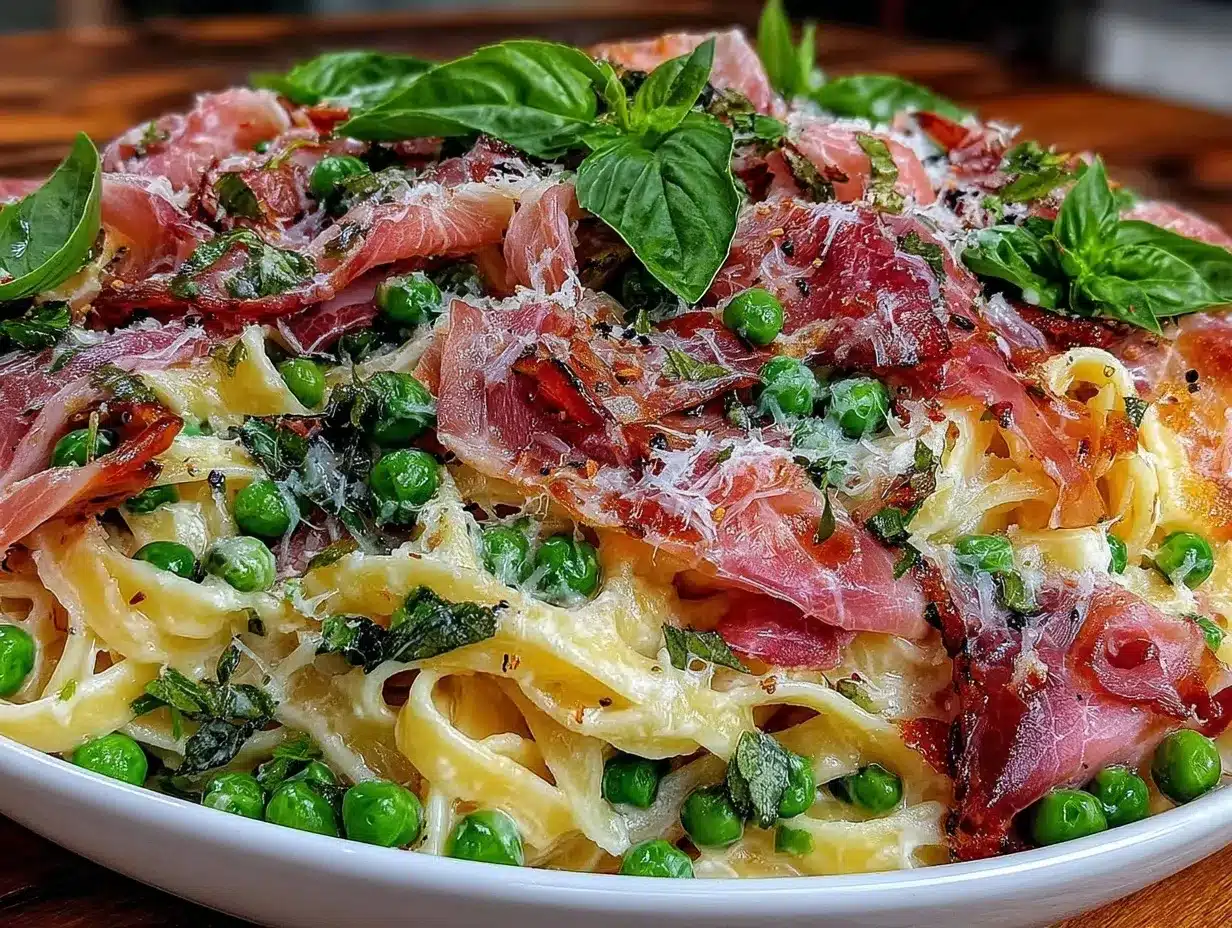
- Bring a large pot of salted water to a boil. Add pasta and cook according to package instructions until al dente—usually 9 to 11 minutes. (Tip: Reserve ½ cup of pasta water before draining for later use.)
- In the last 2 minutes of pasta cooking, add the fresh peas to the boiling water. This keeps them tender-crisp and bright green.
- Drain the pasta and peas together in a colander. Set aside and keep warm.
- Meanwhile, heat olive oil in a large skillet over medium heat. Add the minced garlic and sauté for about 1 minute, until fragrant but not browned.
- Add the torn prosciutto pieces. Cook for 2-3 minutes, stirring gently, until just crisped around the edges.
- Reduce heat to low and add the cooked pasta and peas to the skillet. Toss gently to combine with the prosciutto and garlic.
- Add lemon zest and juice, then sprinkle in the chopped herbs. Toss everything carefully, adding reserved pasta water in small amounts if the mixture seems dry—this helps create a silky sauce that clings to the pasta.
- Turn off the heat and stir in the grated Parmesan cheese. This will melt into the hot pasta, creating a creamy texture without cream.
- Season with salt and freshly ground black pepper to taste. Remember that prosciutto is salty, so taste before adding more salt.
- Serve immediately with extra Parmesan on the side and a drizzle of good olive oil if you like.
Pro tip: Toss quickly but gently at the end to keep the peas whole and the herbs fresh. Don’t overcook the peas—they should still have a slight pop when you bite in.
Cooking Tips & Techniques
- Peas timing matters: Adding peas in the last two minutes of pasta cooking preserves their bright color and fresh flavor.
- Use reserved pasta water: It’s a little goldmine of starch that helps emulsify your sauce, making it cling to each pasta strand without being heavy.
- Don’t overheat garlic: Cooking it over medium heat and removing it from direct heat prevents bitterness.
- Slice prosciutto thinly: Thinner slices crisp up nicely without turning tough; tearing by hand creates rustic texture.
- Fresh herbs last minute: Add herbs off the heat to keep their vibrant color and fragrance intact.
- Cheese matters: Freshly grated Parmesan dissolves better and tastes richer than pre-grated versions.
- Once, I accidentally added the lemon juice too early and lost some brightness—adding it at the end keeps the flavor punchy.
- For multitasking, prep herbs and zest while pasta cooks, so everything comes together smoothly without scrambling.
Variations & Adaptations
- Vegetarian option: Skip the prosciutto and toss in toasted pine nuts or walnuts for a satisfying crunch and added protein.
- Seasonal swap: In summer, switch peas for fresh green beans or asparagus tips to keep the dish vibrant and fresh.
- Gluten-free: Use your favorite gluten-free pasta instead of traditional wheat pasta; just adjust cooking times accordingly.
- Spicy twist: Add a pinch of red pepper flakes along with garlic for a subtle heat that complements the sweet peas.
- Personal favorite: Once I stirred in a spoonful of ricotta cheese at the end for extra creaminess—totally optional but a lovely indulgence.
Serving & Storage Suggestions
Serve this pasta warm, right off the stove, to enjoy the full brightness of the fresh herbs and tender peas. A light green salad or crusty bread pairs beautifully alongside.
Leftovers keep well in the refrigerator for 2 days in an airtight container. When reheating, add a splash of water or olive oil to loosen the pasta and warm gently on the stove or microwave.
Flavors deepen slightly after resting, with the herbs mellowing and the prosciutto melding into the pasta—but I honestly prefer it fresh every time.
Nutritional Information & Benefits
This spring pea and prosciutto pasta offers a balanced meal with carbohydrates from pasta, protein from prosciutto, and fiber plus vitamins from fresh peas and herbs. Peas provide vitamin C and K, as well as folate, while herbs bring antioxidants and bright flavor without extra calories.
The recipe is moderate in sodium because of the prosciutto, so adjusting salt carefully is key. Using whole grain or legume-based pasta can boost fiber and protein if desired. All in all, it’s a fresh, satisfying dish that feels nourishing and wholesome without complicated ingredients.
Conclusion
This flavorful spring pea and prosciutto pasta recipe is one of those rare dishes that captures the essence of the season while being surprisingly simple to pull together. I love how it combines fresh, vibrant ingredients with that touch of salty richness from prosciutto, making it both comforting and lively.
Feel free to tweak the herbs or swap ingredients to suit your tastes—this recipe is forgiving and flexible. It’s become a favorite in my kitchen for its quick prep and the way it feels like a little celebration of spring in every bite.
If you try it, I’d love to hear how it turns out or what variations you make. Sharing food stories and recipes is what makes cooking feel more like home. Here’s to many more bowls of this green goodness!
FAQs
Can I use frozen peas instead of fresh?
Yes, frozen peas work well—just thaw them before adding to the pasta to avoid watering down the sauce.
What pasta shapes work best for this recipe?
Long, thin noodles like fettuccine or linguine are ideal, but short shapes like penne or rigatoni also pair nicely.
How can I make this recipe dairy-free?
Skip the Parmesan and use nutritional yeast or a dairy-free cheese alternative for a similar cheesy flavor.
Is there a substitute for prosciutto?
You can use pancetta, smoked turkey slices, or omit altogether and boost herbs and lemon for brightness.
Can I prepare this dish ahead of time?
While it’s best fresh, you can prepare all components separately and combine just before serving to keep flavors vibrant.
Pin This Recipe!
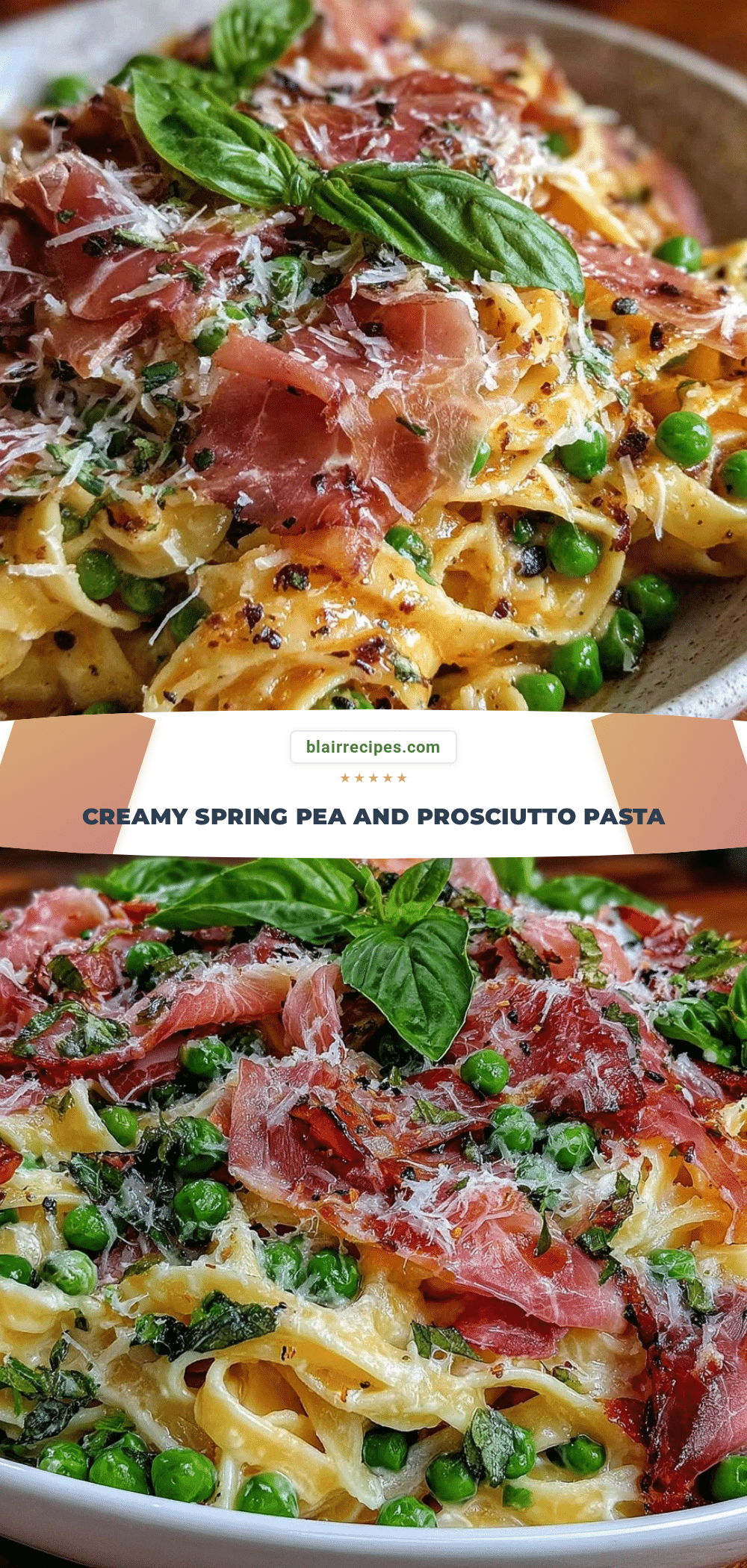
Flavorful Spring Pea and Prosciutto Pasta

A light yet satisfying pasta dish combining sweet spring peas, salty prosciutto, and fresh herbs for a bright, creamy meal perfect for spring evenings.
- Prep Time: 10 minutes
- Cook Time: 15 minutes
- Total Time: 25 minutes
- Yield: 4 servings 1x
- Category: Main Course
- Cuisine: Italian
Ingredients
- 12 ounces (340 grams) pasta (fettuccine, linguine, or penne)
- 1 ½ cups (about 225 grams) shelled fresh spring peas (thawed if frozen)
- 4 ounces (115 grams) prosciutto, thinly sliced and roughly torn
- ¼ cup chopped fresh basil
- 2 tablespoons fresh mint, chopped
- 2 tablespoons fresh parsley, chopped
- 2 cloves garlic, minced
- 3 tablespoons extra-virgin olive oil
- Zest and juice of 1 lemon
- ½ cup (50 grams) freshly grated Parmesan cheese, plus extra for serving
- Salt and freshly ground black pepper, to taste
Instructions
- Bring a large pot of salted water to a boil. Add pasta and cook according to package instructions until al dente, usually 9 to 11 minutes. Reserve ½ cup of pasta water before draining.
- In the last 2 minutes of pasta cooking, add the fresh peas to the boiling water to keep them tender-crisp and bright green.
- Drain the pasta and peas together in a colander. Set aside and keep warm.
- Heat olive oil in a large skillet over medium heat. Add minced garlic and sauté for about 1 minute until fragrant but not browned.
- Add torn prosciutto pieces and cook for 2-3 minutes, stirring gently, until just crisped around the edges.
- Reduce heat to low and add the cooked pasta and peas to the skillet. Toss gently to combine with prosciutto and garlic.
- Add lemon zest and juice, then sprinkle in the chopped herbs. Toss carefully, adding reserved pasta water in small amounts if the mixture seems dry to create a silky sauce.
- Turn off heat and stir in grated Parmesan cheese, allowing it to melt into the hot pasta for a creamy texture.
- Season with salt and freshly ground black pepper to taste, remembering prosciutto adds saltiness.
- Serve immediately with extra Parmesan on the side and a drizzle of good olive oil if desired.
Notes
Add peas in the last 2 minutes of pasta cooking to keep them tender and bright. Use reserved pasta water to create a silky sauce. Avoid overheating garlic to prevent bitterness. Add herbs off heat to preserve freshness. For dairy-free, substitute Parmesan with nutritional yeast. For vegetarian, omit prosciutto and add toasted nuts.
Nutrition
- Serving Size: 1 serving (about 1/4
- Calories: 420
- Sugar: 5
- Sodium: 700
- Fat: 18
- Saturated Fat: 5
- Carbohydrates: 45
- Fiber: 5
- Protein: 18
Keywords: spring pea pasta, prosciutto pasta, fresh herb pasta, easy pasta recipe, spring recipes, quick dinner, creamy pasta, seasonal pasta