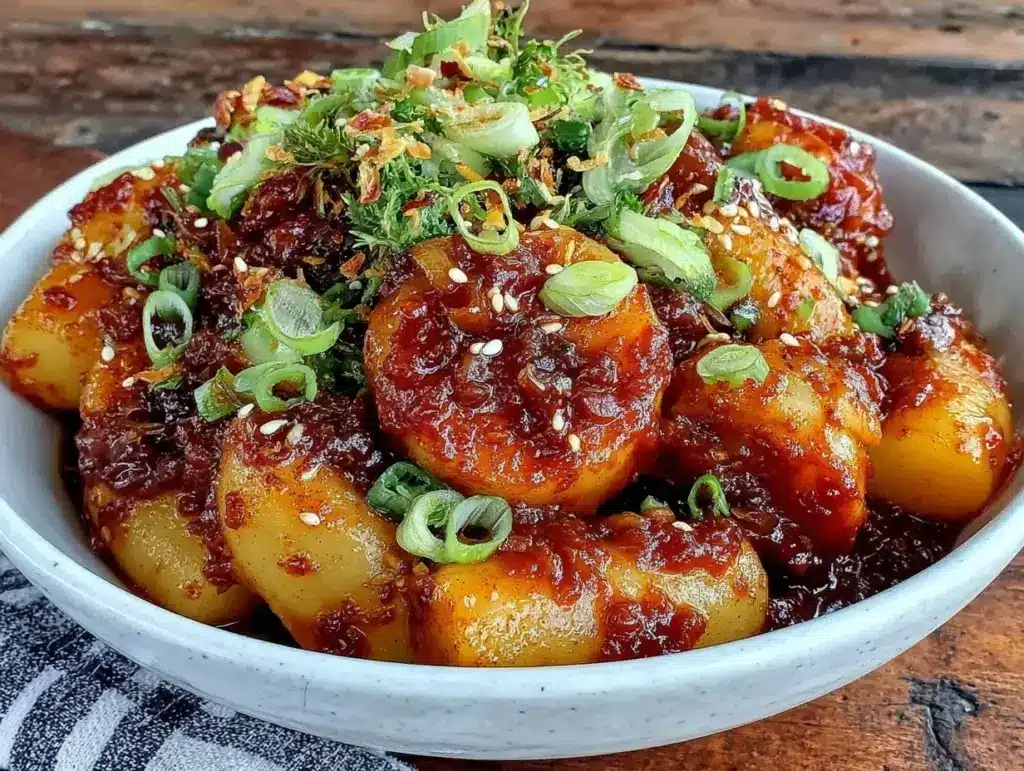
“You sure that’s not too spicy?” my friend asked, eyeing the simmering pot with suspicion. Honestly, I wasn’t quite sure myself when I first tried making this flavorful tteokbokki spicy Korean rice cakes in gochujang sauce. That sticky, fiery red sauce bubbling away on the stove looked intimidating, but somehow, it turned into one of those accidental wins. What started as a late-night craving and a half-forgotten pack of rice cakes in the fridge became a dish I’ve made more than a dozen times in just a few weeks.
There’s something oddly comforting about stirring that thick, glossy sauce as it clings to chewy rice cakes, the sweet heat teasing your taste buds just right. I remember sitting at the kitchen counter, the spicy aroma filling the air, thinking—this could be a total game-changer for quick dinners. I’m not usually the type to chase spicy foods, but this recipe somehow hooked me with its balance of boldness and subtle sweetness. That first bite? A quiet realization that this wasn’t just any snack; it was a small moment of joy in a hectic day.
Over time, I tweaked the sauce just enough to make it my own, balancing the fiery gochujang with a touch of sweetness and umami that feels like a warm hug. What’s cool about this tteokbokki recipe is how it brings a slice of Korean street food right into your kitchen without fuss or fancy ingredients. That’s probably why this dish stuck around in my rotation — it’s reliable, delicious, and honestly, a little addictive. No grand promises, just a straightforward, flavorful spicy rice cake recipe that’s easy to come back to whenever you need a quick hit of comfort.
Why You’ll Love This Recipe
Having spent plenty of evenings experimenting with Korean flavors, I can say this flavorful tteokbokki spicy Korean rice cakes in gochujang sauce recipe holds a special place in my weekly meal planning. It’s a dish that manages to juggle simplicity and depth, which is no small feat.
- Quick & Easy: Takes about 25 minutes from start to finish, making it perfect for those busy weeknights when you want something satisfying without the fuss.
- Simple Ingredients: Most are pantry staples or easy-to-find Asian groceries like gochujang. No need for exotic or hard-to-track-down items.
- Perfect for Casual Gatherings: Whether you’re sharing with friends during a cozy night or craving a solo snack, this dish fits the bill.
- Crowd-Pleaser: The chewy texture of rice cakes combined with the sweet-spicy sauce usually has everyone asking for seconds.
- Unbelievably Delicious: The sauce’s deep, fermented chili flavor layered with a hint of sweetness makes every bite balanced and memorable.
What sets this recipe apart from others is the way I layer flavors—starting with a homemade sauce that blends gochujang with soy sauce, garlic, and a touch of sugar, then letting it simmer just right so the rice cakes soak up all that goodness. I’ve found that simmering gently rather than boiling aggressively keeps the rice cakes tender but still chewy, which is the sweet spot for authentic texture. It’s not just spicy for the sake of heat; it’s spicy with soul.
This tteokbokki isn’t just another quick Korean dish—it’s the one that makes you pause and think, “Yeah, I want this on repeat.” If you’re into dishes that feel a little comforting, a little bold, and totally satisfying, you’ll find this recipe hits all those notes.
What Ingredients You Will Need
This flavorful tteokbokki spicy Korean rice cakes in gochujang sauce recipe relies on simple, wholesome ingredients that combine to create bold, dynamic flavor without complicated steps. Most of these are pantry staples or easy to source at any Asian market.
- Korean Rice Cakes (Tteok): Cylindrical or sliced. Fresh or refrigerated is best, but frozen works if thawed properly.
- Gochujang (Korean Chili Paste): The foundation of the sauce. I recommend Chung Jung One brand for authentic flavor and balanced heat.
- Gochugaru (Korean Chili Flakes): Optional for extra heat and texture. Use sparingly if you’re wary of spice.
- Soy Sauce: Adds salty umami depth. Low-sodium works well to control saltiness.
- Garlic: Fresh minced cloves for pungency and aroma.
- Onion: Thinly sliced or roughly chopped to soften in the sauce and add subtle sweetness.
- Water or Anchovy Broth: To simmer the rice cakes. Anchovy broth adds traditional depth, but water is fine.
- Sugar: Plain white or brown sugar to balance the heat with sweetness.
- Sesame Oil: For finishing, giving a nutty aroma and sheen.
- Scallions: Thinly sliced, added at the end for freshness and color.
- Fish Cake (optional): Sliced Korean fish cakes add texture and protein, but you can leave them out for vegetarian versions.
For a seasonal twist, feel free to add vegetables like cabbage, carrots, or even mushrooms. In spring and summer, fresh greens brighten the dish nicely. If you want a gluten-free version, look for gluten-free soy sauce or tamari. And if you’re avoiding seafood, skip the anchovy broth and fish cakes altogether; the sauce still shines.
Equipment Needed
Making this flavorful tteokbokki spicy Korean rice cakes in gochujang sauce is straightforward, requiring minimal gear. Here’s what I usually pull out:
- Non-stick skillet or wide saucepan: A 10-inch skillet or a medium saucepan works perfectly for simmering the rice cakes and sauce evenly.
- Wooden spoon or heatproof spatula: For stirring gently to prevent sticking.
- Measuring spoons and cups: To get the sauce ratios just right.
- Knife and cutting board: For slicing onions, scallions, and optional fish cakes.
- Small bowl: For mixing the sauce ingredients before adding to the pan.
If you don’t have a non-stick pan, just be sure to stir frequently to avoid the sauce burning on the bottom. A heavy-bottomed pan helps with even heat distribution and prevents scorching, but isn’t mandatory. I’ve made this recipe on basic stovetops and camping burners alike, so don’t worry about fancy equipment.
Preparation Method
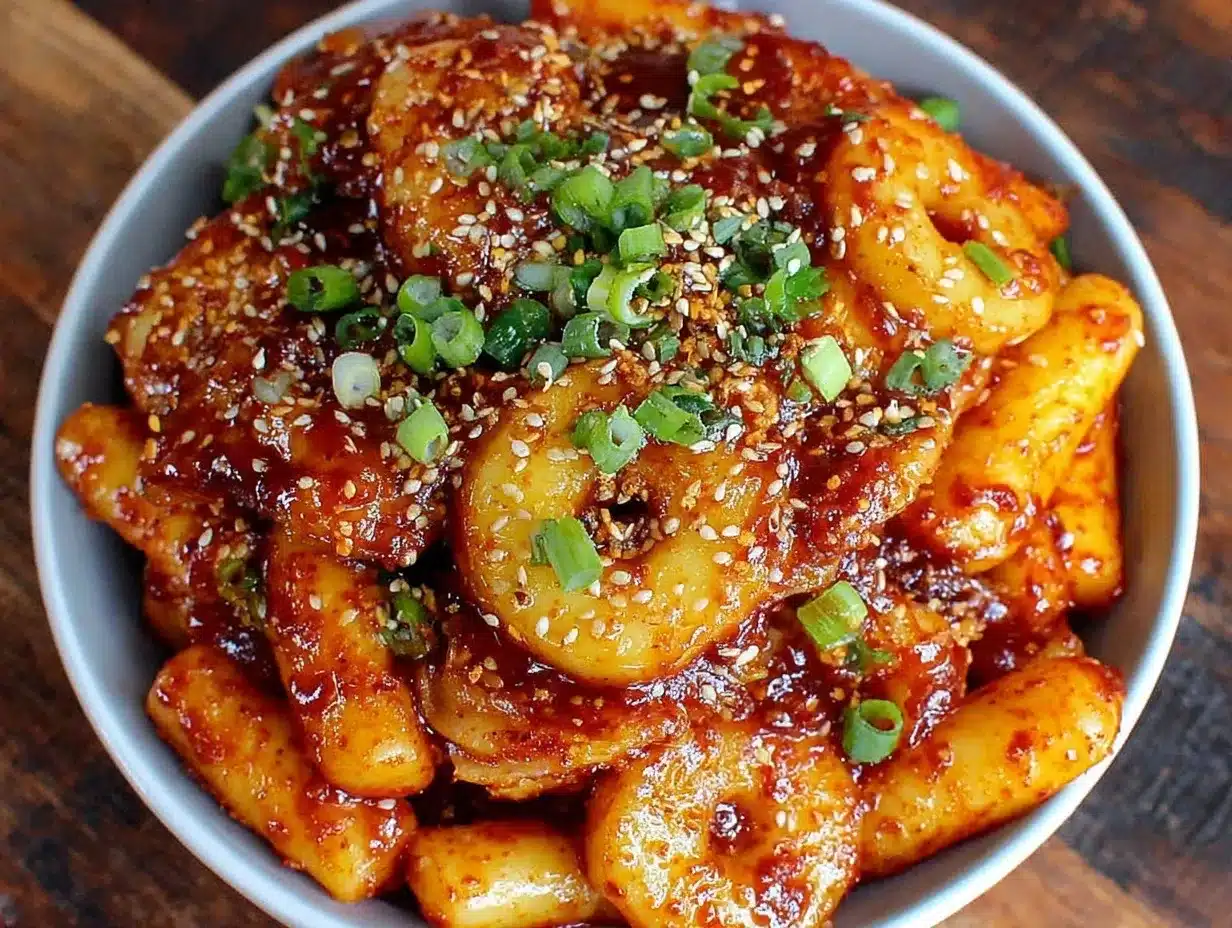
- Prep the rice cakes: If using refrigerated or frozen rice cakes, soak them in warm water for 10-15 minutes to soften. This helps them cook evenly and achieve that perfect chewy texture.
- Mix the sauce: In a small bowl, combine 3 tablespoons (45 ml) of gochujang, 1 tablespoon (15 ml) soy sauce, 1 tablespoon (12 g) sugar, and 1 teaspoon (5 g) gochugaru if using. Stir until smooth. This balance of spicy, salty, and sweet is the heart of the dish.
- Sauté aromatics: Heat 1 tablespoon (15 ml) vegetable oil in your pan over medium heat. Add 2 cloves minced garlic and ½ a thinly sliced onion. Cook for 2-3 minutes until fragrant and translucent. Don’t rush this step; it builds the base flavor.
- Add liquids: Pour in 1 ½ cups (360 ml) water or anchovy broth. Bring to a gentle simmer.
- Cook rice cakes: Add the soaked rice cakes and optional sliced fish cakes (about 1 cup / 100 g). Stir to coat with the sauce base and simmer gently for 8-10 minutes. The sauce should thicken slightly and become glossy. If it gets too thick, add a splash more water.
- Add the spicy sauce mix: Spoon the gochujang mixture into the pan, stirring well to combine with the simmering liquid. Continue to cook for another 5 minutes, stirring occasionally. The rice cakes should be tender but still chewy, coated in the vibrant red sauce.
- Finish with sesame oil and scallions: Turn off the heat and drizzle 1 teaspoon (5 ml) toasted sesame oil over the top. Sprinkle with sliced scallions for a fresh bite and color pop.
- Serve immediately: Tteokbokki is best hot and fresh. Grab chopsticks or a fork and dig in!
Pro tip: Avoid high heat after adding the sauce to prevent burning. Slow and steady simmering keeps the rice cakes tender and the sauce luscious.
Cooking Tips & Techniques
Getting tteokbokki just right can feel tricky at first, but a few learned tips make all the difference:
- Soak your rice cakes: This step can’t be skipped unless your rice cakes are super fresh. Soaking softens them just enough to cook through without turning mushy.
- Simmer gently: High heat will toughen the rice cakes and risk burning the sauce. Low to medium heat lets flavors meld beautifully.
- Balance your sauce: Gochujang is spicy but also sweet and savory. Taste as you go. If it’s too spicy, a touch more sugar or water calms it down.
- Use anchovy broth for umami: It’s traditional and adds depth but can be replaced with water or vegetable broth for a lighter flavor.
- Avoid overcrowding the pan: Give rice cakes room to simmer evenly; overcrowding leads to clumping.
I remember my first failed attempt when I cranked the heat and ended up with rubbery rice cakes sticking to the pan bottom—lesson learned! Also, stirring gently keeps everything coated without breaking the rice cakes. Multitasking is easy here; while the sauce simmers, you can whip up a quick side like the vibrant sautéed green beans with lemon zest and pine nuts I often make alongside.
Variations & Adaptations
One of the best things about this tteokbokki recipe is how adaptable it is. Here are some of my favorite tweaks:
- Vegetarian version: Skip fish cakes and use vegetable broth instead of anchovy broth. Add mushrooms or firm tofu for extra texture.
- Cheese tteokbokki: Sprinkle shredded mozzarella over the top before serving and cover briefly to melt for a creamy contrast to the spicy sauce.
- Seafood tteokbokki: Add shrimp or mussels during the last few minutes of simmering for a briny kick.
- Health-conscious swap: Use brown rice cakes or substitute with sliced zucchini noodles for lower carbs.
- Faster microwave method: Combine all ingredients in a microwave-safe bowl and cook in bursts, stirring in between, for a speedy fix.
Personally, I tried mixing in leftover roasted sweet potatoes from a recent batch of honey roasted butternut squash. The sweetness paired surprisingly well with the sauce, adding a mellow counterpoint to the spice. Feel free to experiment with your favorite veggies or proteins—it’s a dish that welcomes creativity.
Serving & Storage Suggestions
Tteokbokki tastes best served hot and fresh, straight from the pan. The sauce is thick and sticky, perfect for scooping with chopsticks or a fork. I like to garnish it with a sprinkle of toasted sesame seeds or extra scallions for a pop of color and crunch.
It pairs beautifully with simple sides like steamed rice or a crisp green salad. For a Korean-inspired meal, consider serving it alongside Asian sesame green beans to add a fresh, nutty contrast to the spicy main dish.
If you have leftovers, store them in an airtight container in the refrigerator for up to 2 days. The rice cakes will firm up as they cool, so when reheating, add a splash of water and warm gently on the stovetop or microwave until heated through and saucy again.
Flavors tend to deepen overnight, so some say leftovers taste even better the next day, though the texture won’t be quite as tender as freshly made. For best results, enjoy this dish the same day you cook it.
Nutritional Information & Benefits
This flavorful tteokbokki spicy Korean rice cakes in gochujang sauce packs a punch without being overly heavy. A typical serving (about 1 cup or 200 g) contains roughly:
| Calories | 280-320 |
|---|---|
| Carbohydrates | 55g |
| Protein | 6g |
| Fat | 3-5g |
| Sodium | 600mg |
Rice cakes provide a good source of energy through carbs, while gochujang contributes capsaicin, which may boost metabolism. Garlic and onions add antioxidants that support immune health. This dish is naturally gluten-free if you use gluten-free soy sauce, and can be easily adapted for vegetarian or pescatarian diets.
From a wellness perspective, I appreciate that this recipe satisfies spicy cravings without relying on heavy oils or cream. It’s a great way to enjoy bold flavors while keeping things fairly light and balanced.
Conclusion
Flavorful tteokbokki spicy Korean rice cakes in gochujang sauce is one of those recipes that turns simple ingredients into something irresistible. It’s quick, approachable, and delivers a comforting hit of spice and sweetness that lingers just right. Whether you’re new to Korean cooking or a longtime fan, this recipe invites you to make it your own with easy tweaks and add-ins.
I love this dish because it’s flexible enough for solo meals or sharing with friends, and it always feels a little special without much effort. Give it a try, play with the flavors, and let me know how you make it your own. It’s one of those recipes that keeps you coming back, spicy and saucy, every time.
Frequently Asked Questions
What are Korean rice cakes (tteok), and where can I buy them?
Tteok are chewy, cylindrical rice cakes commonly used in Korean cooking. You can find them fresh or frozen at Asian grocery stores or order online. Look for “garaetteok” or “tteokbokki tteok” specifically.
Can I make tteokbokki less spicy?
Absolutely! Adjust the amount of gochujang and skip gochugaru if preferred. Adding a bit more sugar or water can also mellow the heat.
Is there a vegetarian version of this recipe?
Yes! Simply omit fish cakes and use vegetable broth instead of anchovy broth. Adding mushrooms or tofu boosts texture and flavor.
How do I store and reheat leftovers?
Store leftovers in an airtight container in the fridge for up to 2 days. Reheat gently with a splash of water on the stove or microwave to restore the sauce’s consistency.
Can I freeze tteokbokki?
Freezing isn’t ideal because rice cakes can become tough and lose their chewy texture once thawed. It’s better to enjoy fresh or refrigerated leftovers.
Pin This Recipe!
Flavorful Tteokbokki Recipe Easy Spicy Korean Rice Cakes in Gochujang Sauce

A quick and easy recipe for spicy Korean rice cakes simmered in a bold, sweet, and savory gochujang sauce. Perfect for a comforting weeknight meal or casual gatherings.
- Prep Time: 15 minutes
- Cook Time: 25 minutes
- Total Time: 40 minutes
- Yield: 4 servings 1x
- Category: Main Course
- Cuisine: Korean
Ingredients
- Korean rice cakes (tteok), cylindrical or sliced, fresh or refrigerated (thawed if frozen)
- 3 tablespoons gochujang (Korean chili paste)
- 1 tablespoon soy sauce (low-sodium recommended)
- 1 tablespoon sugar (white or brown)
- 1 teaspoon gochugaru (Korean chili flakes), optional
- 1 tablespoon vegetable oil
- 2 cloves garlic, minced
- ½ onion, thinly sliced or roughly chopped
- 1½ cups water or anchovy broth
- 1 cup sliced Korean fish cakes (optional)
- 1 teaspoon toasted sesame oil
- Thinly sliced scallions for garnish
- Optional: vegetables like cabbage, carrots, mushrooms, or tofu for vegetarian version
Instructions
- Soak refrigerated or frozen rice cakes in warm water for 10-15 minutes to soften.
- In a small bowl, mix 3 tablespoons gochujang, 1 tablespoon soy sauce, 1 tablespoon sugar, and 1 teaspoon gochugaru (if using) until smooth.
- Heat 1 tablespoon vegetable oil in a non-stick skillet or medium saucepan over medium heat.
- Add minced garlic and sliced onion; sauté for 2-3 minutes until fragrant and translucent.
- Pour in 1½ cups water or anchovy broth and bring to a gentle simmer.
- Add soaked rice cakes and optional fish cakes; stir to coat and simmer gently for 8-10 minutes until sauce thickens slightly and becomes glossy. Add more water if sauce gets too thick.
- Add the gochujang sauce mixture to the pan; stir well and cook for another 5 minutes, stirring occasionally, until rice cakes are tender but chewy and coated in sauce.
- Turn off heat; drizzle 1 teaspoon toasted sesame oil over the top and sprinkle with sliced scallions.
- Serve immediately while hot.
Notes
Soak rice cakes before cooking to ensure even cooking and chewy texture. Simmer gently on low to medium heat to avoid toughening rice cakes or burning sauce. Adjust spice level by varying gochujang and gochugaru amounts. Use anchovy broth for traditional umami flavor or water/vegetable broth for lighter taste. Avoid overcrowding pan to prevent clumping. Leftovers store up to 2 days refrigerated; reheat gently with splash of water.
Nutrition
- Serving Size: About 1 cup (200 g)
- Calories: 280320
- Sodium: 600
- Fat: 35
- Carbohydrates: 55
- Protein: 6
Keywords: tteokbokki, Korean rice cakes, spicy Korean food, gochujang sauce, easy Korean recipe, Korean street food, spicy rice cakes