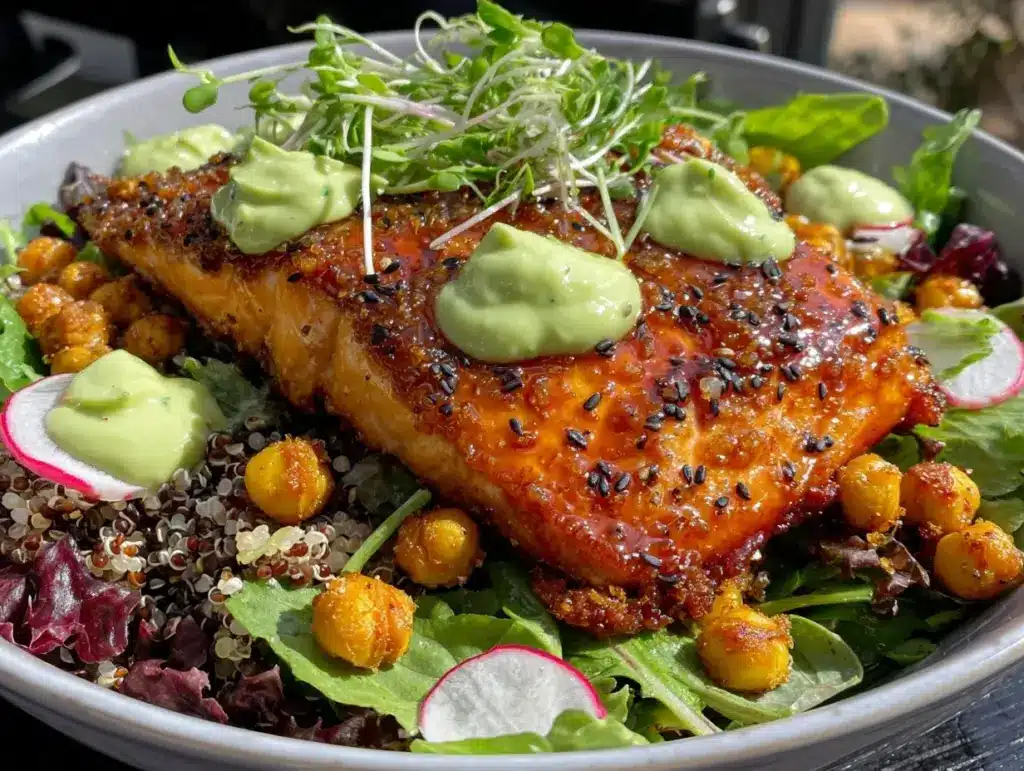
The scent of warm miso-glazed salmon sizzling gently in the pan instantly brings me back to cozy weeknights spent in my tiny kitchen, experimenting with flavors that feel both comforting and fresh. Honestly, this miso-glazed salmon nourish bowl quickly became one of my go-to recipes after I realized it packed so much flavor and nutrition into one bowl, without any fuss. I first stumbled upon the idea when craving something wholesome but didn’t want to spend hours cooking. Combining the rich umami of miso with tender, flaky salmon, fresh veggies, and fluffy rice felt like the perfect balance.
This recipe is a keeper because it’s not just delicious—it’s a little celebration of texture and taste. You know, the way the miso glaze caramelizes slightly on the salmon, the crisp bite of fresh greens, and the creamy avocado all mingling together? It’s magic. Plus, it’s packed with nutrients that make you feel good after eating (not sluggish). Over the past few months, I’ve made this dish countless times, tweaking the glaze and topping combos, and it’s always a hit. Whether you’re new to cooking fish or looking for a healthy meal that impresses without stress, this miso-glazed salmon nourish bowl is worth trying.
Perfect for busy families, health-conscious eaters, or anyone craving a bowl that feels like a hug, this recipe brings together simple ingredients and bold flavors in a way that’s both satisfying and nourishing.
Why You’ll Love This Miso-Glazed Salmon Nourish Bowl Recipe
After preparing this miso-glazed salmon nourish bowl dozens of times, I can say it’s truly one of those recipes that just clicks. Here’s why it’s become a staple in my kitchen:
- Quick & Easy: You can have this meal ready in about 30 minutes, which makes it perfect for busy weeknights or when you want something healthy but don’t want to slave over the stove.
- Simple Ingredients: No need for strange or hard-to-find items. Most of what you need is probably already in your pantry or fridge.
- Perfect for Meal Prep: The bowls keep well in the fridge, so you can prep ahead and enjoy a nourishing lunch or dinner all week long.
- Crowd-Pleaser: My family and friends always ask for seconds. The balance of sweet, salty, and savory flavors appeals to picky and adventurous eaters alike.
- Unbelievably Delicious: The miso glaze adds a rich umami punch that pairs beautifully with the tender salmon and crisp veggies.
What sets this recipe apart is the glaze itself — blending miso paste with a touch of honey and sesame oil for that signature sweetness and depth. I’ve tried many miso salmon recipes, but this one nails the texture with perfectly cooked fish that flakes apart easily without drying out. It’s comfort food with a fresh, healthy twist.
Honestly, after the first bite, you might just close your eyes and savor the moment. It’s exactly the kind of dish that makes healthy eating feel indulgent and satisfying. Plus, it’s a great way to impress guests without complicated cooking techniques or exotic ingredients.
What Ingredients You Will Need
This miso-glazed salmon nourish bowl uses straightforward ingredients that come together to create a meal bursting with flavor and texture. Most of these are pantry staples or easy to find at local stores.
- For the Salmon and Glaze:
- 4 salmon fillets (about 6 oz / 170 g each), skin-on for crispiness
- 3 tablespoons white miso paste (I recommend using Hikari brand for smooth texture)
- 2 tablespoons honey or maple syrup (balances the miso’s saltiness)
- 1 tablespoon soy sauce (use tamari for gluten-free option)
- 1 tablespoon rice vinegar (adds gentle acidity)
- 1 teaspoon toasted sesame oil (for rich, nutty flavor)
- For the Nourish Bowl Base:
- 2 cups cooked jasmine rice or brown rice (about 400 g cooked) — warm or room temperature
- 1 cup steamed edamame (shelled)
- 1 avocado, sliced (adds creaminess)
- 1 cup shredded carrots (for crunch and color)
- 1 cucumber, thinly sliced or julienned
- 2 green onions, sliced (for fresh bite)
- For Garnish and Extras:
- Sesame seeds (black or white, toasted if possible)
- Pickled ginger or kimchi (optional, for tangy contrast)
- Fresh cilantro or microgreens (adds brightness)
- Extra soy sauce or sriracha for serving
If you want to swap the rice, quinoa or cauliflower rice works well as a lower-carb alternative. For the miso paste, white or yellow miso is best here because it’s milder and sweeter, which complements the salmon perfectly. Also, look for firm, fresh salmon with bright skin — it makes a difference in cooking and texture.
Equipment Needed
- Non-stick or cast iron skillet — I personally love using my cast iron for the crisp skin it gives the salmon, but a good non-stick pan works fine too.
- Mixing bowl — for whisking together the miso glaze ingredients.
- Measuring spoons and cups — accuracy helps keep the glaze balanced.
- Sharp knife — essential for slicing veggies and avocado cleanly.
- Rice cooker or pot — for perfectly cooked rice without fuss.
- Cutting board — sturdy and spacious for prepping all the fresh ingredients.
If you don’t have a cast iron skillet, don’t worry! A heavy-bottomed non-stick pan will do the job, just keep an eye on the heat so the glaze doesn’t burn. For budget-friendly options, a simple stainless steel pan is perfectly fine but may take a little more care to prevent sticking. Make sure to clean and dry your pan well before cooking for best results.
Detailed Preparation Method
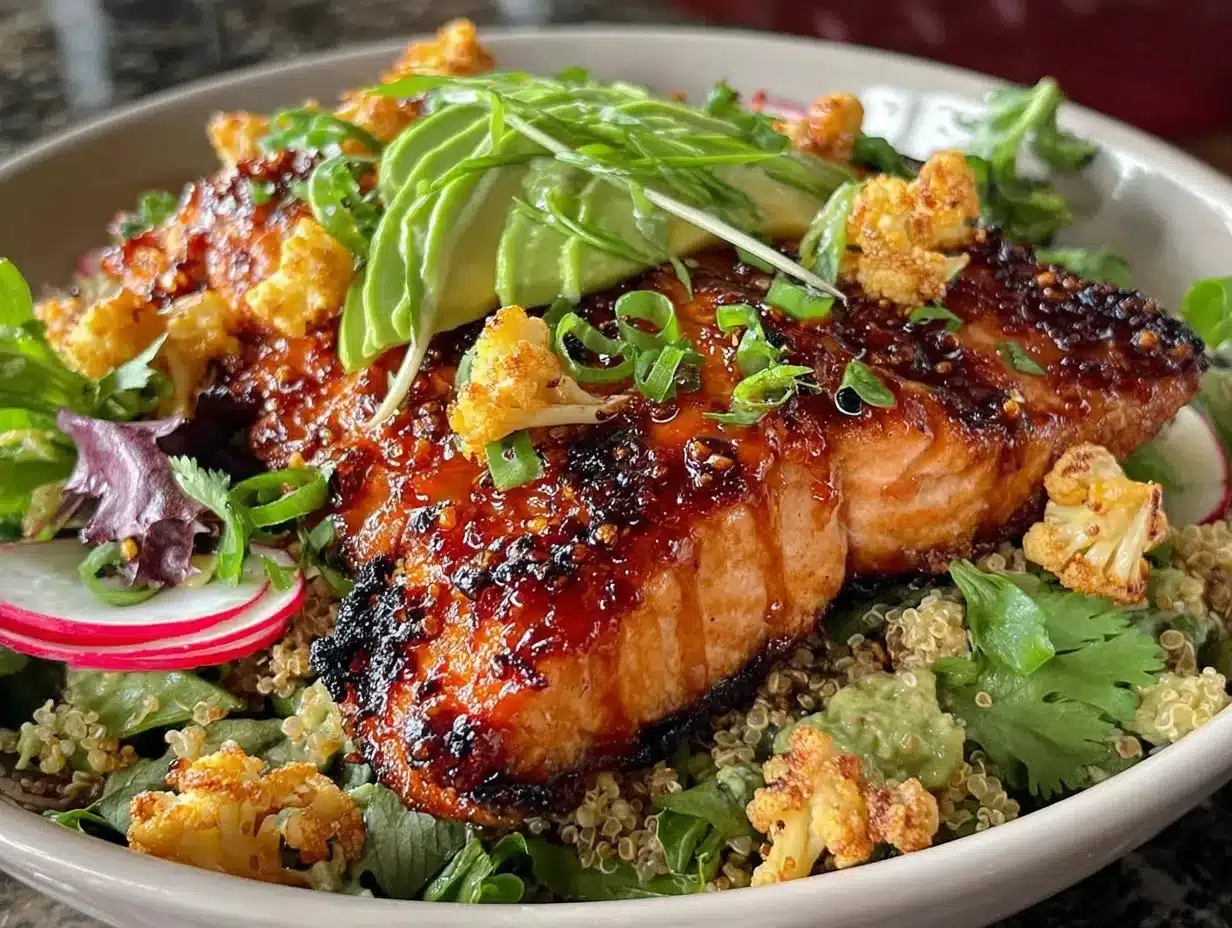
- Prepare the miso glaze: In a small mixing bowl, whisk together 3 tablespoons white miso paste, 2 tablespoons honey, 1 tablespoon soy sauce, 1 tablespoon rice vinegar, and 1 teaspoon toasted sesame oil until smooth and well combined. Set aside. (This should take about 5 minutes.)
- Cook the rice: Prepare 2 cups of jasmine or brown rice according to package instructions. Fluff with a fork and keep warm. (If using a rice cooker, this step can be done ahead.)
- Prep the vegetables: While rice is cooking, slice the cucumber thinly, shred the carrots, slice green onions, and prepare the avocado slices carefully to avoid browning. Steam or boil 1 cup of shelled edamame until tender (about 5 minutes), then drain and set aside.
- Cook the salmon: Heat a non-stick or cast iron skillet over medium heat. Pat salmon fillets dry with paper towel (this helps skin crisp up). Place salmon skin-side down and cook for 4-5 minutes without moving to get crispy skin. Flip the fillets carefully, then brush the miso glaze generously over the top side. Cook for another 3-4 minutes until salmon is just cooked through and glaze caramelizes slightly. (Internal temp should reach about 125°F / 52°C for medium, or adjust to your liking.)
- Assemble the nourish bowls: Divide the cooked rice evenly among four bowls. Arrange the steamed edamame, shredded carrots, cucumber slices, avocado, and green onions on top. Place one glazed salmon fillet on each bowl. Sprinkle with toasted sesame seeds and garnish with fresh cilantro or microgreens. Serve immediately with extra soy sauce or sriracha on the side.
Pro tip: Don’t overcrowd the pan when cooking salmon to keep the skin crisp. If the glaze starts to burn, lower the heat slightly and cook a bit longer. You want that sticky, slightly caramelized finish without bitterness. Also, keeping the salmon skin-on locks moisture in and adds a wonderful texture contrast.
Cooking Tips & Techniques
Getting the miso-glazed salmon nourish bowl just right takes a few handy tricks I’ve picked up along the way. First, always pat your salmon dry before cooking — this is key to crisp skin. Wet fish steams instead of sears, and nobody wants soggy skin.
When applying the glaze, do so after flipping the salmon, not before. The miso contains sugar which can burn if cooked too long over direct heat. Brushing it on the last few minutes lets it caramelize without turning bitter. If you’re worried about burning, lower the heat slightly or finish the salmon in a preheated oven at 375°F (190°C) for 3-4 minutes.
Timing is everything here. While the rice cooks, prep your veggies so everything comes together smoothly. I often steam edamame in the last few minutes of rice cooking to save time. Multitasking like this turns the whole process into a quick, enjoyable routine instead of a scramble.
Don’t skip the garnishes — fresh herbs and sesame seeds add layers of flavor and make the bowl look inviting. And if you like a little heat, a drizzle of sriracha or chili oil is fantastic.
Lastly, trust your senses — the salmon should feel firm but springy, and the glaze should be shiny and slightly sticky. If it smells burnt or tastes bitter, adjust your heat and timing next time. Cooking fish perfectly takes practice, but this recipe is forgiving and works well even for beginners.
Variations & Adaptations
You can easily customize this miso-glazed salmon nourish bowl to suit different tastes or dietary needs. Here are a few variations I’ve tried and loved:
- Gluten-Free Version: Swap soy sauce with tamari or coconut aminos to keep it gluten-free without losing that salty umami flavor.
- Low-Carb Adaptation: Replace the rice with cauliflower rice or spiralized zucchini noodles for a lighter, grain-free bowl.
- Vegetarian Option: Instead of salmon, try marinated tofu or tempeh glazed with the same miso mixture and pan-fried until crispy.
- Seasonal Twist: Swap out edamame or cucumber for seasonal veggies like roasted sweet potato, sautéed kale, or steamed asparagus in spring and fall.
- Spicy Kick: Add a teaspoon of chili paste or sriracha into the miso glaze before cooking for a subtle heat that complements the salmon.
One personal favorite is adding a spoonful of pickled ginger or kimchi on the side — it cuts through the richness and adds a refreshing tang. Feel free to experiment with your favorite veggies or grains to make this bowl truly your own.
Serving & Storage Suggestions
Serve your miso-glazed salmon nourish bowl warm, right after assembling, to enjoy the contrast of crispy salmon skin and fresh, cool veggies. I like to drizzle a little extra soy sauce or a squeeze of lime over the top for brightness.
This bowl pairs beautifully with a light green tea or sparkling water with lemon to keep things refreshing. For lunch, it’s a complete, satisfying meal on its own, but for dinner, consider pairing it with a simple miso soup or steamed greens.
If you have leftovers (which is rare!), store the components separately if possible—keep salmon and rice in airtight containers in the fridge for up to 2 days. Veggies like avocado are best added fresh, but steamed or shredded veggies hold up well. Gently reheat the salmon in a low oven or microwave, but be careful not to overcook.
Flavors actually deepen a bit after resting, especially the glaze soaking into the salmon, so leftovers can be just as tasty if handled right. Just avoid storing the bowl fully assembled to prevent sogginess.
Nutritional Information & Benefits
This miso-glazed salmon nourish bowl is a powerhouse of nutrition. A typical serving provides approximately:
| Nutrient | Amount per serving |
|---|---|
| Calories | 450-500 kcal |
| Protein | 35-40 g |
| Fat | 15-20 g (mostly healthy fats) |
| Carbohydrates | 35-40 g |
| Fiber | 6-8 g |
Salmon is rich in omega-3 fatty acids, which support heart and brain health. Miso paste provides beneficial probiotics and adds a savory depth without excess sodium. The fresh veggies contribute antioxidants, fiber, and essential vitamins, making this bowl a balanced meal that fuels your body well.
This recipe is naturally gluten-free when using tamari, and can easily be adapted for lower-carb or vegetarian diets as noted. Just be mindful of soy allergies or sensitivities when selecting your ingredients.
Conclusion
All in all, this miso-glazed salmon nourish bowl is a recipe worth having up your sleeve. It’s quick, flavorful, and nourishing—perfect for anyone wanting a wholesome meal that doesn’t require hours in the kitchen. The balance of flavors and textures makes each bite a little celebration, and it’s easy to customize to suit your preferences or dietary needs.
Personally, this dish has been a comforting constant in my kitchen when I want something healthy yet indulgent-feeling. I hope you’ll give it a try and tweak it to make it yours. If you do, please come back and share your thoughts or any fun variations you’ve tried—I love hearing how recipes evolve in other kitchens!
Happy cooking, and here’s to many delicious bowls ahead!
FAQs About Miso-Glazed Salmon Nourish Bowl
Can I use frozen salmon for this recipe?
Yes, frozen salmon works fine. Just thaw it completely and pat dry before cooking to get crispy skin and even cooking.
What can I substitute if I don’t have miso paste?
You can try a mix of soy sauce and a small amount of tahini or peanut butter for richness, but the flavor won’t be quite the same. Miso is key for that umami punch.
How do I prevent the miso glaze from burning?
Brush the glaze on after flipping the salmon and cook on medium to medium-low heat. If needed, finish in the oven to avoid burning.
Can I make this recipe ahead of time?
Yes, you can prep the glaze, rice, and veggies ahead. Cook the salmon fresh for best texture, or reheat gently before serving.
Is this recipe suitable for meal prep?
Absolutely! Keep components separate in containers and assemble bowls when ready to eat to keep everything fresh and vibrant.
Pin This Recipe!
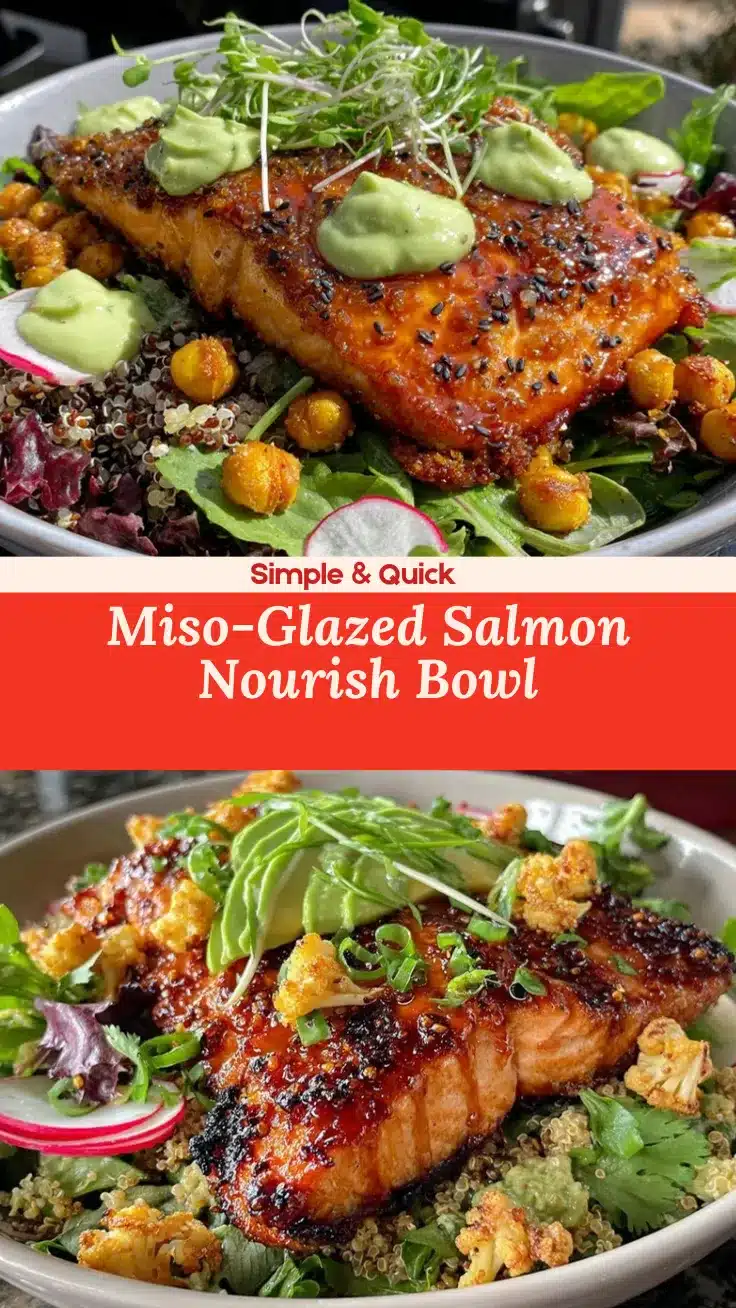
Miso-Glazed Salmon Nourish Bowl

A quick and healthy miso-glazed salmon nourish bowl combining tender salmon, fresh veggies, and fluffy rice with a rich umami glaze for a satisfying meal.
- Prep Time: 10 minutes
- Cook Time: 20 minutes
- Total Time: 30 minutes
- Yield: 4 servings 1x
- Category: Main Course
- Cuisine: Japanese
Ingredients
- 4 salmon fillets (about 6 oz / 170 g each), skin-on
- 3 tablespoons white miso paste
- 2 tablespoons honey or maple syrup
- 1 tablespoon soy sauce (use tamari for gluten-free option)
- 1 tablespoon rice vinegar
- 1 teaspoon toasted sesame oil
- 2 cups cooked jasmine rice or brown rice (about 400 g cooked)
- 1 cup steamed edamame (shelled)
- 1 avocado, sliced
- 1 cup shredded carrots
- 1 cucumber, thinly sliced or julienned
- 2 green onions, sliced
- Sesame seeds (black or white, toasted if possible)
- Pickled ginger or kimchi (optional)
- Fresh cilantro or microgreens
- Extra soy sauce or sriracha for serving
Instructions
- Prepare the miso glaze: In a small mixing bowl, whisk together 3 tablespoons white miso paste, 2 tablespoons honey, 1 tablespoon soy sauce, 1 tablespoon rice vinegar, and 1 teaspoon toasted sesame oil until smooth and well combined. Set aside.
- Cook the rice: Prepare 2 cups of jasmine or brown rice according to package instructions. Fluff with a fork and keep warm.
- Prep the vegetables: Slice the cucumber thinly, shred the carrots, slice green onions, and prepare the avocado slices carefully to avoid browning. Steam or boil 1 cup of shelled edamame until tender (about 5 minutes), then drain and set aside.
- Cook the salmon: Heat a non-stick or cast iron skillet over medium heat. Pat salmon fillets dry with paper towel. Place salmon skin-side down and cook for 4-5 minutes without moving to get crispy skin. Flip the fillets carefully, then brush the miso glaze generously over the top side. Cook for another 3-4 minutes until salmon is just cooked through and glaze caramelizes slightly (internal temp about 125°F / 52°C for medium).
- Assemble the nourish bowls: Divide the cooked rice evenly among four bowls. Arrange the steamed edamame, shredded carrots, cucumber slices, avocado, and green onions on top. Place one glazed salmon fillet on each bowl. Sprinkle with toasted sesame seeds and garnish with fresh cilantro or microgreens. Serve immediately with extra soy sauce or sriracha on the side.
Notes
Pat salmon dry before cooking for crispy skin. Brush glaze on after flipping salmon to prevent burning. If glaze burns, lower heat or finish in oven at 375°F for 3-4 minutes. Do not overcrowd pan. Store components separately for leftovers to avoid sogginess.
Nutrition
- Serving Size: 1 bowl with 1 salmon
- Calories: 475
- Sugar: 8
- Sodium: 600
- Fat: 17
- Saturated Fat: 3
- Carbohydrates: 38
- Fiber: 7
- Protein: 38
Keywords: miso-glazed salmon, nourish bowl, healthy meal, quick dinner, salmon recipe, miso glaze, easy salmon, gluten-free, meal prep