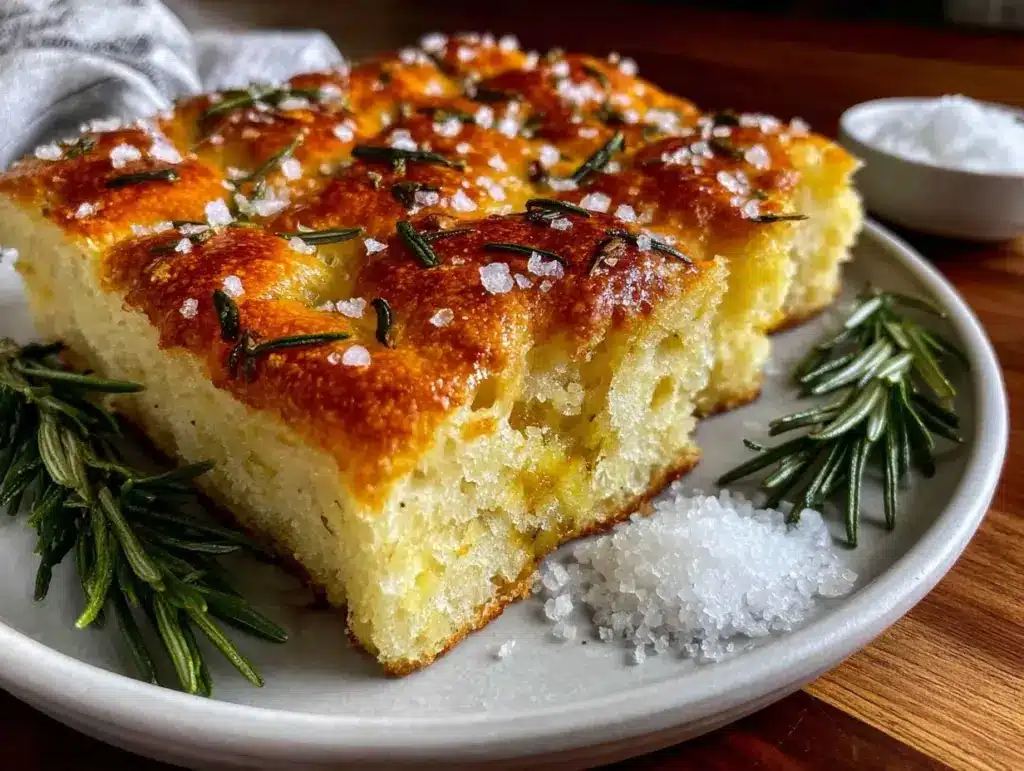
The smell of fresh rosemary focaccia baking in the oven, with its golden crust sprinkled generously with sea salt, is honestly one of those scents that make you stop whatever you’re doing. I first fell for this irresistible rosemary focaccia during a weekend getaway in Tuscany, where the locals swore by their simple yet deeply flavorful bread. It’s funny how something so straightforward—just flour, water, yeast, olive oil, and a few sprigs of rosemary—can feel like such a warm hug in food form.
This rosemary focaccia recipe has become my go-to for both casual dinners and special occasions because it’s easy to make ahead, and the flavors actually deepen overnight. Over dozens of tries, I tweaked the method to ensure the perfect chewy texture with crispy edges and that signature sea salt crunch on top. If you’re looking for a comforting, aromatic bread that’s as versatile as it is delicious, this is the one to try.
Whether you’re a busy home cook, a bread lover, or someone who enjoys impressing guests without stress, this rosemary focaccia with sea salt is a genuine crowd-pleaser. And trust me, once you’ve had it fresh from the oven, you’ll understand why it’s a make-ahead delight that keeps everyone coming back for more.
Why You’ll Love This Recipe
- Quick & Easy: Comes together in under 2 hours, with most of the work done by the dough resting and rising—perfect for busy days.
- Simple Ingredients: No need for fancy or hard-to-find items; just pantry essentials and fresh rosemary.
- Perfect for Any Occasion: Whether it’s a weeknight dinner, a brunch spread, or a party appetizer, this focaccia fits right in.
- Crowd-Pleaser: Kids and adults alike rave about the soft, airy crumb with that irresistible salty, herby crust.
- Unbelievably Delicious: The blend of earthy rosemary and crunchy sea salt makes every bite a little celebration.
This recipe stands out because of the make-ahead aspect. Letting the dough rest overnight in the fridge not only saves time on the day of baking but also intensifies the flavor and develops the texture. I also swear by pressing the rosemary and sea salt gently into the dough right before baking—it locks in the aroma and gives that rustic, artisanal look.
Honestly, this isn’t just any rosemary focaccia—it’s the one that makes you close your eyes and savor every crumb. It’s comfort food that’s approachable, fuss-free, and packed with character. You’ll find yourself reaching for this recipe again and again, whether it’s to impress guests or just treat yourself.
What Ingredients You Will Need
This rosemary focaccia recipe uses simple, wholesome ingredients to deliver bold flavor and that satisfying chewy texture without any fuss. Most of these are kitchen staples, and the fresh rosemary gives it that unmistakable aromatic punch.
- All-purpose flour (3 ½ cups / 440 grams) – I prefer King Arthur for consistent results.
- Warm water (1 ⅓ cups / 320 ml) – Around 100°F (38°C) to activate the yeast.
- Active dry yeast (2 ¼ teaspoons or one packet) – Check freshness for good rise.
- Extra virgin olive oil (¼ cup / 60 ml) – Use a fruity, peppery oil for best flavor.
- Fine sea salt (1 ½ teaspoons) – For the dough seasoning.
- Fresh rosemary (2-3 tablespoons, chopped) – Small needles work best; avoid woody stems.
- Coarse sea salt flakes (for topping) – Look for Maldon or fleur de sel for that satisfying crunch.
- Sugar or honey (1 teaspoon) – Helps yeast bloom and adds a touch of sweetness.
Optional: You can swap all-purpose flour with bread flour if you want a slightly chewier crumb, or use gluten-free flour blend for a gluten-free option, but texture may vary. When it comes to rosemary, if fresh isn’t available, dried rosemary works but use less as it’s more concentrated.
Equipment Needed
- Large mixing bowl: For combining and proofing the dough.
- Measuring cups and spoons: For precise ingredient amounts.
- Wooden spoon or dough whisk: For mixing the wet and dry ingredients.
- Stand mixer with a dough hook (optional): Makes kneading easier but you can do it by hand.
- 9×13-inch baking pan or rimmed sheet pan: For shaping and baking the focaccia.
- Kitchen towel or plastic wrap: To cover dough during rising.
- Pastry brush: For coating the dough with olive oil before baking.
If you don’t have a stand mixer, no worries—hand kneading takes about 8–10 minutes and gives you a good arm workout! For the baking pan, a rimmed cookie sheet works just fine if you don’t have a specific focaccia pan. I’ve also used silicone mats or parchment paper for easy cleanup.
Detailed Preparation Method
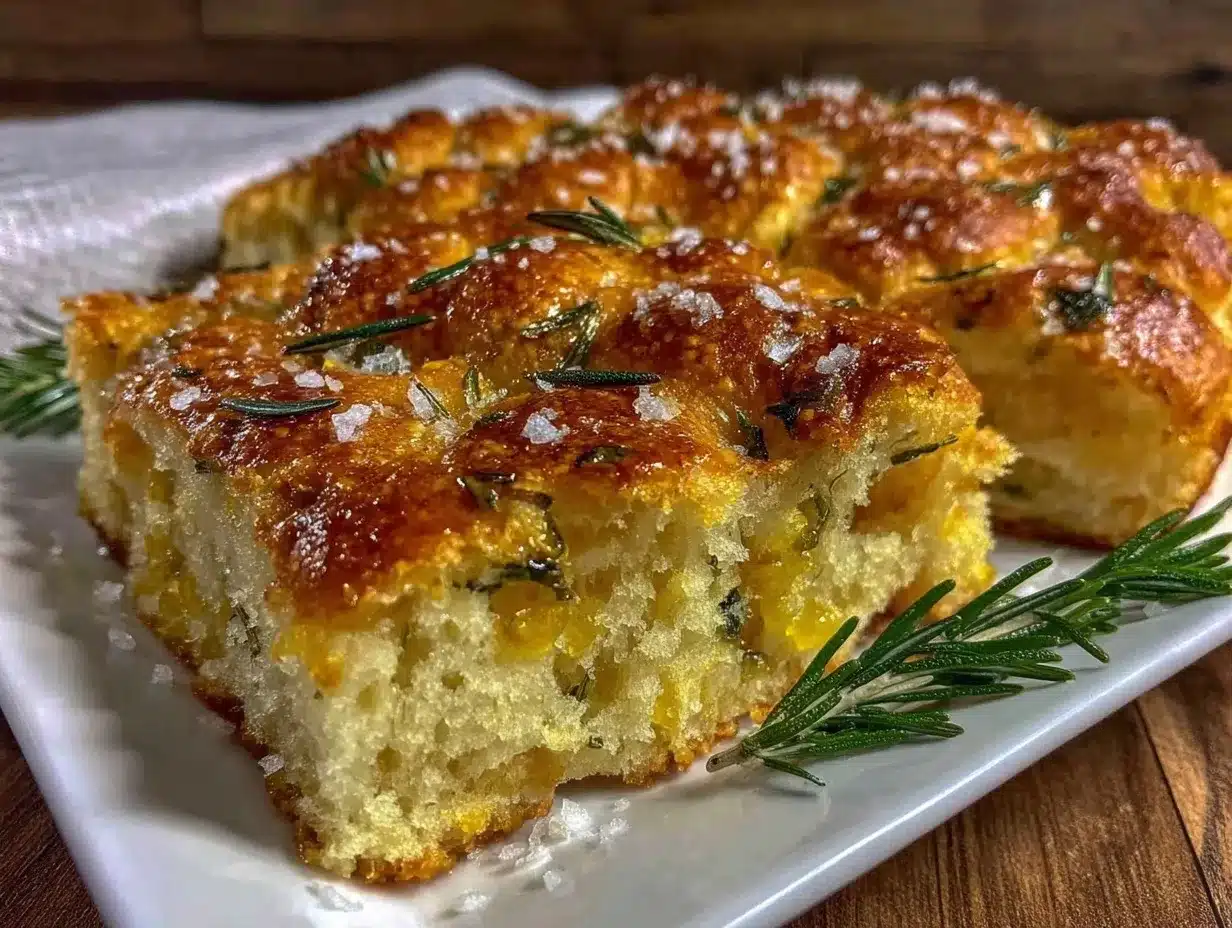
- Activate the yeast: In a small bowl, combine warm water (1 ⅓ cups / 320 ml), sugar (1 teaspoon), and active dry yeast (2 ¼ teaspoons). Stir gently and let it sit for 5–10 minutes until foamy. If it doesn’t foam, your yeast might be old, so get fresh yeast for best results.
- Mix the dough: In a large bowl, whisk together flour (3 ½ cups / 440 grams) and fine sea salt (1 ½ teaspoons). Slowly pour in the yeast mixture and olive oil (¼ cup / 60 ml). Stir with a wooden spoon or dough whisk until it forms a shaggy dough.
- Knead the dough: Turn the dough out onto a lightly floured surface and knead for 8–10 minutes until smooth and elastic. If using a stand mixer, knead with the dough hook on medium speed for about 6 minutes. The dough should feel soft but not sticky—if it sticks too much, sprinkle a tiny bit more flour.
- First rise: Lightly oil a large bowl and place the dough inside, turning once to coat. Cover with a damp kitchen towel or plastic wrap and let it rise in a warm spot for 1 to 1 ½ hours, or until doubled in size. If you want to make it ahead, refrigerate the dough overnight for a slower rise that enhances flavor.
- Shape the dough: Lightly oil your baking pan (9×13-inch or similar). Gently transfer the risen dough to the pan and press it out evenly with your fingers to cover the bottom. Don’t worry if it doesn’t reach the edges perfectly; it will spread while resting.
- Second rise: Cover the dough loosely and let it rest for 30–45 minutes to puff up slightly.
- Create dimples and add toppings: Using your fingertips, press deep dimples all over the dough’s surface. Drizzle generously with olive oil (about 2 tablespoons), sprinkle chopped fresh rosemary (2-3 tablespoons), and top with coarse sea salt flakes. This step locks in moisture and gives that classic focaccia texture.
- Bake: Preheat your oven to 425°F (220°C). Bake the focaccia for 20–25 minutes until the surface is golden brown and crispy. You should see the olive oil glistening and the edges nicely crisped.
- Cool and serve: Let the focaccia cool in the pan for 5–10 minutes before slicing. Fresh out of the oven is amazing, but it also tastes great at room temperature or lightly toasted the next day.
Cooking Tips & Techniques
One of the trickiest parts in focaccia baking is getting the dough texture just right—soft and airy inside, crispy outside. A few things I learned the hard way:
- Don’t be shy with the olive oil: It’s crucial for flavor and texture, both in the dough and on top before baking.
- Press those dimples deep enough: This traps pockets of oil and air, making the bread tender and beautifully textured.
- Let the dough rest well: Rushing the rising phases leads to dense bread. I always set a timer to remind myself to be patient.
- Use fresh rosemary: It makes a huge difference. If you only have dried, crush it gently and use less to avoid bitterness.
- Watch your oven temperature: Every oven is different. If your focaccia browns too quickly, lower the temp slightly to avoid burning the crust before the inside cooks through.
When multitasking, I like to prep the dough in the morning and let it rise slowly in the fridge while I tackle other meals. It’s a time saver and the flavor gets even better! Also, if the dough feels sticky during kneading, sprinkle flour gradually—too much flour can dry it out.
Variations & Adaptations
- Garlic and Herb: Add thinly sliced garlic and mixed herbs like thyme or oregano along with rosemary for a flavor boost.
- Cheesy Focaccia: Sprinkle grated Parmesan or mozzarella on top before baking for a melty, savory twist.
- Gluten-Free Version: Use a gluten-free all-purpose baking mix and add a tablespoon of xanthan gum if your blend doesn’t contain it. Baking time may vary.
- Olive and Sun-Dried Tomato: Press chopped olives and sun-dried tomatoes into the dough before baking for a Mediterranean flair.
- Whole Wheat or Spelt Flour: Swap up to half the all-purpose flour with whole wheat or spelt for a nuttier taste and more fiber.
Personally, I once tried adding caramelized onions and it turned the focaccia into a perfect side for roasted meats. If you want to bake it on a pizza stone, preheat the stone and slide the dough carefully for an extra crispy bottom.
Serving & Storage Suggestions
This rosemary focaccia is best served warm, right out of the oven, drizzled with a little extra olive oil or alongside a dipping sauce like balsamic vinegar and olive oil mix. It pairs wonderfully with soups, salads, or charcuterie boards for a cozy meal.
To store, wrap cooled focaccia tightly in plastic wrap or place in an airtight container. It keeps well at room temperature for up to 2 days. For longer storage, freeze the bread wrapped in foil or plastic wrap for up to 3 months.
When reheating, pop slices in a toaster oven or conventional oven at 350°F (175°C) for 5–7 minutes to revive that crispy crust and warm interior. Flavors often deepen after resting, so leftovers are great toasted with a bit of butter or cheese.
Nutritional Information & Benefits
One serving (about 1/12th of the focaccia) contains approximately 180 calories, 5 grams of fat (mostly healthy olive oil), 25 grams of carbohydrates, and 4 grams of protein. The fresh rosemary offers antioxidants and anti-inflammatory benefits, while olive oil contributes heart-healthy monounsaturated fats.
This bread is naturally dairy-free and can be made gluten-free with appropriate flour substitutions. It’s a nourishing choice when enjoyed in moderation, especially compared to processed bread alternatives. I love that it pairs flavor and texture with wholesome ingredients.
Conclusion
Making this rosemary focaccia with sea salt is one of those cooking moments that feels both satisfying and effortless. Thanks to the simple ingredients and the option to make it ahead, it’s a recipe that fits into busy lives without compromising flavor or comfort. I love how it brings people together—whether it’s shared at a family dinner or a casual gathering with friends.
Give this recipe a try, and don’t hesitate to tweak the herbs or toppings to suit your tastes. It’s forgiving and fun, and I promise once you’ve had a slice fresh from the oven, you’ll want to make it again soon. Let me know how your focaccia turns out—I’d love to hear your twists and tips!
FAQs About Rosemary Focaccia with Sea Salt
How long can I store rosemary focaccia?
Store at room temperature in an airtight container for up to 2 days or freeze for up to 3 months. Reheat before serving for best texture.
Can I make the dough ahead of time?
Absolutely! You can refrigerate the dough overnight after the first rise. Just bring it to room temperature before shaping and baking.
What’s the best way to get a crispy crust?
Use plenty of olive oil, create deep dimples in the dough, and bake at a high temperature. Also, avoid overcrowding the pan so heat circulates well.
Can I use dried rosemary instead of fresh?
Yes, but use less dried rosemary since it’s more potent. I recommend about 1 to 1 ½ tablespoons crushed dried rosemary.
Is this recipe suitable for beginners?
Definitely! The steps are straightforward, and the dough is forgiving. Making it ahead also helps with timing and ease.
Pin This Recipe!

Rosemary Focaccia Recipe Easy Make-Ahead Bread with Sea Salt Topping

A simple and aromatic rosemary focaccia bread with a golden crust and sea salt topping, perfect for make-ahead baking and versatile for any occasion.
- Prep Time: 20 minutes
- Cook Time: 25 minutes
- Total Time: 1 hour 55 minutes
- Yield: 12 servings 1x
- Category: Bread
- Cuisine: Italian
Ingredients
- 3 ½ cups (440 grams) all-purpose flour
- 1 ⅓ cups (320 ml) warm water (around 100°F / 38°C)
- 2 ¼ teaspoons (one packet) active dry yeast
- ¼ cup (60 ml) extra virgin olive oil
- 1 ½ teaspoons fine sea salt
- 2–3 tablespoons fresh rosemary, chopped
- Coarse sea salt flakes for topping
- 1 teaspoon sugar or honey
Instructions
- Activate the yeast: In a small bowl, combine warm water, sugar, and active dry yeast. Stir gently and let sit for 5–10 minutes until foamy.
- Mix the dough: In a large bowl, whisk together flour and fine sea salt. Slowly pour in the yeast mixture and olive oil. Stir until a shaggy dough forms.
- Knead the dough: Turn dough onto a lightly floured surface and knead for 8–10 minutes until smooth and elastic, or knead with a stand mixer dough hook for about 6 minutes.
- First rise: Lightly oil a large bowl, place dough inside, turning once to coat. Cover and let rise in a warm spot for 1 to 1 ½ hours until doubled in size. Alternatively, refrigerate overnight for a slower rise.
- Shape the dough: Lightly oil a 9×13-inch baking pan. Transfer dough to pan and press evenly with fingers to cover the bottom.
- Second rise: Cover dough loosely and let rest for 30–45 minutes to puff up slightly.
- Create dimples and add toppings: Press deep dimples all over dough surface. Drizzle with about 2 tablespoons olive oil, sprinkle chopped rosemary and coarse sea salt flakes.
- Bake: Preheat oven to 425°F (220°C). Bake focaccia for 20–25 minutes until golden brown and crispy.
- Cool and serve: Let cool in pan for 5–10 minutes before slicing. Serve warm or at room temperature.
Notes
Use plenty of olive oil for flavor and texture. Press dimples deeply to trap oil and air pockets. Let dough rest well to avoid dense bread. Fresh rosemary is preferred; if using dried, use less. Adjust oven temperature if browning too quickly. Dough can be refrigerated overnight for enhanced flavor.
Nutrition
- Serving Size: 1 slice (1/12th of f
- Calories: 180
- Fat: 5
- Carbohydrates: 25
- Protein: 4
Keywords: rosemary focaccia, focaccia bread, easy bread recipe, make-ahead bread, sea salt focaccia, Italian bread, homemade focaccia