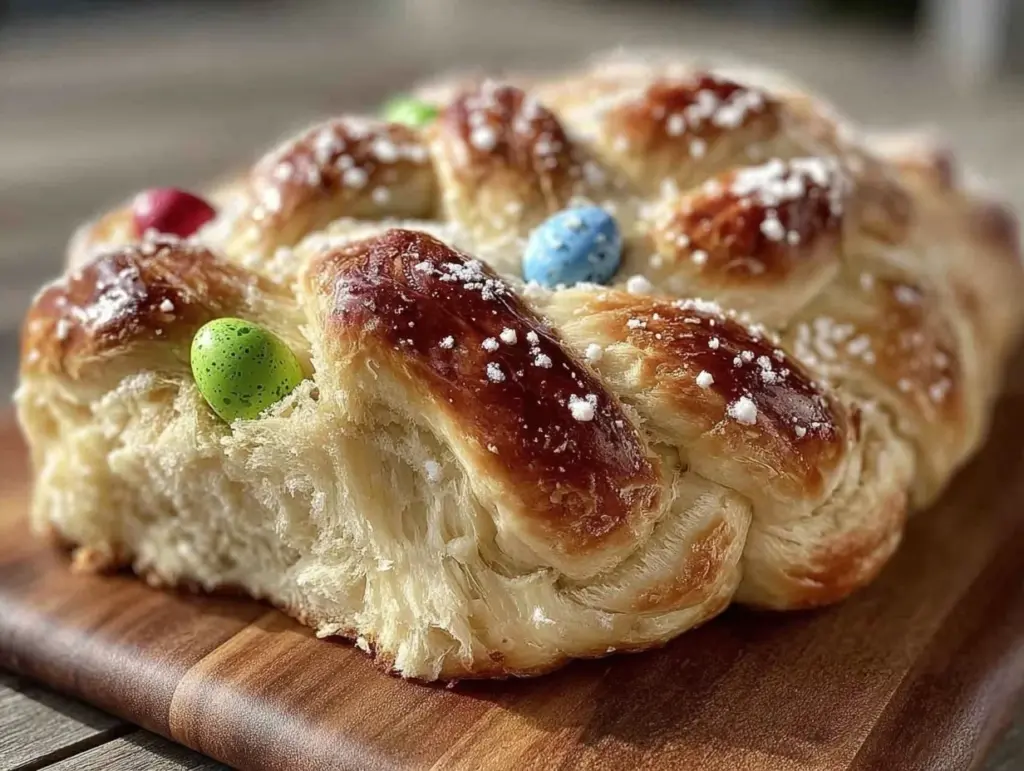
There’s something quietly magical about the early morning light filtering through lace curtains as the kitchen fills with the warm, sweet scent of freshly baked bread. One spring, while scrambling to prepare for a last-minute Easter brunch, I stumbled upon this recipe for soft fluffy braided Easter egg bread that turned out to be an unexpected showstopper. Honestly, I wasn’t sure if I had time to bake anything elaborate, but this bread came together like a charm—light, tender, and just the right touch of sweetness, with those colorful eggs nestled right in the braid. It wasn’t just bread; it was the centerpiece of the table, the kind that made everyone pause, smile, and ask for the recipe.
What really hooked me wasn’t just the look or the taste, but how effortlessly it brought a festive vibe without the fuss. I remember watching my niece’s eyes widen when she saw the braided bread with its pastel eggs—a simple tradition, but one that stuck with us. Since then, I’ve made this soft fluffy braided Easter egg bread every spring, sometimes multiple times a week, adjusting the dough just enough to get that perfect pillow-like texture. It’s become my go-to for turning a casual family breakfast into a memorable celebration.
All in all, this bread isn’t just about Easter—it’s about those shared moments, the smell of yeast and sugar mingling, and the comfort of something homemade. So, if you’re wondering whether to try your hand at a festive bread that’s as delightful as it is approachable, this recipe might just quietly become your favorite tradition too.
Why You’ll Love This Recipe
- Quick & Easy: Comes together in about 2 hours total, including rising time—perfect for busy mornings or last-minute festive plans.
- Simple Ingredients: You’re likely to have everything already—flour, eggs, sugar, yeast—no specialty stores needed.
- Perfect for Festive Tables: The braided shape with colorful eggs tucked in makes an instant centerpiece for Easter brunch or spring gatherings.
- Crowd-Pleaser: Kids and adults alike love its soft, fluffy texture and gently sweet flavor—always a hit!
- Unbelievably Delicious: The contrast of tender dough and slightly caramelized crust is a little slice of comfort food heaven.
- Distinctive Touch: I blend in a bit of vanilla and a hint of citrus zest to give this bread a subtle yet unforgettable flavor that sets it apart.
- Emotional Connection: This bread is the kind that invites you to slow down, enjoy a moment, and feel the joy of simple, classic baking.
What Ingredients You Will Need
This recipe uses simple, wholesome ingredients to deliver bold flavor and satisfying texture without fuss. Most are pantry staples, with a few fresh ones for that authentic softness and sweetness.
- All-purpose flour: 4 cups (480 g) – For best results, I recommend King Arthur brand for consistent texture.
- Active dry yeast: 2 ¼ teaspoons (1 packet) – Fresh yeast works too if you prefer.
- Granulated sugar: ⅓ cup (65 g) – Adds subtle sweetness without overpowering.
- Salt: 1 teaspoon – Balances the flavors in the dough.
- Whole milk: 1 cup (240 ml), warmed to about 110°F (43°C) – Use dairy-free milk if needed, but richness is key here.
- Unsalted butter: 6 tablespoons (85 g), softened – Adds tenderness and richness.
- Large eggs: 3, at room temperature – Two for the dough and one for egg wash.
- Vanilla extract: 1 teaspoon – Enhances flavor with a gentle aroma.
- Lemon zest: From 1 medium lemon – Optional, but gives a fresh, springtime brightness.
- Colored eggs: 6 large eggs, hard-boiled and dyed – Traditional for Easter, but you can use plain white if preferred.
Substitution notes: For a gluten-free twist, swap the flour with a 1-to-1 gluten-free blend, but the texture will be slightly different. Coconut or almond milk can replace dairy milk, though the crumb may be a bit denser.
Equipment Needed
- Large mixing bowl – For combining ingredients and letting the dough rise comfortably.
- Measuring cups and spoons – Accurate measurements make or break bread.
- Stand mixer with dough hook (optional) – Speeds up kneading, but hand kneading works just fine if you don’t have one.
- Kitchen towel or plastic wrap – To cover the dough while it rises, keeping it warm and moist.
- Baking sheet lined with parchment paper – Prevents sticking and promotes even baking.
- Pastry brush – For applying the egg wash to get that golden, glossy crust.
- Cooling rack – Essential to let the bread cool evenly, preventing sogginess underneath.
If you don’t have a stand mixer, a sturdy wooden spoon and some elbow grease will do the job. I used to knead this dough by hand, and honestly, it’s kind of therapeutic, especially watching the dough transform under your palms.
Preparation Method
- Activate the yeast: In a small bowl, combine the warm milk (110°F/43°C) with the sugar and yeast. Stir gently and let sit for 5-10 minutes until foamy. If it doesn’t foam, your yeast might be old—start over with fresh yeast.
- Mix dry ingredients: In a large bowl, whisk the flour and salt together to distribute evenly.
- Combine wet and dry: Make a well in the flour mixture and add the yeast mixture, 2 eggs, softened butter, vanilla extract, and lemon zest. Stir with a wooden spoon or dough hook until a shaggy dough forms.
- Knead the dough: Turn the dough onto a lightly floured surface and knead for about 8-10 minutes until smooth and elastic. If using a stand mixer, knead with the dough hook on medium speed for 6-7 minutes. The dough should bounce back when poked.
- First rise: Place the dough in a greased bowl, cover with a damp towel or plastic wrap, and let it rise in a warm spot for 1 to 1.5 hours, or until doubled in size. A cozy corner near a sunny window works well.
- Divide and shape: Punch down the dough gently to release air. Divide it into three equal portions. Roll each portion into a long rope, about 18 inches (45 cm) long.
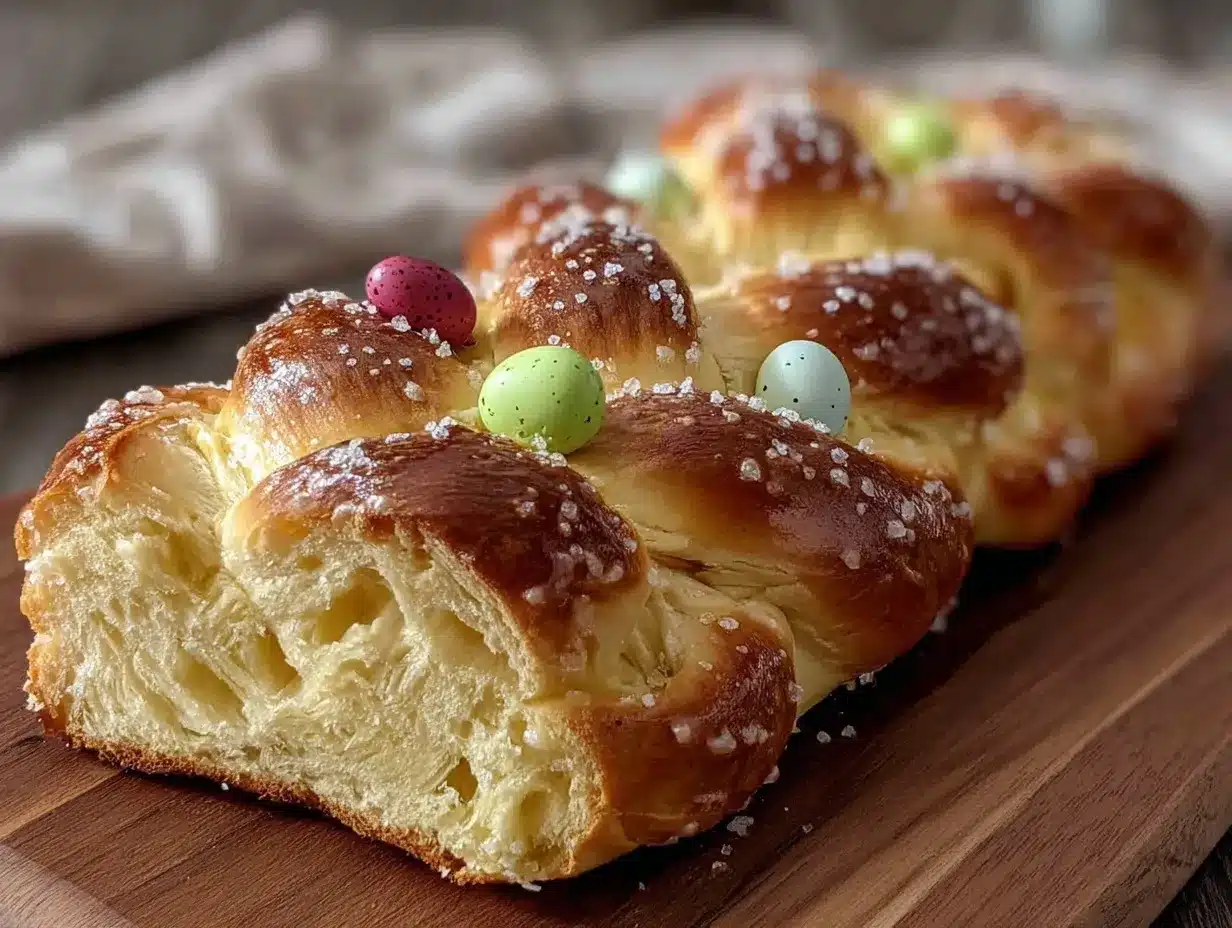
- Braid the dough: Place the three ropes side by side and pinch them together at one end. Lay the colored, hard-boiled eggs evenly spaced along the ropes, then carefully braid the strands over and under, tucking the eggs in as you go. Pinch the ends to seal.
- Second rise: Transfer the braided loaf to a parchment-lined baking sheet. Cover loosely with plastic wrap and let rise for another 30-45 minutes until puffy but not doubled.
- Preheat the oven: While the dough rises, preheat your oven to 350°F (175°C).
- Egg wash and bake: Beat the remaining egg with a tablespoon of water and brush it gently over the braid. Bake for 25-30 minutes until golden brown and hollow-sounding when tapped.
- Cool: Transfer the bread to a cooling rack and let it cool completely before slicing. This helps the crumb set perfectly.
Keep an eye on the bread in the last 10 minutes; if it’s browning too fast, tent with foil. The smell at this point is just irresistible—the kind that fills the whole house and makes you want to sneak a slice right away.
Cooking Tips & Techniques
When making soft fluffy braided Easter egg bread, timing is everything. Yeast loves warmth, so make sure your milk is just right—too hot and it kills the yeast, too cold and it won’t activate properly. I learned that the hard way once and ended up with dense bread (not fun!).
Kneading is your friend here. If you’re hand kneading, don’t rush it. The dough should feel smooth and springy, not sticky or dry. Adding flour bit by bit helps, but resist the urge to overdo it; slightly tacky dough yields the best softness.
Covering the dough for rising is crucial. I use a damp towel, but plastic wrap works too. It keeps the dough from drying out and forming a crust, which can mess with the final texture.
When braiding, be gentle around the eggs. If you pull too tight, the eggs might crack or the braid will lose its shape. I usually tuck the eggs snugly but carefully, so they peek through without risking breakage.
Finally, the egg wash gives this bread its signature shiny, golden finish. Brush lightly and evenly to avoid soggy spots. And don’t skip cooling—cutting warm bread can lead to a gummy crumb.
Variations & Adaptations
- Flavor twists: Add orange zest instead of lemon for a sweeter citrus note, or sprinkle cinnamon and nutmeg for a warm, cozy vibe.
- Dietary swaps: Use almond milk and vegan butter to make a dairy-free version. Substitute the eggs with flaxseed “eggs” for an egg-free option, but the texture will be less fluffy.
- Seasonal additions: Toss in dried cranberries or chopped nuts into the dough for extra texture and flavor.
- Cooking method: This braided bread can also be baked in a loaf pan if you prefer a more traditional shape, just adjust baking time accordingly (about 35-40 minutes).
- Personal twist: Once, I brushed the braid with honey instead of egg wash for a softer crust and added edible flowers for a delicate springtime look—a real crowd-pleaser.
Serving & Storage Suggestions
Serve this soft fluffy braided Easter egg bread slightly warm or at room temperature to enjoy its full flavor. It pairs beautifully with creamy butter, homemade jam, or a smear of mascarpone. For festive brunches, slice thick and offer alongside fresh fruit and coffee or tea.
Store leftover bread wrapped tightly in plastic wrap or in an airtight container at room temperature for up to 3 days. For longer storage, freeze slices in a freezer bag for up to 2 months. Thaw at room temperature and warm in the oven for a few minutes to refresh softness.
Over time, the flavors mellow and the crumb becomes even more tender, so sometimes I make the bread a day ahead to let it “rest” before serving—it’s worth the wait.
Nutritional Information & Benefits
This braided bread offers a comforting source of carbohydrates and protein from the eggs and milk. One serving (about 1/12th of the loaf) contains roughly 180 calories, 5 grams of fat, 30 grams of carbohydrates, and 6 grams of protein.
The inclusion of eggs provides essential vitamins like B12 and D, while the milk adds calcium and vitamin A. Using fresh lemon zest adds a touch of vitamin C and antioxidants.
While it’s not a low-carb recipe, this bread balances indulgence with nourishment, making it a wholesome choice for festive occasions. It’s naturally gluten-rich unless you make substitutions, so be mindful if you have sensitivities.
Conclusion
This soft fluffy braided Easter egg bread is a wonderful way to add charm and warmth to your festive table. It’s approachable, comforting, and offers that satisfying “wow” factor without demanding all day in the kitchen. I love how it brings people together—whether for a quick breakfast or a celebratory brunch.
Feel free to tweak the flavors or colors to suit your family’s style. Baking this bread has become one of my favorite spring rituals, a simple but meaningful way to celebrate the season. I hope it finds a place at your table and in your heart as well.
If you give it a try, I’d love to hear how your loaf turned out or what special touches you added. Sharing food stories is the best part of baking, after all!
FAQs
Can I use instant yeast instead of active dry yeast?
Yes, you can substitute instant yeast using about 2 teaspoons. Mix it directly with the flour without proofing in milk, but keep an eye on rising times—they may be shorter.
What if I don’t have food coloring for the eggs?
Plain hard-boiled eggs work just fine and still look lovely nestled in the braid. You can also decorate the eggs with natural dyes from beet juice or turmeric for a subtle, homemade touch.
Can I prepare the dough the night before?
Absolutely! After kneading, place the dough in the refrigerator overnight. Bring it to room temperature before shaping and braiding. This slow rise can enhance flavor.
How do I prevent the eggs from cracking during baking?
Gently tuck the eggs into the braid without squeezing too tightly. Also, bake at a moderate temperature (350°F/175°C) and avoid sudden temperature changes after baking.
Is this bread suitable for freezing?
Yes! Freeze the fully cooled bread wrapped tightly in plastic wrap and then foil. Thaw at room temperature and warm gently before serving for best texture.
Pin This Recipe!
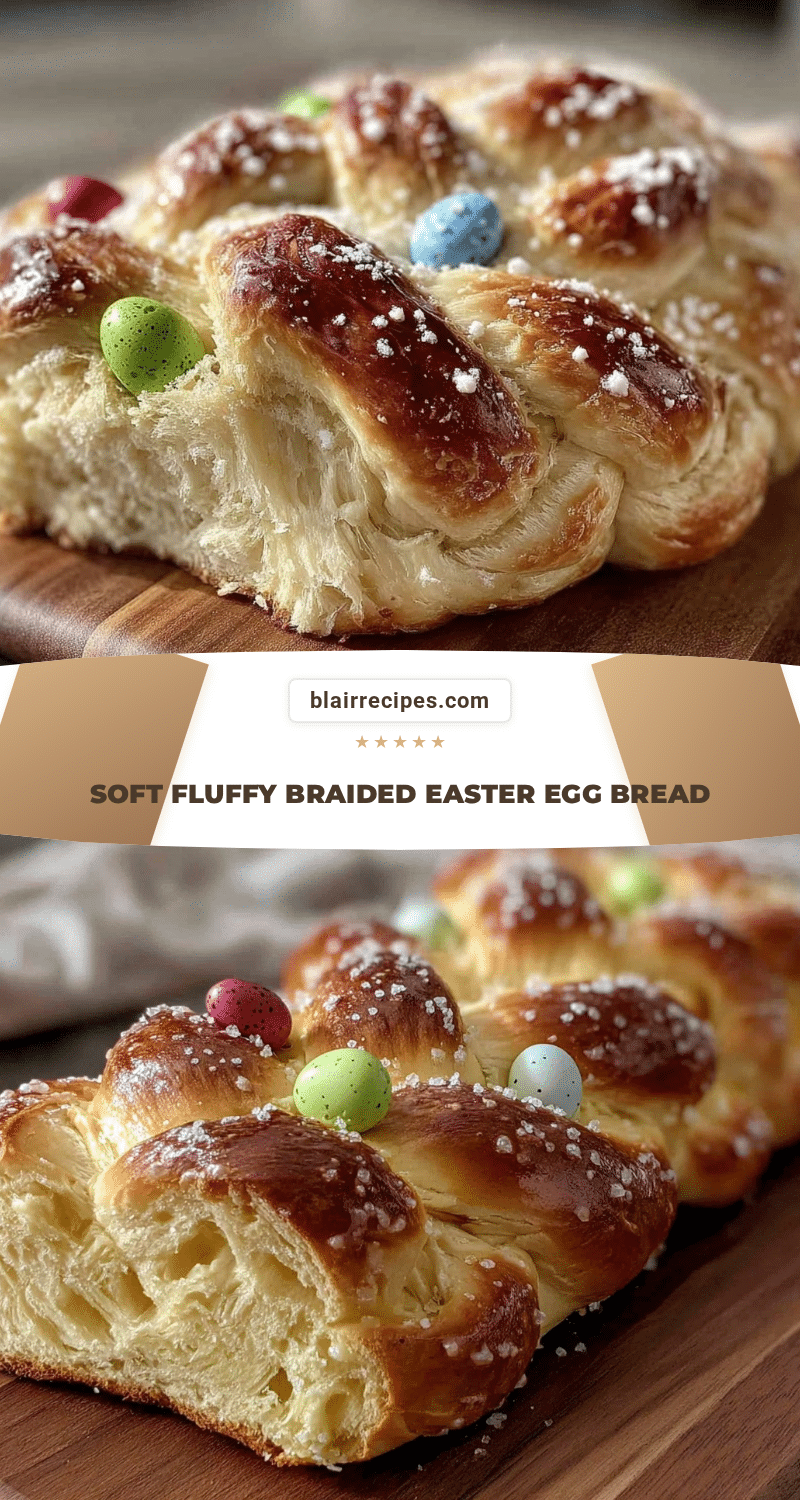
Soft Fluffy Braided Easter Egg Bread

A soft, tender, and lightly sweet braided bread with colorful eggs nestled in the braid, perfect for festive Easter tables and spring gatherings.
- Prep Time: 20 minutes
- Cook Time: 30 minutes
- Total Time: 2 hours 15 minutes
- Yield: 12 servings 1x
- Category: Bread
- Cuisine: American
Ingredients
- 4 cups (480 g) all-purpose flour
- 2 ¼ teaspoons (1 packet) active dry yeast
- ⅓ cup (65 g) granulated sugar
- 1 teaspoon salt
- 1 cup (240 ml) whole milk, warmed to about 110°F (43°C)
- 6 tablespoons (85 g) unsalted butter, softened
- 3 large eggs, at room temperature (2 for dough, 1 for egg wash)
- 1 teaspoon vanilla extract
- Zest of 1 medium lemon
- 6 large colored eggs, hard-boiled and dyed
Instructions
- Activate the yeast: In a small bowl, combine warm milk (110°F/43°C) with sugar and yeast. Stir gently and let sit for 5-10 minutes until foamy.
- Mix dry ingredients: In a large bowl, whisk flour and salt together.
- Combine wet and dry: Make a well in the flour mixture and add yeast mixture, 2 eggs, softened butter, vanilla extract, and lemon zest. Stir until a shaggy dough forms.
- Knead the dough: Turn dough onto a floured surface and knead 8-10 minutes until smooth and elastic, or knead with stand mixer dough hook for 6-7 minutes.
- First rise: Place dough in greased bowl, cover with damp towel or plastic wrap, and let rise in warm spot for 1 to 1.5 hours until doubled in size.
- Divide and shape: Punch down dough, divide into three equal portions, and roll each into 18-inch ropes.
- Braid the dough: Pinch ropes together at one end, lay colored eggs evenly spaced along ropes, braid strands over and under, tucking eggs in. Pinch ends to seal.
- Second rise: Transfer braided loaf to parchment-lined baking sheet, cover loosely, and let rise 30-45 minutes until puffy but not doubled.
- Preheat oven to 350°F (175°C).
- Egg wash and bake: Beat remaining egg with 1 tablespoon water, brush over braid, and bake 25-30 minutes until golden brown and hollow sounding when tapped.
- Cool: Transfer bread to cooling rack and cool completely before slicing.
Notes
Ensure milk is warmed to about 110°F to properly activate yeast. Knead dough until smooth and elastic but slightly tacky for best softness. Be gentle when braiding around eggs to avoid cracking. Brush egg wash lightly and evenly for a shiny crust. Cool bread completely before slicing to prevent gummy texture. If bread browns too fast, tent with foil during last 10 minutes of baking.
Nutrition
- Serving Size: 1 slice (1/12th of l
- Calories: 180
- Fat: 5
- Carbohydrates: 30
- Protein: 6
Keywords: Easter bread, braided bread, soft bread, fluffy bread, festive bread, holiday bread, homemade bread, braided Easter egg bread