
“Pass me the butter,” my partner said, eyes lighting up as I slid the golden-brown, perfectly crisp sourdough English muffin onto the plate. It wasn’t always this way—I used to think English muffins were just those boring store-bought rounds with that weird texture. But one late Sunday morning, a small kitchen mishap turned into a breakfast obsession. I’d planned a simple toast, but my sourdough starter was bubbling away, and I thought, why not try making English muffins from scratch?
What followed was a couple of hours of flour dust, sticky hands, and yes, a few flattened muffins that looked more like pancakes. But that one batch that finally worked? Oh, the smell alone was enough to fill the whole house with a warm, tangy promise. Crispy edges gave way to those signature nooks and crannies, just waiting to trap melting butter and jam. Honestly, I couldn’t stop making them for almost a week. No fancy bakery could touch the depth of flavor and crunch I got from my own sourdough starter.
Now, this perfect crispy sourdough English muffins recipe has a quiet place in our weekend routine. It’s not just breakfast food—it’s the kind of treat that turns a rushed morning into a moment worth savoring, with that gentle tang of sourdough and the satisfying crunch you don’t get from regular muffins. This recipe stuck because it felt like a small victory in the chaos of everyday life, a chance to slow down and enjoy something truly homemade.
Why You’ll Love This Recipe
After testing and tweaking this sourdough English muffins recipe several times, I can confidently say it’s a gem for your breakfast lineup. Here’s why it stands out:
- Quick & Easy: While sourdough starters take time, the hands-on portion is straightforward and takes under an hour. Perfect for those weekends when you want a homemade touch without the fuss.
- Simple Ingredients: No hard-to-find stuff here—just pantry staples and your lively sourdough starter. You probably have everything on hand already.
- Perfect for Weekend Brunch: Whether you’re hosting friends or enjoying a quiet morning alone, these muffins bring a special, rustic charm to your table.
- Crowd-Pleaser: I’ve shared these with neighbors and family, and they always ask for the recipe. Kids love the crispy outside and soft inside, and adults appreciate the complex sourdough flavor.
- Unbelievably Delicious: The crunchy crust combined with the chewy, airy crumb is the kind of texture combo you won’t find in store-bought muffins.
What sets this apart is the use of active sourdough starter instead of commercial yeast, which adds that signature tang and depth. Also, the cooking method—griddling with care—creates unmatched crispness. This isn’t just another muffin recipe; it’s a little culinary triumph that rewards patience with every bite. And honestly, there’s something cozy about knowing you made these from scratch, no shortcuts. It’s food that feels like a warm hug on a plate.
What Ingredients You Will Need
This recipe relies on simple, wholesome ingredients to build a robust flavor and perfect texture—nothing fancy or intimidating. Most are pantry staples, which means you can whip these up even on a whim.
- Active sourdough starter (100g / 3.5 oz): Use a bubbly, well-fed starter for best results. I prefer a whole wheat starter for added depth, but white starter works too.
- All-purpose flour (250g / 2 cups): Look for a high-protein brand like King Arthur for a sturdy crumb.
- Whole wheat flour (50g / ½ cup): Adds nuttiness and chewiness; feel free to swap for all-purpose if preferred.
- Warm water (180ml / ¾ cup): Around 75-80°F (24-27°C) to encourage fermentation.
- Sugar (1 tbsp): Helps feed the starter and lightly sweetens the dough.
- Salt (1 tsp): Balances flavor and strengthens gluten.
- Baking semolina or cornmeal (for dusting): This is crucial for that signature texture on the muffin surface; fine cornmeal works well too.
Optional additions:
- Unsalted butter (1 tbsp, melted): Adds richness when mixed into the dough or brushed on top before cooking.
- Milk (substitute for water): For a softer crumb, though water keeps the tang more pronounced.
Pro tip: When selecting your sourdough starter, make sure it’s active and bubbly—this recipe depends on that lively fermentation. If you’re curious about flavor layering, you might enjoy pairing these muffins with something a little different like the honey roasted butternut squash with rosemary I made recently. It’s a great savory-sweet combo!
Equipment Needed
To get your sourdough English muffins just right, you’ll want a few basic kitchen tools that you probably already own.
- Mixing bowl: A large one for combining and proofing the dough. Glass or stainless steel works well.
- Dough scraper or spatula: Helps with handling sticky dough without too much mess.
- Kitchen scale: For accurate measurements—especially with flour and starter. This helps keep your muffins consistent.
- Cast iron skillet or heavy non-stick pan: Essential for griddling the muffins evenly and achieving that crispy crust. I find a cast iron skillet gives the best heat distribution, but non-stick pans work if you don’t have one.
- Round biscuit cutter (about 3 inches / 7.5 cm diameter): For shaping muffins. If you don’t have one, a small jar lid or cup rim works fine.
A little tip: Keep your skillet well-seasoned for optimal crust development. If you’re often cooking with cast iron, maintaining it with a thin layer of oil after each use keeps your muffins from sticking and helps with even browning.
Preparation Method
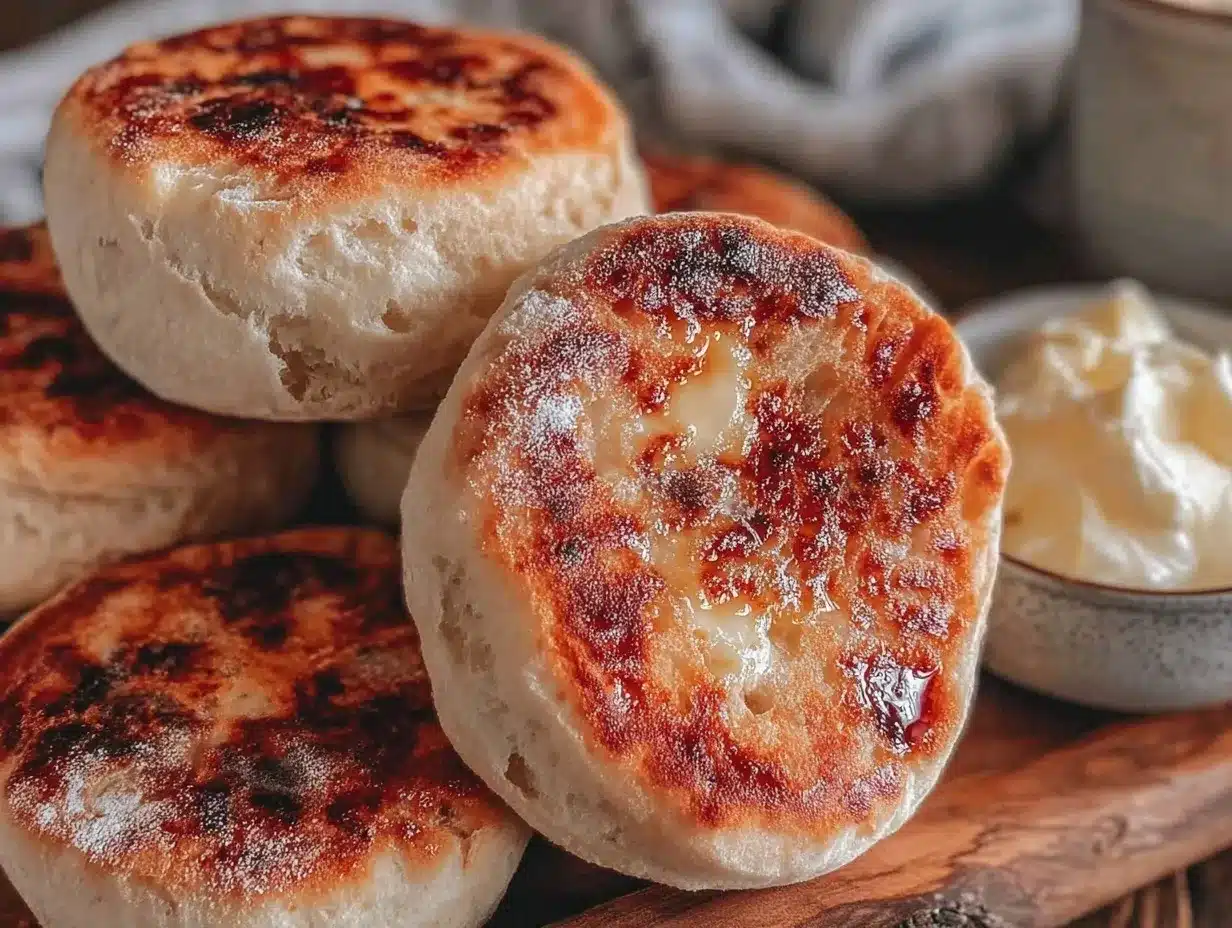
- Mix the dough (15 minutes): In your mixing bowl, combine 100g (3.5 oz) active sourdough starter with 180ml (¾ cup) warm water and 1 tbsp sugar. Stir until dissolved. Add 250g (2 cups) all-purpose flour, 50g (½ cup) whole wheat flour, and 1 tsp salt. Mix until a shaggy dough forms. Add melted butter if using, then knead (by hand or with a stand mixer) for about 8-10 minutes until smooth and elastic.
- First rise (3-4 hours): Cover the bowl with a damp towel or plastic wrap. Leave at room temperature for 3-4 hours until the dough roughly doubles in size and looks bubbly. It should feel light and airy when poked.
- Shape the muffins (10 minutes): Transfer dough onto a lightly floured surface. Roll out to about ½ inch (1.3 cm) thickness. Using your biscuit cutter, stamp out rounds. Place each on a baking sheet dusted with semolina or cornmeal to prevent sticking. Cover loosely and let rest for 45-60 minutes; they’ll puff slightly.
- Cook the muffins (20 minutes): Heat your cast iron skillet or non-stick pan over medium-low heat. Place muffins in the pan (don’t overcrowd). Cook for 7-8 minutes on each side, covered with a lid to trap steam. You’re looking for a deep golden crust with a crispy texture. Flip carefully to avoid deflating the muffins.
- Cool and split: Let muffins cool on a wire rack. When ready to eat, split them open with a fork to reveal those classic nooks and crannies, perfect for holding butter or jam.
Watch out for overcooking; too high heat burns the crust before the inside cooks. Also, don’t press down on muffins while cooking—they need space to rise and stay fluffy inside. I learned this the hard way with a batch that ended up dense and flat!
Cooking Tips & Techniques
To nail these sourdough English muffins every time, here are some lessons from my kitchen adventures:
- Use an active starter: The bubbles and aroma tell you it’s ready. If your starter is sluggish, feed it a couple of times before baking.
- Don’t skip the semolina: This gritty dusting prevents sticking and adds that familiar texture on the muffin’s surface.
- Low and slow heat is key: Too hot, and you get burnt crust with raw dough inside; too low, and the muffins dry out. Medium-low heat with a lid helps trap steam for airy interiors.
- Fork-splitting: Always open your muffins with a fork, not a knife. This keeps those nooks and crannies intact, ideal for butter and jam to pool.
- Patience pays off: The longer proofing time lets the sourdough develop flavor and texture—you’ll notice the difference with a quick-rise bread.
- Multitasking tip: While waiting for your dough to rise, you can prepare a simple side like the vibrant sautéed green beans with lemon zest and pine nuts. It’s an easy way to round out your breakfast or brunch plate.
Variations & Adaptations
Want to switch things up or cater to different tastes? Here are some ways to make these muffins your own:
- Gluten-free option: Use a gluten-free flour blend designed for bread baking. Keep in mind texture will be different but still tasty.
- Herb-infused muffins: Add fresh herbs like rosemary or thyme to the dough for a savory twist—great alongside eggs or cheese.
- Sweet cinnamon sugar: Sprinkle a mix of cinnamon and sugar onto the semolina before cooking for a breakfast treat that’s a little dessert.
- Whole milk substitution: Swap water for whole milk or buttermilk to get a richer, softer crumb.
- Different flours: Try rye or spelt flour to deepen flavor complexity. I once did a batch with rye that paired beautifully with a sharp cheddar spread.
For those curious about alternative cooking methods, you can finish the muffins in a 350°F (175°C) oven for 5-7 minutes after pan-frying to ensure thorough cooking without risking burning.
Serving & Storage Suggestions
These sourdough English muffins shine when served warm, fresh off the griddle. Split them with a fork and slather with butter, honey, or your favorite jam.
Pairing ideas:
- Classic: Butter and local honey or homemade jam.
- Savory: Top with avocado, smoked salmon, or scrambled eggs for a hearty breakfast.
- Sweet: Spread with cream cheese and fresh berries, or try a drizzle of maple syrup.
If you want to store leftovers, place cooled muffins in an airtight container and refrigerate for up to 4 days. For longer storage, freeze them in a zip-top bag for up to 3 months. To reheat, toast the muffins straight from frozen or warm gently in a pan over low heat to revive the crisp exterior.
Flavors develop mildly overnight, so sometimes I prefer these muffins a day later, warmed with a touch of butter—comfort food that feels ready-made but still fresh.
Nutritional Information & Benefits
Each muffin contains approximately:
| Nutrient | Per Muffin |
|---|---|
| Calories | 150 |
| Carbohydrates | 30g |
| Protein | 5g |
| Fat | 1.5g |
| Fiber | 2g |
The sourdough fermentation process helps break down gluten and phytic acid, making these muffins easier to digest than conventional bread. Plus, the natural fermentation boosts beneficial bacteria, which may aid gut health.
Using whole wheat flour adds extra fiber and nutrients compared to white flour alone. This recipe is naturally dairy-free unless you add butter or milk, and you can easily swap out ingredients for gluten-free or vegan variations.
Personally, I appreciate sourdough for its subtle tang and how it feels lighter on my stomach—a small wellness perk wrapped in a crispy crust.
Conclusion
This perfect crispy sourdough English muffins recipe has become a little ritual for me—turning simple mornings into moments of real comfort. It’s a recipe that encourages slow mornings and simple pleasures, made with ingredients you trust and flavors you crave.
Don’t hesitate to tweak it—whether that’s experimenting with herbs, trying different flours, or pairing the muffins with unexpected toppings. I love how this recipe feels approachable but rewarding, a genuine homemade treat that never disappoints.
If you give this a try, I’d love to hear how you customized your batch or what toppings you paired it with. Sharing these kitchen wins (and learning moments) always makes cooking feel a little more connected.
Here’s to many mornings filled with that perfect crunch and tangy sourdough flavor—enjoy!
FAQs
- Can I use commercial yeast instead of sourdough starter?
Yes, but the flavor and texture will be different. Sourdough adds a unique tang and chewiness that commercial yeast can’t replicate. - How do I know if my sourdough starter is active enough?
It should be bubbly and double in size within 4-6 hours after feeding, with a pleasant tangy aroma. - Can I make the dough the night before?
Absolutely! Refrigerate the dough overnight after the first rise, then shape and cook the muffins the next day. - Why are my muffins dense?
This usually happens if the dough didn’t rise enough or the cooking temperature was too high, causing the outside to cook too fast. - What’s the best way to store leftover muffins?
Cool completely, then store in an airtight container in the fridge for up to 4 days, or freeze for longer. Reheat by toasting or warming in a pan.
Pin This Recipe!

Perfect Crispy Sourdough English Muffins

A homemade sourdough English muffin recipe that delivers a crispy crust and chewy, airy crumb with a signature tangy flavor. Perfect for weekend brunch or a cozy breakfast treat.
- Prep Time: 25 minutes
- Cook Time: 20 minutes
- Total Time: 4 hours 45 minutes
- Yield: 8 muffins 1x
- Category: Breakfast
- Cuisine: American
Ingredients
- 100g (3.5 oz) active sourdough starter
- 250g (2 cups) all-purpose flour
- 50g (½ cup) whole wheat flour
- 180ml (¾ cup) warm water (75-80°F / 24-27°C)
- 1 tbsp sugar
- 1 tsp salt
- Baking semolina or cornmeal for dusting
- Optional: 1 tbsp unsalted butter, melted
- Optional: Milk (substitute for water for a softer crumb)
Instructions
- Mix the dough (15 minutes): In a mixing bowl, combine 100g (3.5 oz) active sourdough starter with 180ml (¾ cup) warm water and 1 tbsp sugar. Stir until dissolved. Add 250g (2 cups) all-purpose flour, 50g (½ cup) whole wheat flour, and 1 tsp salt. Mix until a shaggy dough forms. Add melted butter if using, then knead for 8-10 minutes until smooth and elastic.
- First rise (3-4 hours): Cover the bowl with a damp towel or plastic wrap. Leave at room temperature for 3-4 hours until the dough roughly doubles in size and looks bubbly.
- Shape the muffins (10 minutes): Transfer dough onto a lightly floured surface. Roll out to about ½ inch (1.3 cm) thickness. Using a 3-inch (7.5 cm) biscuit cutter, stamp out rounds. Place each on a baking sheet dusted with semolina or cornmeal. Cover loosely and let rest for 45-60 minutes until slightly puffed.
- Cook the muffins (20 minutes): Heat a cast iron skillet or non-stick pan over medium-low heat. Place muffins in the pan without overcrowding. Cook for 7-8 minutes on each side, covered with a lid to trap steam, until deep golden and crispy.
- Cool and split: Let muffins cool on a wire rack. Split open with a fork to reveal nooks and crannies, perfect for butter or jam.
Notes
Use an active, bubbly sourdough starter for best results. Keep skillet well-seasoned to prevent sticking. Cook on medium-low heat with a lid to trap steam and achieve airy interiors. Avoid pressing down on muffins while cooking to keep them fluffy. Fork-split muffins to preserve nooks and crannies.
Nutrition
- Serving Size: 1 muffin
- Calories: 150
- Fat: 1.5
- Carbohydrates: 30
- Fiber: 2
- Protein: 5
Keywords: sourdough, English muffins, homemade breakfast, crispy muffins, sourdough starter, easy brunch recipe